
Tag Archives: pneumatology

Why the Holy Spirit?

by Scott

I would have to say that the second most important event of history, second only to the resurrection of Jesus, is that of the pouring out of the Spirit recorded in Acts 2. So important was it!

Now, what we must realise is that the feast of Pentecost had been annually celebrated for some time. It was connected to the feast of Shavuot, where the Jews also remembered the giving of the Law to Moses at Mt. Sinai.

So Acts 2 was not the recording of the first Pentecost. Hence, Luke’s words here: When the day of Pentecost arrived…(Acts 2:1). They were already expecting Pentecost to come. I’m just not sure they were fully expecting the fruitful harvest that came on that particular Pentecost as recorded in Acts 2. A greater gift was given here than at Mt. Sinai!

What had been intimated at and prophesied about for centuries past (see Numbers 11:24-30; Isaiah 32:14-15; 44:3; Joel 2:26-29), and promised by Jesus himself (John 7:37-39; Acts 1:4-5), had finally arrived. No longer was the Holy Spirit to be given to only a select few. He was to be given and poured out on all God’s people, no distinction made – male/female, young/old, Jew/Greek.

The Messianic age would also be marked as the age of the Holy Spirit! Fantastic news, no doubt.

But, one might ask: Why the Holy Spirit? Why was he given?

Good question. And while Scripture does not answer every single question we ask, it seems to clearly answer this question. It’s recorded by Luke, coming from the lips of Jesus.

But you will receive power when the Holy Spirit has come upon you, and you will be my witnesses in Jerusalem and in all Judea and Samaria, and to the end of the earth. (Acts 1:8)

Pretty clear, heh?

This statement in the early words of Acts stands as the thesis statement for the whole book. The account of Acts would be an outworking of this one statement. The Spirit would be given, and through such an event of extreme import, the people of God would be empowered witnesses.

This was not something for a group of twelve, or a group of twelve and a few other special people. Again, this was a reality for all of God’s people. Remember, the Spirit would not differentiate via gender or age or social barriers. This is one reason why Peter quotes Joel:

17 “‘And in the last days it shall be, God declares, that I will pour out my Spirit on all flesh, and your sons and your daughters shall prophesy,
and your young men shall see visions,
and your old men shall dream dreams;
18even on my male servants and female servants
in those days I will pour out my Spirit, and they shall prophesy. (Acts 2:17-18; quoting Joel 2:28-29)

So, reason number 1 for the Spirit being given – that we might receive power and that we might be his witnesses. If there is anything that should mark the life of the Christ-follower it should be the power of the Spirit and the power of the Spirit to be his witnesses. No, I do not only mean that we all must be used in miracles and healings, though I am definitely not opposed to such. Rather, we are to know the power of God across all areas our lives. The power of God is to be available in every aspect, leading to a life that seasons with salt and shines with light.

I cannot imagine anything less.

So, as I shared in my last post, the Spirit of God was not given to ‘maintain the status quo’. It was not given to make sure we hold together nice meetings, a prayer meeting here, a Bible study there, a fellowship meal here, a finance meeting there. None of those are bad in and of themselves. But they are not necessarily the fruit of Acts 1:8, especially if it is tied into solely maintaining the status quo.

Can you imagine Acts 1:8 saying this?

But you will receive the ability to maintain the status quo when the Holy Spirit has come upon you, and you might possibly be my witnesses in Jerusalem and in all Judea and Samaria, and to the end of the earth. (Acts 1:8)

I’m sorry, but I can honestly say I would not want any part of that. The Spirit was not given to make sure we all live out a nice and comfortable life in Christ. The Spirit was given that we might be empowered witnesses. Acts 1:8 does not get any clearer.

I am stirred deep by the reality of the reason the Holy Spirit was given when reading Acts 1:8.

The second reason the Spirit is given, not that it is subservient to the first reason I pointed out, is found in the very first verse of Acts 1:

In the first book, O Theophilus, I have dealt with all that Jesus began to do and teach. (Acts 1:1)

Luke’s first volume, the Gospel of Luke, was an account of the things Jesus began to do and teach. Jesus was not finished. He had more to accomplish and say. Hence, he poured out the Spirit to continue his work, for the Spirit is the Spirit of Jesus (see Acts 16:7; Galatians 4:6; Philippians 1:19).

But, though the Lord of heaven and earth, as one man, accomplished quite a lot, he was not able to accomplish all as that one human being. Remember, he did not grasp at his equality as the divine (Philippians 2:6).

So, as I have emphasised, to continue his powerful work, Jesus pours out his Spirit to empower an entire body, though that body started at about 120 (Acts 1:15). Hence, why his words in John 14:12 make a lot of sense:

Truly, truly, I say to you, whoever believes in me will also do the works that I do; and greater works than these will he do, because I am going to the Father.

Not a select few, but whoever believes. I know there are plenty to argue that this does not mean everyone, since Jesus was only talking to the disciples-apostles. Or that this does not really mean all of Christ’s works, since some of those works are not needed much any more because the gospel has spread enough and we have the testimony of Scripture.

I am glad that gospel has spread, though I am not sure we understand the power of the gospel at times, and I am glad we have the God-breathed Scripture. But I am not sure whoever believes can be any clearer as to whom Jesus envisioned when he uttered those words. Suffice it to say, I am clear on what Jesus clearly meant – whoever believes. But if you want more to chew on, here is a great article to read.

Now, let me also note that I do not believe the ‘greater works’ is so much speaking qualitatively as it is speaking quantitatively. You get me? We can’t really walk out much greater a manifestation of the works and power of God than raising the dead, healing the blind, seeing withered hands restored, etc. Thus, I believe this is speaking more about the whole Spirit-empowered body of Christ being able to accomplish more than the Son of God as one human being.

Can you imagine millions and billions of Christ-followers empowered with the same Spirit? I’m thinking greater works, quantitatively. Remember, the same Spirit that Jesus relied on in the flesh, even post-resurrection (see Acts 1:2), is the one who indwells and empowers the body of Christ now.

Of course, I am not so silly as to believe that John 14:12 is only speaking of major manifestations of God’s power through healings and miracles. The works of Jesus include compassion for the hurting, mercy for the downtrodden, food to the homeless, respect and love for our spouses, tender care for our children, overcoming the temptation of the enemy and flesh, etc, etc. But I could never deny and step back from recognising that the works of Jesus also include healings and miracles and other demonstrations of the powerful work of the Spirit. We cannot argue our way out of this one.

Again, whoever believes in me will also….

So, why was the Spirit given? Simply put: 1) to continue the works of Jesus and 2) to empower God’s people as witnesses, so that those works might continue. This didn’t stop with Jesus. And this didn’t conclude with Acts 28. This has been continuing for some 2000 years and will continue on until all is accomplished and he returns to marry his prepared bride.

Oh, that we might know his power.
The Disciples in Ephesus – Acts 19:1-7

by Scott

One debated passage when it comes to the baptism of the Spirit, or the initial reception/filling of the Spirit, is that of Acts 19:1-7. The debate surrounds the questions of whether or not the twelve disciples mentioned in Acts 19:1-7 were actually born again or not. If they already were, I believe this has certain implications on our pneumatology. If they were not, then that has other implications on our doctrine of the Spirit.

So, here’s the passage up for discussion:

1 And it happened that while Apollos was at Corinth, Paul passed through the inland country and came to Ephesus. There he found some disciples. 2 And he said to them, “Did you receive the Holy Spirit when you believed?” And they said, “No, we have not even heard that there is a Holy Spirit.” 3 And he said, “Into what then were you baptised?” They said, “Into John’s baptism.” 4 And Paul said, “John baptised with the baptism of repentance, telling the people to believe in the one who was to come after him, that is, Jesus.” 5 On hearing this, they were baptized in the name of the Lord Jesus. 6 And when Paul had laid his hands on them, the Holy Spirit came on them, and they began speaking in tongues and prophesying. 7 There were about twelve men in all. (Acts 19:1-7)

So the passage identifies these twelve men as disciples (vs1), but were they authentic and real disciples?

Describing the situation of Acts 19:1-7, John Stott is persuaded they are not true believers, asserting:

There [in Ephesus] he [Paul] met about a dozen men who, if we may judge from Luke’s description of them, do not seem to have been Christians at all. It is true that he calls them ‘disciples’ (verse 1), but this need mean no more than professing disciples, just as Simon Magus is said to have ‘believed’ (8:13), although the context indicates that he had only professed to believe. (Baptism & Fullness: The Work of the Holy Spirit Today, p34)

So let’s consider these seven verses more carefully.

For starters, one interesting thing to note is that Luke uses the words disciple or disciples 30 different times throughout the book of Acts, one of those times being in 19:1. Even more, in all of the other 29 times the word is used, the context is definitely clear that Luke is speaking of true Christian disciples. Of course, it is possible that, in this one instance, Luke is not referring to true believers. But knowing he consistently uses the word as a positive affirmation of true disciples, it is highly likely he has done the same in describing these twelve men in Ephesus.

Secondly, here we have an example of our chapter and verse divisions not being helpful in seeing the larger context of Scripture. The whole ofActs 19 is actually specifically connected to the last five verses of Acts 18 where we learn about a certain man by the name of Apollos:

24 Now a Jew named Apollos, a native of Alexandria, came to Ephesus. He was an eloquent man, competent in the Scriptures. 25 He had been instructed in the way of the Lord. And being fervent in spirit, he spoke and taught accurately the things concerning Jesus, though he knew only the baptism of John. 26 He began to speak boldly in the synagogue, but when Priscilla and Aquila heard him, they took him and explained to him the way of God more accurately. 27 And when he wished to cross to Achaia, the brothers encouraged him and wrote to the disciples to welcome him. When he arrived, he greatly helped those who through grace had believed, 28 for he powerfully refuted the Jews in public, showing by the Scriptures that the Christ was Jesus. (Acts 18:24-28)

We see that Apollos had settled, at least for a time, in the city of Ephesus, which was the residence of the twelve ‘disciples’ ofActs 19. Concerning Apollos, we read that he was:

  • Competent in the Scriptures
  • Instructed in the way of the Lord
  • Fervent in spirit
  • Taught accurately the things concerning Jesus

But the problem is that he only knew the baptism of John (that is, John the Baptist). Therefore, Priscilla and Aquila were very helpful in the life of Apollos, becoming mentors to him in the faith.

We read that they ‘explained to him the way of God more accurately’ (18:25). Still, we never read that this was Apollos’ conversion. He was already converted and was a true believer. True, we would probably expect that Priscilla and Aquila would have seen Apollos finally ‘baptised into the name of Jesus’ (an expression used frequently in Acts – 2:38; 8:16; 10:48; 19:5). But this did not negate that he was already a true Christian disciple.

Therefore, keeping this in mind, we return to the twelve men of Acts 19:1-7.

Knowing Apollos’ ministry in Ephesus, it is most likely that these twelve were disciples of Apollos. The argument might arise that this is the problem – they were disciples of Apollos and not Christ. But such an argument does not hold up when we consider that, in the book of Acts, Luke refers to a group as ‘disciples’ of Paul (seeActs 9:25). Yet we can only expect that they were also true believers.

Thus, whether the word ‘disciples’ in 19:1 refers to being disciples of Christ or disciples of Apollos, it matters little. Why?

  • If they were disciples of Christ, which is highly likely since Luke uses the word everywhere else in Acts to describe true believers, then these twelve had to be true Christians.
  • If they were disciples of Apollos, which is also highly likely, then they would have been true disciples because Apollos was, himself, a true disciple.

Thus, Acts 19:1-7 presents to us a case of a group of twelve men that would have needed to be taught more accurately the way of God, just as Apollos had needed such in Acts 18:24-28. But they already were true believers.

Still, problems arise for many in regards to these Ephesians disciples. The next problem to consider is: If they were believers, why did Paul ask them if they had received the Spirit when they believed (vs2)? Paul makes it clear in other places that all Christians receive the Spirit at conversion (e.g.Romans 8:10-17; etc).

Such a question is definitely worth considering. But the problem is that we are walking down the path of conforming Luke’s emphasis of the work of the Spirit to Paul’s emphasis on the Spirit. As I have hinted at before, Luke has a very specific perspective on the charismatic activity of the ‘Spirit of prophecy’, all in regards to empowering God’s people for service. Paul’s emphasis is on the reception of the Spirit at conversion, bringing God’s people into union with Christ and making them the sons and daughters of God.

Though Acts 19:1-7 describes Paul’s activity, we must let Luke teach and emphasise the charismatic, empowering role that comes through the baptism of, or filling with, the Spirit.

Also, worth noting is that Paul asked, ‘Did you receive the Holy Spirit when you believed (vs2)? Again, some will claim that Paul thought they had ‘believed’, but these Ephesian twelve had not truly believed. But we have already seen the high prospect that they were truly believers.

Next, some might have difficulty with the response of the Ephesians disciples to the question of Paul. They answer his question in this way: ‘No, we have not even heard that there is a Holy Spirit.’

Our English translations for their answer are not very helpful. When we read it in the ESV, NIV, etc, it seems that they are not even aware that the Holy Spirit exists. But such cannot be true. They would have sat under the teaching of Apollos and he would have definitely known about the Spirit.

In vs3, we also see that they had been baptised into John’s baptism. It is possible that Apollos had received some teaching from John the Baptist, which he then had passed on to others, some of those being the disciples in Ephesus. Even John taught that the Messiah would come and baptise in the Holy Spirit (Matthew 3:11). Thus, it is most likely they had heard about the Holy Spirit.

But what we must note is that the better translation of the response of the Ephesian disciples would be, ‘We have not heard that the Holy Spirit is given.’ Why? Well, consider what we just discussed above about how they would have heard of the Spirit. Recognising their connection to Apollos, and Apollos’ connection to John the Baptist, they would have known about the Holy Spirit.

But, also, we point out that the Greek wording of their response in Acts 19:2 is almost identical to the words of Jesus in John 7:39:

Now this he said about the Spirit, whom those who believed in him were to receive, for as yet the Spirit had not been given, because Jesus was not yet glorified. (John 7:39)

Literally, the bolded phrase in John 7:39 should be translated as, ‘for not yet was the Holy Spirit’. This is seen in Young’s Literal Translation.

Our English versions translate the bolded phrase as above because they are bringing out the intended message of the words, rather than a literal wording that might not make as much sense. Yet, when we turn to the words of Acts 19:2, we normally do not find the translators doing the same with the response of the Ephesians disciples, which we noted is very similar in the Greek.

Why?

This is probably due to one’s theology leading to a specific translation. Yet, both the middle phrase of John 7:39 and the response of the Ephesian disciples in Acts 19:2 are very close in the Greek text.

Therefore, these twelve men were not stating that they had never heard that the Holy Spirit existed. They were declaring that they did not know He had been given (as of yet). Thus, we cannot use their response in Acts 19:2 as a pointer to them not being true believers and disciples. And, therefore, I believe it looks more and more likely thatthese twelve in Ephesus were actually true disciples.

But Paul does recognise that they had not yet been baptised into the name of Jesus. Thus, he corrects this (vs4-5). And, as I noted above, this would have been similar to what Priscilla and Aquila had probably done with Apollos when they taught him more accurately the things of God.

Then, and only then, we read that the Holy Spirit came upon these twelve. These Ephesian disciples were true disciples, believers in Christ. But they needed some greater instruction. They needed to step into the fuller things of Christ – through water baptism and through Spirit baptism.

And here is the point: I believe such breaks down the typical package that we teach about Luke’s theology of the Holy Spirit in Acts. I understand that Acts is all about the outworking of the thesis in 1:8 – But you will receive power when the Holy Spirit has come upon you, and you will be my witnesses in Jerusalem and in all Judea and Samaria, and to the end of the earth. And what is normally argued is that Acts 2 is the outpouring of the Spirit initially on the Jews, Acts 8 is the initial outpouring on Samaritans, and Acts 10 (with Cornelius’s household) is the initial outpouring on the Gentiles.

But I believe that the account of the Ephesian disciples in Acts 19, as well as the account of Paul’s delayed initial filling of the Spirit in Acts 9:17, both show that the package does not remain nice and neat. Theologically, I believe there is room to breathe that says the baptism/initial filling of the Spirit might not happen at conversion. Luke’s theological emphasis of the empowering work of the Spirit for service shows that a delayed reception of this empowering just might occur in the life of the believer.

In a perfect world, I would say it probably wouldn’t be that way. But I don’t believe the neat package stands with regards to the outworking of the thesis of Acts 1:8 throughout Acts. There are enough examples, even of the great Paul, that one might not receive such an empowering Spirit baptism/filling upon initiation-conversion.

And, so, practically in today’s world, how many Christians are believers in Christ, but have never truly known the empowering of God’s Spirit? They ‘prayed the prayer’, even truly believed upon Christ and repented of sins. Yet, they possibly have never been water baptised nor received the empowering baptism-initial filling of the Spirit like these twelve Ephesian disciples. This is part of God’s model for all Christians. Not just faith and repentance, but also that of the powerful working of God in water baptism (Colossians 2:11-12) and the powerful working of the Spirit through His baptism.

God, send Your Spirit to empower us, since that is truly Your desire.

Two Books and an Interview About the Holy Spirit

by Scott

Over at Between Two Worlds, blog of Justin Taylor, he recently posted an article that tells of two books on the Holy Spirit by author Graham Cole. Cole is currently professor of biblical and theological studies at Trinity Evangelical Divinity School.

The two books are He Who Gives Life: The Doctrine of the Holy Spirit (which is a more theological work) and Engaging with the Holy Spirit: Real Questions, Practical Answers (which is a more accessible book to all people).

It seems Cole is more of a cessationist, but his book receives a positive recommendation by C.J. Mahanney (a continuationist) for both books.

But, more interesting on Justin Taylor’s blog is a short interview between him and Cole. There are four specific questions discussed, but I thought this one about the Spirit’s filling in Ephesians 5:18 presented some good things to chew on.

———————————–

We are commanded to “be filled with the Spirit” (Eph. 5:18). How do we do that?

A great question!

The first thing to notice is that Ephesians 5:18 is addressed to a congregation.

Next, it may be translated “Be filled by the Spirit!” In fact, in context Paul is contrasting the sort of behaviors you see in a pagan assembly (e.g., drunkenness) and what is to characterize a Christian one (e.g., making melody in your [plural] heart [singular] to the Lord and submitting to one another out of reverence for Christ).

In my view, it is not about power for service for the individual. We obey this command when our Christian meeting is filled by the Spirit with these kinds of practices. Then we truly are the temple of the Holy Spirit that Paul speaks of in Ephesians 2.

However, Paul specifies no steps. So what’s the way forward? I suggest Acts 4 provides a paradigm case. These early Christians gathered in the face of persecution and prayed for boldness to proclaim the gospel. Interestingly they did not pray to be filled with the Spirit. And what did God do? He filled them with the Spirit and they spoke boldly indeed. So I would counsel if you want to be filled with the Spirit, set your heart and life prayerfully on the next step of Christian faith and obedience and you will be filled with the Spirit.

Back to Ephesians 5. When we as a congregation prayerfully fill our meeting with the practices set out in Ephesians 5:19-21 we can trust that our assembly really is the temple of the Spirit. In these practices the focus shifts from me to the Lord, and my brothers and sisters.

———————————–

Click here for the rest of the article at Between Two Worlds.

The Use of Luke-Acts For Developing Our Pneumatology

by Scott

When it comes to developing our pneumatology, or our theology of the Holy Spirit, there has been much discussion on whether or not we can utilise the Gospel of Luke and the book of Acts to inform our understanding. Honestly, some have not been keen on the idea of utilising Luke-Acts, since they would see it as more descriptive rather than didactic (teaching doctrine). Such a group would see the epistles (i.e. Paul’s letters) as the primary didactic source for our pneumatology and the descriptive parts (such as Luke-Acts) as secondary in teaching doctrine.

So, is it worth utilising Luke’s words in both his Gospel and Acts as a primary source for developing our theology of the Holy Spirit? Or should Luke’s two-volume work be seen more as a secondary pneumatological resource?

There are a couple of points I believe that are worth noting:

Luke as Both Historian and Theologian

An important thing to notice is that Luke stands as the only recorder of the early church and its history. Other Gospels (3 of them) had been written alongside Luke’s. But he alone holds a unique position as presenting early church history. It leaves us asking if his words should be relegated as secondary to the epistles or if they will give us a better understanding of the Spirit of God and His work.

If we are honest with the text, and note Luke’s pneumatological purpose in his recording of early church history, Acts does stand as a vitally important theological work. And its significance is especially heightened when studied with its preceding volume, the Gospel of Luke, as Luke emphatically highlights the work of the Spirit in the life of Christ.

So, whereas in the past, many evangelical theologians would have not seen the benefit of developing doctrine from narrative portions of Scripture, there has been a much great acceptance of such in recent years. This is a very important recognition, for we can definitely learn from narrative parts. We can learn just as much from God’s deeds as we can learn from God’s words. Even more, this inspired account of early church history is where theology and doctrine are being walked out in daily life. Thus, it carries importance. This is why I believe that Luke must be respected as both historian and theologian.

Below are a few passages showing how we can receive instruction from the historical recordings of Scripture.

For whatever was written in former days was written for our instruction, that through endurance and through the encouragement of the Scriptures we might have hope. (Romans 15:4)

Now these things happened to them as an example, but they were written down for our instruction, on whom the end of the ages has come. (1 Corinthians 10:11)

Yes, it is definitely true that Luke presents a descriptive history of the church in his second volume, Acts. No one can argue with such. But, what we must be willing to recognise is that it is a didactic history at the same time. There is no doubt that Luke wrote to teach. He did not only write to describe, he wrote with a purpose to instruct us, just as the writers of old would have done with their narrative portions of the Old Testament text.

As theologian Roger Stronstad reminds us:

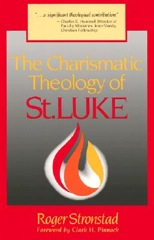
‘If for Paul the historical narratives of the Old Testament had didactic lessons for New Testament Christians, then it would be most surprising if Luke, who modelled his historiography after the Old Testament historiography, did not invest his own history of the origin and spread of Christianity with a didactic significance.’ (The Charismatic Theology of St. Luke, p7)

Not only that, but we have these oft-quoted words of Paul:

16 All Scripture is breathed out by God and profitable for teaching, for reproof, for correction, and for training in righteousness, 17 that the man of God may be competent, equipped for every good work. (2 Timothy 3:16-17)

Paul envisioned all parts of Scripture as God-breathed and useful for teaching. To say that certain portions of Scripture take precedence over others is not easily established from Scripture itself.

Luke Speaks For Himself

What I mean with this subheading is that, many times, theologians will try and squeeze Paul’s specific theological emphases into Luke’s theology. Thus, we end up reading Luke through a Pauline lens, which is not at all helpful.

Of course Scripture presents a harmonious whole. There is a unifying structure and nature to the entire text. But we need to give room for Luke to speak as Luke, rather than try and make Paul’s words fit into Luke’s words (or vice versa). For Luke is himself trying to teach us something about the Messiah, the mission of the church, the work of the Spirit, and a whole lot more. Let’s give this man room to teach us, even teach us apart from Paul’s own words.

Even more interesting, when it comes to the baptism and filling of the Holy Spirit, Luke speaks about these two issues many more times than Paul ever does. Consider these statistics:

  • Baptised in the Spirit: Luke 3 times; Paul 1 time
  • Filled with the Spirit: Luke 9 times; Paul 1 time

Not only that, but Luke utilises a lot of different phrases to describe these similar actions: the Holy Spirit came upon; the Spirit was poured out; the gift of the Holy Spirit; the Spirit fell on people; people received the Spirit. If we take all of these into account with regards to being baptised and/or filled with the Spirit, Luke has a lot to contribute on this topic. Our ears should be tuned to this man’s words.

Stronstad shares some more insights:

‘Consequently, just as the recognition that Luke is a theologian as well as a historian makes Luke-Acts a legitimate data base for the doctrine of the Holy Spirit, so the recognition that Luke is independent of Paul will broaden the New Testament data base for the doctrine of the Holy Spirit. To recognize these two facts is to rehabilitate Luke as a historian-theologian of the Holy Spirit and to allow him to make a significant, unique, and independent contribution to the doctrine of the Holy Spirit.’ (p11)

Thus, I agree wholeheartedly with this final statement of Stronstad:

‘On the one hand, where it is appropriate, all parties in the current debate must abandon those largely self-serving methodological programs which conspire to either silence or to manipulate Luke’s distinctive theology. On the other hand, all parties must develop a methodological consensus for interpreting the gift of the Spirit in Luke-Acts. At a minimum, this consensus must include the following principles: 1) Luke-Acts is theologically homogeneous, 2) Luke is a theologian as well as a historian, and 3) Luke is an independent theologian in his own right.’ (p12)

And just as a side note, another great work on how Luke should be viewed as not only historian, but also theologian, is I. Howard Marshall’s Luke: Historian & Theologian.

As we look to develop a holistic pneumatology, consistent with the full text of Scripture, we must not forget Luke’s words and set them aside as only secondary to the words of Paul. Of course, we must also not pit Luke and Paul against one another, noting they were part of the same ministry team at times and are both within the canon of Scripture. But Luke’s words will, no doubt, enrich our understanding of the work of the Holy Spirit. All we must do is allow for them to teach us.

Four Positive Scriptures for Continuationism

by Scott

In the past, I have addressed four major passages of Scripture that cessationists might typically use to discount the continuation of all gifts of the Spirit following the first century (or sometime there abouts). Those four passages are:

In my article, I specifically showed how I believe these four passages are, often times, misunderstood and misused by cessationists to teach that there was an expectation in the first century that certain gifts (supernatural gifts or miraculous gifts or sign gifts) were to cease as we moved toward the full and faithful teaching of the first apostles now recorded in the New Testament.

I don’t say these words – misunderstood or misused – arrogantly. Yet, I still believe that if we read the passages carefully and fully consider what they are teaching, we will see that none of these four give solid ground for the case of cessationism.

Of course, there are other passages that could be dealt with from a cessationist standpoint (i.e. Ephesians 2:20 – that apostles and prophets were foundation layers and we no longer need a foundation to be laid since it was laid once for all time in the first century). But I decided to mainly focus on those four passages, though I have addressed the Ephesians 2 verse in another article.

But, while, at times, it is good to address how another viewpoint utilises certain passages, it is also quite healthy to lay out Scripture passages that would support one’s own specific view. So we don’t just take up the ‘polemical approach’ or addressing what we consider wrong, but we also take up the ‘apologetic approach’ in confirming what is true.

I’m not talking about moulding passages to fit our view, though it is easy to fall into that trap here and there (and I’m sure I could be accused with the form four passages and what I will address in just a moment in this post). But we can’t just defend against another view. We have to make sure Scripture actually teaches what we believe it teaches.

Thus, there are four major passages I would like to point out that I believe give a positive case for the existence of all spiritual gifts from Christ’s first advent to second advent. Those four passages are:

John 14:12

These words in John 14 are well-known, at least to most charismatics and Pentecostals:

Truly, truly, I say to you, whoever believes in me will also do the works that I do; and greater works than these will he do, because I am going to the Father.

I don’t want to spend an immense time on this passage, as my partner in crime, Marv, has done fine exegesis on it here. But I will share a few of my own thoughts.

I know that for many, this passage can merely be put down to talking about doing more evangelism, reaching more people than the one Christ could in His incarnation. And while I absolutely support such a notion, I would argue that to say it only speaks of that is a bit reductionistic. It misses the bigger picture

I believe this statement entails all of the works of Christ. He simply meant it that way. I love the first words of Luke in Acts 1:1:

In the first book, O Theophilus, I have dealt with all that Jesus began to do and teach.

Christ, in His incarnation, had only begun to do and to teach. There was a lot more work to accomplish. A lot more! Hence, the Father and Son had this great plan to send the Spirit to indwell all of God’s people to empower them to do the works that Jesus did. It’s absolutely astounding that Christ Himself would want His body, in the power of His Spirit, to continue the works He did.

Of course, this is not limited to gifts of the Spirit as listed in 1 Corinthians 12:8-10. Nor is this just about miracles and healings. It is about that. But not only about that, just as it was not only about evangelism.

And Jesus said these wonderful words, ‘whoever believes in me’. That’s challenging, but a good challenge for us who are believers. The works of Jesus, in all their variety, which includes miracles and healings and prophecy, are available to the Spirit-indwelt and Spirit-empowered body of Christ. There is no denying this or reducing this. All of the works of Christ are available to all of the body of Christ, not just the spiritually elite nor the spiritually elite of 1900 years ago.

Acts 2:17-18

I love Acts 2:17-18, where, at Pentecost, Peter quotes Joel’s prophetic words from centuries before:

17 “‘And in the last days it shall be, God declares, that I will pour out my Spirit on all flesh, and your sons and your daughters shall prophesy,
and your young men shall see visions,
and your old men shall dream dreams;
18 even on my male servants and female servants
in those days I will pour out my Spirit, and they shall prophesy.

After the Spirit had fallen on the 120 like never seen or known before, Peter has a revelation: This is the fulfilment of Joel’s words spoken so long ago. Joel said that, in the last days, God would pour out His Spirit on all flesh. This was happening right in front of eyes and ears as these tongues of fire descend and these new tongues are spoken.

The last days had just been initiated way back then. This was not to be some few final years of planet earth. The last days began some 1977 years ago at that great Pentecost.

What was the fruit of this outpouring?

That God’s people would become of prophetic community. Oh sure, God would continue to have those specifically gifted as prophets (1 Corinthians 12:28; Ephesians 4:11; etc). But from now on, during the last days of the Messianic age when Messiah would reign over all heaven and earth, God’s Spirit would allow all of God’s people to be utlitised in the prophetic. Moses had longed for it (Numbers 11:24-30), but this was the beginning of the prophethood of all believers, as I’ve written about before.

This work of the Spirit would break all gender barriers and age barriers: sons and daughters; young men and old men; male servants and female servants.

Because the last days are the entire age from Pentecost onwards (or we might technically say first advent of Christ to second advent), we must expect God’s people to always function as a prophetic community. This includes revelations, prophecies, visions, dreams, words of knowledge, words of wisdom, etc. None of this has to be leather bound and added to the New Testament, and thankfully Scripture stands as a measuring stick of whether such prophetic action is truly of God today. But there is no doubt that the last days are to be a continuing work of Jesus by the prophetic Spirit amongst His church in the world.

1 Corinthians 13:8-12

8 Love never ends. As for prophecies, they will pass away; as for tongues, they will cease; as for knowledge, it will pass away. 9 For we know in part and we prophesy in part, 10 but when the perfect comes, the partial will pass away. 11 When I was a child, I spoke like a child, I thought like a child, I reasoned like a child. When I became a man, I gave up childish ways. 12 For now we see in a mirror dimly, but then face to face. Now I know in part; then I shall know fully, even as I have been fully known.

For an in depth look at my thoughts on this passage, I would encourage you to read this article. But, suffice it to say, the ‘perfect’ of this passage is not the completed New Testament canon. I believe the New Testament canon is the God-breathed Word. I’m not into backing away from that reality. But the perfect that Paul speaks about in this passage was not the awaiting of the New Testament.

He was awaiting the perfect One, the perfect ending, where we would see ‘face to face’ and we would ‘know fully, even as [we] have been fully known’. This is quite obviously talking about the final consummation of all things when Christ brings the fullness of His kingdom.

Thus, prophecies and tongues and [words of] knowledge (vs8) have not yet been done away with.

Ephesians 4:11-16

11 And he gave the apostles, the prophets, the evangelists, the shepherds and teachers, 12 to equip the saints for the work of ministry, for building up the body of Christ, 13 until we all attain to the unity of the faith and of the knowledge of the Son of God, to mature manhood, to the measure of the stature of the fullness of Christ, 14 so that we may no longer be children, tossed to and fro by the waves and carried about by every wind of doctrine, by human cunning, by craftiness in deceitful schemes. 15 Rather, speaking the truth in love, we are to grow up in every way into him who is the head, into Christ, 16 from whom the whole body, joined and held together by every joint with which it is equipped, when each part is working properly, makes the body grow so that it builds itself up in love.

I’ve personally been doing a very long series for the past few months on apostles today and what all that entails, of which I have posted about 17 articles already over at The Prodigal Thought. You can click here for the first one or do a search on the category sidebar of my blog for ‘apostles’ or ‘apostles today’.

But, at least from the perspective of the ministry of the prophet in this passage, we are told some very helpful information about the enduring nature of that ministry. We are told that Jesus has given these five (or some argue for four) ministries spoken of in Ephesians 4:11 to help equip God’s people to do the work of ministry. They are equippers of the body so that the body can get on with the work of Christ. And I wonder what work(s) Paul had in mind? Possibly the works of Christ, going back to John 14:12.

But vs13 of Ephesians 4 is very important here. It tells us about the duration of these gifts: until we all attain to the unity of the faith and of the knowledge of the Son of God, to mature manhood, to the measure of the stature of the fullness of Christ.

Well, I think everyone could easily agree that we are not there yet. The word ‘until’ denotes we are headed that way. But we all know we have not reached the point. And we might not be as far along as we had hoped after 1900 years.

Hence, Jesus still gives all five of these ministries. Not just shepherds or evangelists or teachers, though they provide a necessary part. But all five to help equip us and prepare us to move towards the unity of the faith and the knowledge of the Son of God. Prophets (and apostles also) are still needed. Again, it doesn’t mean we are to add a new book to the Bible and call it 2 Romans or 1 Chicago. But we need their ministry to help equip us. And prophets will be very helpful in seeing the body formed into the prophetic community we have been called to, for Joel (and Peter) prophesied of the prophetic community of this new covenant age.

Therefore, I believe this ministry is absolutely vital until we reach that place of unity in the faith and become mature, reaching the full stature of Christ. I would even argue that we would be found somewhat lacking if we do not allow for this ministry in our midst, just as we would be found lacking without shepherds, teachers and evangelists.

Thus, these are four very strong passages that have helped me realise that Jesus still desires that all the gifts be utilised in the present age as He reigns at the right hand of the Father. I don’t want to put my eggs solely in the basket of miracles, healings, prophecy, tongues, etc. But I do want those gifts to be a few of the eggs that go in the ‘full basket’ of what Christ has called His body to by the empowering of the Spirit.

All I can say is this provides for both an exciting and challenging move forward in seeing the kingdom come on earth as it is in heaven. I’m up for such an exciting challenge.