
Category Archives: 1 Corinthians 14

The Gift of Prophecy 102

by Scott

Just a couple of weeks ago, I shared some introductory thoughts on the gift of prophecy, a kind of Prophecy 101, as well as giving the link to our podcast with my teaching on the same topic with our local church. I shared a lot of things mainly from the New Testament, as I believe there was a shift in the ministry of the prophet and the gift of prophecy when Jesus, the Prophet and Living Word, arrived on the scene (you can read more about this shift here).

And so here is my follow-up post on the gift of prophecy, which we could call ‘Prophecy 102’.

If you would like, you can listen to my teaching by clicking on the icon below, or you can download from Cornerstone’s podcast site or iTunes. Or feel free to read on.

Different Measures of the Gift

When reading the New Testament, it is very easy to see there are varying measures of the varying gifts that God gives. I believe this is seen in passages like Rom 12:3:

For by the grace given to me I say to everyone among you not to think of himself more highly than he ought to think, but to think with sober judgment, each according to the measure of faith that God has assigned.

To each has been given a measure of faith. This passage does not speak of saving faith, but I believe it speaks of the faith we are given according to the gifts God has given to us. Hence why Paul would go on to say:

Having gifts that differ according to the grace given to us, let us use them: if prophecy, in proportion to our faith. (Rom 12:6)

Also, real life shows that each of us are given different measures of ministry-serving gifts. My teaching gift is miniscule compared with some other teachers. Not because they are so much more studied than I, though that can play a role, but because they have insights in God that I have not come to yet and might never. So not only are there differing parts of the body, but even those parts that are very similar in gift will vary in their measure of ministry and gift.

And, so, with the gift of prophecy, I easily see three distinctive measures:

a) Prophet – (Eph 2:20; 3:5; 4:11-13; 1 Cor 12:28-29)

Yes, these people will be used frequently in prophecy. But they are also called to be foundation layers and to equip God’s people. One of the best ways they equip the saints (Eph 4:11-13) is by helping prepare God’s people to fulfil their prophetic role as a Spirit-indwelt and Spirit-empowered people.

b) Gift of prophecy – (1 Cor 12:10; Rom 12:6)

Some people will be used in this gift rather frequently, but they are not functioning as foundation-laying and equipping prophets.

c) All may prophesy – (Acts 2:17-18; 1 Cor 14:5, 31)

Because all of God’s people now have the gift of the Holy Spirit, the Spirit of prophecy, we are a prophetic body and can all be used in prophecy. I am very passionate about this and, so, share more about this reality here.

Different Ways God Speaks

Of course God reveals Himself in so many ways – through creation, through art, through a whole host of things. But with regards to God speaking and revealing Himself today in the more ‘prophetic’ and ‘revelatory’ sense, I find that there are typically 5 ways in which God does so:

a) Actual words

Here God actually speaks to the person. A case and example would be God’s call to Abraham in Gen 12:1-3. We see this in other places like Acts 13:1-3 where the Holy Spirit, via the prophets in Antioch, speaks that Paul and Barnabas are to be set apart for their apostolic-mission work. And, of course, there are hundreds, if not thousands, of other examples in both the Old and New Testaments.

b) Pictures/Images

This is not so much about hearing God speak something, but rather the times when God gives a kind of mental picture of something He wants to communicate. It’s almost like a rubber-stamp on our mind or spirit of God’s revelation. Again, God has not spoken to the person but rather gives a picture, an image of what He wants to communicate. And so, when we share the prophetic picture, we describe what we see imprinted upon our minds.

c) Visions/Dreams

Typically, we might identify our receiving of visions when we are awake and receiving of dreams when we are asleep. Peter, when quoting Joel, said that this would be part of the fruit of the prophetic Spirit in the last days. And we’ve been in the last days for about 2000 years. And so these things would continue through this entire age. An example of a vision would be the one Peter had on the rooftop with the sheet coming down with the unclean animals (Acts 10). God repeated it 3 times to communicate that Peter needed to reach the Gentiles with the gospel. A dream might be like what we find in Gen 15:12-20 where God makes the all-important covenant with Abraham.

d) Promptings/Impressions

What I always encourage people with is that we don’t get caught up too legalistically with terms and definitions. Goodness, we love our terms and definitions. And while I hope these are helpful here, though others might approach things with different terms, there are things that fall outside these first 3 examples. And, so, I might identify as promptings and impressions. There is no spoken word from God, no mental picture, no vision or dream, but there is a stirring, a sensing, a prompting, an impression of the heart of God and what He wants to communicate to a person, within the local church body, etc. It might call for us to speak out a prophecy or act out of prophetic action. But this comes from an inner sense and prompting of God, not so much a direct word, picture, vision or dream. Here is a great example of a prompting of the Spirit over at Jesus Creed.

e) Scripture

I shared this in the last article, but when I say God speaks through Scripture, I do mean that He speaks from the God-breathed words that are right there in the text. But I also believe that He utilises those same words, at times, to speak things that were not ‘intended’ within the text. I will give you one example from my own life. One day, as I was reading Jesus’ words in Matt 6:21 – For where your treasure is, there your heart will be also. – I understood that Jesus was speaking in the context of challenging people that they cannot have two masters. Such is extremely important in a life of following Jesus as Master. But, as I was meditating on the passage, God said to me, ‘Scott, this is true of me as well. Where my treasure is, there my heart is also. And my people are my treasures, and, therefore, my heart is with them.’

God utilised Scripture to speak to me. It wasn’t something ‘in between the lines’. But God definitely used what was already there to reveal ‘more’ of His heart to me. Now, sure, I could have also received that from reading Psalm 139 or other passages. But God took the text I was meditating on and spoke to me right then and there. I have plenty of other examples of this exact same experience, but that should be one sufficient example.

How To Communicate Prophecy

This is important to look at as well. When we communicate prophecy, or what we believe God has revealed to us, we must use wisdom. First off, when we do prophesy, there is nothing inherently more spiritual about speaking in King James Old English – Thus saith the Lord…

Now, I think we all pretty much know that, but there was a day when prophecy always had to come with that kind of language. But remember that God is incarnational and comes to real human beings in real life. So we can speak ‘normal’ and it still remain just as true, just as directive and just as much from God.

I spoke earlier in this article of the different measures of the gift of prophecy. And, so, for the prophet and those regularly used in this gift, I would expect statements to possibly start out with, ‘This is what the Lord says…‘ Of course, it does not have to begin that way. One can begin to speak the prophecy without such a prelude statement. But, to bring a focus, especially in a larger church gathering, it can be helpful at times to begin with such.

But, a word of wisdom to those who are not prophets and not regularly used in this gift of prophecy, or for those who are wanting to learn to hear and discern God’s voice. It is best to begin a prophecy with a less directed statement such as, ‘I believe this is what the Lord is saying…’ or ‘I sense the Lord is saying…’

While I do believe God speaks clearly and directly today, having heard such prophets and those gifted in prophecy speak such powerful things in my almost 14 years in Christ, for those still growing in hearing God and in prophecy, let’s be wise how we communicate such things.

Weighing Prophecy

Finally, I end with some thoughts on weighing prophecy. This is biblical and a very good practise. Of course, we don’t only want to weigh prophecy, but we want to be wise discerners and evaluaters of all things in our life in God. Now, at the same time, I highly discourage against what I might call agnostic Christianity where we always question every word, action and motive, laying aside any child-like faith of trust. But, when the body speaks forth prophecy, we are to be responsible to weigh it.

One passage to focus in on is found here:

29 Let two or three prophets speak, and let the others weigh what is said. 30 If a revelation is made to another sitting there, let the first be silent. 31 For you can all prophesy one by one, so that all may learn and all be encouraged, 32 and the spirits of prophets are subject to prophets. 33 For God is not a God of confusion but of peace as in all the churches of the saints. (1 Cor 14:29-33)

Who are the ‘others’ in vs29 that are encouraged to weight the prophecy? Some would argue it is the other prophets in the congregation. But, noting the whole thrust of chapter 14 – Paul’s instruction to the whole church, not simply prophets – I believe it is asking the whole congregation to be responsible in weighing things.

Also, to go along with some things I said earlier, it is worth noting that, in vs31, the word all is used 3 times. This, I believe is another pointer that all of God’s people, indwelt by the Spirit of prophecy, can prophesy. We can all prophesy so that all can learn and all can be encouraged.

Now, a quick word about what it means to weigh prophecy, though I am sure more could be said. When it comes to weighing, here are 4 questions that I find helpful:

  • Is it in line with the principles and teaching of Scripture?
  • What do our wise and experienced leaders have to say about the prophecy?
  • Does it resonate well in our hearts as men and women of the Spirit?
  • Does it bring clarity rather than confusion?

If, for some reason we believe the prophecy or revelation shared is not of the Lord, it does not necessarily mean we kick the person out of the church. That is not the norm, at least in my experience. But, suffice it to say, each case will call for its own wisdom. It could be that the leaders speak a personal word to the person who shared the off-base prophecy. Or it could be a public correction right then and there following the so-called prophecy. Or it could be a correction in the next church gathering. Again, it will call for the leaders to have God’s wisdom.

Now, if the person continues to share wrong things, then we would probably need to put a stop to their sharing, if not forever, at least for a time. Again, that might call for a personal word with the person or a public sharing with the congregation. With these things we always need the Lord’s wisdom.

Of course, when it comes to false prophets (2 Pet 2:1; 1 John 4:1), false teachers (2 Pet 2:1), and even false super apostles like what Paul dealt with (2 Cor 11:5; 12:11), these people are immediately seen outside of the fold. The fruit of their lives, what they speak and how they act, will mean that we guard the people from such deceivers and not give any room to them, warning the congregation to stay away from such people. So, though we do not stone people today, we do exclude them from the fold.

But, for the most part, those who are truly in the body of Christ and are looking to hear the voice of God and be faithful to speak what He prompts and reveals, we must allow for the church to be a safe place where we can learn to practice the gifts of the Spirit. I believe this calls for us to allow the people to take steps of faith, even if they might miss something. Some will disagree, but I believe this is part of helping the people of God learn to hear God and speak correctly what He reveals.

Now, 95% of the time, it is my experience that no bomb will be dropped that will devastate people. But it does happen, and when it does, we must deal with it with wisdom. And so, this is why I believe it can be helpful to utilise the leadership of the church as a kind of ‘screening process’ first, asking the people to share with the leadership before stepping forward and utilisng a microphone to share any prophecy. I have found this to be extremely helpful in guarding against unhelpful things spoken to the congregation. We want to steer clear of a controlling spirit as well. But we must consider how to maintain a good balance.

Well, this should suffice for now – a Prophecy 101 and 102 – for getting an introduction into the gift of prophecy, especially noting the changes that Christ and the new covenant have brought about to this all-important gift. We cannot centre out theology in the Old Testament. We can obviously build on it and learn from it, but we must now see Christ and the New Testament as the great teacher on all things of our faith, including prophecy. Of course, this does not mean we have a 7-step instruction manual process to help us through in every instance. Such would take away from the reality that this is part of walking out a life of faith. But I do believe these are some helpful insights into this gift as understood from the fuller, new covenant perspective.
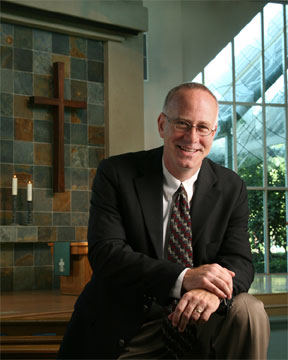
Series on Prophecy by Mark Roberts

by Scott

Over at the blog of Mark Roberts, he recently posted a 3-article series on prophecy in the book of 1 Corinthians. It was refreshing to see a Presbyterian pastor-theologian advocating the continuation of the gift of prophecy today. And, of course, this was interesting as I just began posting a series on prophecy as well.

You can read all three posts by clicking on these links:

  1. Prophecy in 1 Corinthians
  2. Prophecy in 1 Corinthians 14
  3. Prophecy in 1 Corinthians and in the Church Today

The Gift of Prophecy 101

by Scott

On Sunday at Cornerstone, after a few weeks of visiting speakers, I continued on from my introduction to the gifts of the Spirit. I began what will be a two-Sunday series on the gift of prophecy, maybe something like seminars entitled Prophecy 101 and Prophecy 102.

You can listen to the message by clicking on the icon below, or you can download from Cornerstone’s podcast site or iTunes.

For those interested, the major thrust of my message can be found in the article below.

There are five terms I specifically discussed:

1) Revelation

At times, in discussing this word amongst varying Christians, there are two unhelpful perspectives that I believe can arise from the term revelation. They are as follows:

a) Super-scary

This comes with regards to some ideas about the book of Revelation. The Greek word for revelation is apokalupsis, and it’s where we get our word apocalypse. And that word apocalypse brings up all sorts of unhelpful images, with a special thanks to Hollywood in recent decades.

Oddly enough, the word apokalupsis or revelation simply means an unveiling or an uncovering. As an illustration, it’s quite like being present at a theatre play and awaiting the beginning scene of the play. The curtains are drawn closed and everyone is chattering away with anticipation of the opening scene. And, at the first sound of the pit orchestra, the curtains open and the crowd sees the beautiful and intriguing set designed on stage, the cast of characters beginning with a great dance, etc. With that, we just had an unveiling, an uncovering.

The same is true of God’s revelation. When God reveals, He is pulling back the curtain, if you will, for us to see.

b) Super-spiritual

Some Christians hold that God is no longer revealing Himself (they might term it as no more ‘special’ revelation) because we now have all of God’s revelation fully and finally recorded within the canon of Scripture. The Bible is the final measuring stick for the beliefs and practises of the church and, thus, God no longer speaks and specifically reveals Himself. But I have three minor points to bring up about God revealing Himself today.

a) No new redemptive revelation.

I would agree with just about every evangelical Christian that God is no longer bringing forth new redemptive revelation. To claim such is dangerous. Well, it’s heretical. We believe that Jesus Christ and his work alone is the final word on God’s redemptive plans for all peoples. To that, there is nothing to add. As Paul said, if we preach another gospel than the finished work of Christ and, well, one will be cursed (Gal 1:8-9).

b) God has always been speaking and acting outside the Bible.

As I always make sure I communicate, I recognise that the Bible stands as the measuring stick for our faith and the practice of our faith. And, within the the text, we find a very thorough account of all God has said and done from the beginning until the first century. We truly know this is God’s inspired word.

But, of course, the Scripture does not record every word and act of God, does it? A couple of small examples are found in 1 Sam 10:10-13 and 1 Tim 1:18-19. In the first, we find Saul empowered by the Spirit prophesying amongst a group of prophets. What they said was not recorded in Scripture. But there is no doubt that, as prophecy, it would have been Spirit-inspired utterance. In the second example, we read of Paul reminding Timothy of the prophetic words that were made about him and that ‘by them you may wage the good warfare, holding faith and a good conscience’. In both situations, we would have found Spirit-inspired prophecy. But in neither case do we find those prophetic, and revelatory, words recorded in Scripture. The event is mentioned, but not the specific words. And that is quite ok. God has been doing it ever since the beginning and He will keep doing so until all things are completed in Christ.

c) God speaks and reveals today.

As all would note, nothing that God speaks and reveals today would contradict the tenor of Scripture summed up in Christ and the gospel. Such is out of bounds, for we are convinced Scripture is the word of God.

And, so, one way that God still speaks today is through Scripture. Some refer to this as illumination, which is a helpful term. But some use it over and above the term revelation, for they are convinced God no longer does it. But both terms do refer to God unveiling Himself, making Himself known to His creations. It’s just that the term illumination centres around light. And revelation also has to do with light, because revelation helps us see better. So I believe the terms are connected, kind of semantical cousins.

Now, when I say God speaks through Scripture, I do mean that He speaks from the God-breathed words that are right there in the text. But I also believe that He utilises those same words, at times, to speak things that were not intended within the text. I will give you one example from my own life. One day, as I was reading Jesus’ words in Matt 6:21 – For where your treasure is, there your heart will be also. – I understood that Jesus was speaking in the context of challenging people that they cannot have two masters. Such is impossible. But, as I was meditating on the passage, God said to me, ‘Scott, this is true of me as well. Where my treasure is, there my heart is also. And my people are my treasures, and, therefore, my heart is with them.’

God utilised Scripture to speak to me. It wasn’t something ‘in between the lines’. But God definitely used what was already there to reveal more of His heart to me. Now, sure, I could have also received that from reading Psalm 139 or other passages. But God took the text I was meditating on and spoke to me right then and there. Of course, many a folk claim this, with some of it being quite off-base. But there are some guidelines that can prove helpful, of which I have shared a bit here.

Still, I also believe very much that God speaks and reveals Himself ‘outside’ of what is in the Bible. Again, the Bible is the measuring stick for such revelation and that which is truly from God will not contradict that summation of Scripture in Christ. But the reality is that God is a relational and living God, and relational and living beings actually communicate. It’s part and parcel to being relational. I cannot imagine God not speaking, not revealing, not unveiling. It’s at the core of who He is. So God will and does speak, even if there is no verse and chapter number to quote.

2) New revelation

The big question I always get asked is: Is this new revelation?

I have talked about this already above, but I would say there is absolutely no new redemptive revelation. Again, Christ and his work are the final word on that. Such is a closed chapter. But, with regards to God speaking into our lives, our situations, our churches, even the nations today, I am ok to recognise it as ‘new’. Why? Because our lives, situations, churches, etc, are not detailed in Scripture. God didn’t speak about Scott Lencke in Scripture. God did not speak about Cornerstone in Scripture. God did not speak about 21st century Belgium in Scripture. Of course, that which is in Scripture speaks into all three of those. But not in a detailed sense. And I find God still regularly speaks, with detail, into those areas of real life.

3) Prophet

I didn’t spend a long time on this, but I did give what I believe is a solid, working definition of a prophet: one who received and brought forth a direct, inspired, revelatory message from God.

Now, some of these prophets, especially in the Old Testament, were given the amazing, special and authoritative privilege of having their words recorded in the Scripture. And for that every Christian is thankful for their God-inspired words in the Bible. But, of course, not every prophet had their words recorded in Scripture. But, such people were still utilised in direct, inspired, revelatory messages from God, with this ministry continuing into the new covenant era (i.e. Agabus, those in Corinth, those in Antioch in Acts 13:1-3, Philip’s daughters, etc), and I am very much convinced it still continues today.

4) Prophetic community

I have shared about this a lot, but, suffice it to say, because the Spirit of prophecy was to be poured out on all God’s people as of Pentecost, we now have a prophetic community in the whole body of Christ. When Peter stood up on that great day, he quoted some words from Joel’s prophecy:

17 “‘And in the last days it shall be, God declares, that I will pour out my Spirit on all flesh,and your sons and your daughters shall prophesy,
and your young men shall see visions,
and your old men shall dream dreams;
18 even on my male servants and female servants
in those days I will pour out my Spirit, and they shall prophesy. (Acts 2:17-18)

The reality is that now, male and female, young and old, are part of the prophetic community of all believers. We don’t simply have the priesthood of all believers, but we now also have the prophethood of all believers. I share much more in this article.

5) Prophecy

Finally, I began to touch on the gift of prophecy. There is much more to share next Sunday (and, thus, in another post here). But here are a few things I shared thus far.

I believe there are two misunderstandings about prophecy:

a) Prophecy is mainly about prediction.

I am not a fan of the word prediction because it makes one think of fortune telling and palm reading, which is, of course, very dangerous. I would rather use the term forth telling. And, yes, God forth tells things to come. Such is right through the Bible, and I have known such today as well. But prophecy isn’t always about saying something to the effect of: In the next week, events A, B and C will take place in your life. Why? Because the goal is not prediction. The goal is summarised fairly by Paul in these words:

On the other hand, the one who prophesies speaks to people for their upbuilding and encouragement and consolation. ( 1 Cor 14:3)

Prophecy could include forth telling from God, of directives and things to await with regards to ‘the future’. But that is not the central core of prophecy. Prophecy is God unveiling His plans, His purposes, His ways, His heart for the upbuilding, encouragement and consolation of His people.

b) Prophecy is mainly about rebuke.

This is another misnomer for some. Again, a quick glance at 1 Cor 14:3 reminds us of one central goal with prophecy. It doesn’t mean that prophecy is merely a pat on the back with a, ‘You’ll be ok. Hang in there.’ At times, prophecy will involve correction and rebuke. But even in rebuke and correction, such comes forth with the ultimate goal of seeing people strengthened, edified and built up. This is in line with Paul’s earlier words about the purpose of all gifts of the Spirit:

To each is given the manifestation of the Spirit for the common good. (1 Cor 12:7)

Therefore, I would say a helpful and good working definition for prophecy is this: a Spirit-inspired, intelligible, verbally delivered message intended to edify, encourage and comfort other believers. I’ve seen this happen on a regular basis for the past 12 years of my life in Christ and I would never, ever be moved from seeing it as something foregone, ending a long time ago with the finished product of our canon of Scripture. And I have not only known prophecy and revelation to come forth today, but I have also known the true fruit to come from it, that of upbuilding, strengthening, encouragement, exhortation and the common good.

Reports of their demise have been greatly exaggerated: a humble response to Dean Gonzales

by Marv

What I liked best about The Cessation of Special Revelation: A Humble Argument for the Cessation of NT Prophecy and Tongues,  a blog series posted last year by Dr. Robert R. Gonzales, Jr., Dean of Reformed Baptist Seminary is the refreshing way that it takes the “humble” part seriously.  Dean Gonzales comports himself as a gentleman throughout, without the faintest whiff of ad hominem.  He also approaches the subject as a scholar, concentrating his argument on how best to understand the relevant scriptural texts.  In this he takes on Wayne Grudem’s position on prophecy, as laid out in The Gift of Prophecy in the New Testament and Today. The fact that he chooses a worthy interlocutor such as Dr. Grudem is commendable.  As a whole Dean Gonzales takes an approach that ought to be widely emulated.

He is also clear.  He lays out his main thesis in a form of a syllogism, and backs it up with scriptural citation and logical discussion.  The syllogism reads as follows:

Major Premise: All pre-parousia divinely authoritative special revelation has been completed and has, therefore, ceased.
Minor Premise: NT prophecy and tongues are forms of pre-parousia divinely authoritative special revelation.
Conclusion: Therefore, tongues and prophecy have ceased.

Appreciative as I am of his approach, I am not, however, convinced by his argument.  It is a variation of a fairly conventional one, tying the term of charismata to that of the Canon.  In fact I have to object to his references to “scriptural-quality revelation.”  The Bible ascribes, I think, unique attributes to itself.  There is no other revelation, never has been, of equal “quality” to that of Scripture.

This is why the 1689 Baptist Confession of Faith, to which both Dean Gonzales and Reformed Baptist Seminary ascribe states that:

“The Holy Scripture is the only sufficient, certain, and infallible rule of all saving knowledge, faith, and obedience.”

In multiple places Dean Gonzales makes reference to oral prophecy in the early New Testament church as “canonical.”  If this is so, I cannot see how to avoid the conclusion that not only the Holy Scripture, but also every genuine prophecy ever uttered would constitute the Canon.  The Confession, at least, would seem to limit canonicity to those prophecies that the Holy Spirit saw fit to inscripturate.

Similarly, the Bible warrants application of the term inspiration to the Scriptures, the written product of the Holy Spirit’s work.  Whether we are justified in using “inspired” for other manifestations of the Spirit (1 Cor. 12:7) is not readily obvious, to me at least, and his doing so tends to give Dr. Gonzales’ argument a certain circularity, assuming facts not in evidence.

Again, to the Confession, the Bible is the only “infallible” rule.  Contrary to the dean’s assertion or assumption and (perhaps) even Dr. Grudem’s understanding, even Old Testament oral prophecy was not “infallible” in the way that the Scriptures are.

If OT era prophecy were infallible, how could there be false prophecies?  I find it odd that verses such as Deut. 18:22 are often cited to suggest that OT era oral prophecy was inerrant or infallible, when it demonstrates precisely the opposite:

“When a prophet speaks in the name of the Lord, if the word does not come to pass or come true, that is a word that the Lord has not spoken; the prophet has spoken it presumptuously. You need not be afraid of him.”

We are never similarly warned to watch out for “false Scriptures.”  In both the OT and the NT era, “the spirits of prophets are subject to prophets” (1 Cor. 14:32).  The Word of the Lord came to the prophet (Gen. 15:1, 1 Sam. 15:10, 2 Sam. 7:4).  In this last reference, Nathan received the Word of the Lord precisely because Nathan the prophet had spoken presumptuously to David earlier in the day (2 Sam. 7:3).  There is no great intertestamental shift involved that would allow for similarly presumptuous utterances in the NT era, such as the instructions to Paul not to go to Jerusalem, which he sees fit to ignore (Acts 21:4).

The OT prophet was responsible to report the Word of the Lord accurately, though he could fail to do so.  The Scriptures, on the other hand, by being theopneustos are guaranteedcertified to be the Word of the Lord.  They are thus of a quality above and beyond that of oral prophecy, in any era.  This is why Peter specifies “no prophecy of Scripture comes from someone’s own interpretation” (2 Pet 1:20, emphasis mine).  The distinction of two levels of prophecy: “Scripture-quality” and otherwise, does not originate with Dr. Grudem, but is apostolic.

Now, one specific line of argument calls for special mention.  In his part seven he makes a point about the word “mystery” (μυστήριον), which at first blush gives an impression of decisiveness and may in fact be persuasive to many people.  Yet I’m afraid it does not hold up to scrutiny.

As he makes the point succinctly, I will simply quote him:

What I really want to call your attention to is the fact that according to 13:2 and 14:2 both prophecy and tongues reveal “mysteries.” The term “mysteries” is not referring to garbled nonsense. That term translates the same Greek word that Paul used in Ephesians 3 to speak of the canonical-level NT special revelation uttered by apostles and prophets. And according to these passages in 1 Corinthians, these “mysteries” are “known” through the gift of prophecy (13:2) and they are “spoken” through the gift of tongues (14:2).

This argument fails in at least three ways:

1.  In bringing in Ephesians 3:3-9, Dean Gonzales commits a neat little fallacy known as “illegitimate totality transfer.”  The red flag that should tip us off to this is his phrase “the same Greek word that Paul used…to speak of…”  This is meant to imply that the Eph. 3 passage provides us the definition of the term μυστήριον, that is, that it refers to “canonical-level NT special revelation uttered by apostles and prophets.”  But this semantic information is not carried by the single noun μυστήριον, but by an entire descriptive clause: “which was not made known to the sons of men in other generations as it has now been revealed to his holy apostles and prophets by the Spirit” (v. 4).  This is not even a description of what a “mystery” in general is but specifically what Paul there calls “the mystery of Christ.”

The word “mystery” (μυστήριον) essentially denotes a “secret.”  The term was well known in the Greco-Roman world due to the plethora of “mystery religions” in which as part of the initiation, certain items of secret knowledge were imparted to the novice.  The practice has survived to this day in the arcana of societies such as the Freemasons, who possess a convoluted mythology which members are forbidden to reveal to outsiders.

Dean Gonzales simply overloads the word with extraneous meaning, as if he had reached into Eph. 3 with sticky fingers and pulled away half the context along with the noun.  Looking elsewhere, we come away with a more Ockham-friendly understanding that what μυστήριον conveys is the concept “secret” or something unknown or whose meaning is not easy to discern.

“As for the mystery of the seven stars that you saw in my right hand, and the seven golden lampstands, the seven stars are the angels of the seven churches, and the seven lampstands are the seven churches.” (Rev. 1:20)

“But the angel said to me, “Why do you marvel? I will tell you the mystery of the woman, and of the beast with seven heads and ten horns that carries her.” (Rev. 17:7)

In these two cases the “mystery” is the secret to what the visionary imagery symbolizes.  John saw some strange things, knew they meant something, but did not know what they meant, needed to have someone decipher them.

2.  This is what is happening in 1 Cor. 14:2.  Paul is pointing out that a message given in a tongue sounds strange to the hearers, who know it means something, but do not know what it means, and cannot know unless there is someone who can decipher them.

Paul gives us no excuse for not understanding this, because he restates his point multiple times. Verse 2 alone makes Paul’s meaning clear: the problem with one giving a message in tongues in the church assembly, the problem is “no one understands him.” Then he restates his point: “but he utters mysteries in the Spirit.”

Dean Gonzales states that by “mystery” Paul is “not referring to garbled nonsense,” but the issue is not nonsense versus meaningfulness, but meaning that is hidden versus meaning that is known. That by “mystery” here Paul means a message with hidden meaning (due to being in a foreign language) is evident from the many ways he says it:

“…speaks not to men but to God” (2)

“no one understands” (2)

“speech that is not intelligible” (9)

“speaking into the air” (9)

“I do not know the meaning of the language, I will be a foreigner to the speaker and the speaker a foreigner to me.” (11)

“when he does not know what you are saying?” (16)

In short, the meaning of the word “mystery” in 1 Cor. 14:2 is made so abundantly clear within the context of the chapter itself, that giving preference to examples in remote context, theologically rich though they be, does not make exegetical sense.

3.  In 1 Cor. 13:2, Paul is talking about prophecy, not tongues, and so the concept of unintelligibility is not the issue.  Indeed, here he is making reference to “secrets” in the sense of deep, hidden, unrevealed knowledge.  This is clear because of his parallel of “all mysteries” and “all knowledge”:

“And if I have prophetic powers, and understand all mysteries and all knowledge…”

But does this verse justify Dean Gonzales assertion that “Paul portrays NT prophecy as a revelatory gift by which the one who possess the gift comes to understand ‘all mysteries’”?  That Dean Gonzales would make such a claim is rather surprising in view of the fact that he knows perfectly well that in verses 13:1-3 Paul is engaging in hyperbole.  He argues as much within this very discussion: “Paul’s reference to the “tongues … of angels” may simply be a form of hyperbole.”  Indeed, it is clearly hyperbole to suggest that any mortal human being would “understand all mysteries and all knowledge.”  This is a hypothetical gift of prophecy taken to the nth degree, not any reasonable expectation of what a given prophecy from a given church member would entail on a given Sunday.

Dean Gonzales then is very seriously overstating the nature of oral prophecy in the New Testament church.  It may well be opening up secrets of a sort.  Paul says as much in 1 Cor. 14:24-25:

“But if all prophesy, and an unbeliever or outsider enters, he is convicted by all, he is called to account by all, the secrets of his heart are disclosed, and so, falling on his face, he will worship God and declare that God is really among you.”

But these secrets are not theological or doctrinal truths, hidden in the recesses of God’s eternal plan, things which, once revealed, find their place in God’s Canon, as a “prophecy of Scripture,” alongside the writings of Moses, Isaiah, Peter, Paul, and John.  They are individual details of a particular person’s life, revealed to that person, through the Holy Spirit for “upbuilding and encouragement and consolation” (1 Cor. 14:3) or else to convict regarding “concerning sin and righteousness and judgment” (John 16:8).

This is what Jesus does in John 4:17 when he says to the Samaritan woman:

“You are right in saying, ‘I have no husband’; for you have had five husbands, and the one you now have is not your husband. What you have said is true.”

To which she replies:

“Sir, I perceive that you are a prophet.”

Jesus’ words to her, while perfectly true, and divinely authoritative, were for her specifically, not for the Canon, even though a few of the details occur as recorded speech within a canonical gospel.  Jesus told her more, things which are not reported by John, since the woman says Jesus “told me all that I ever did.”  They are important for her, but not “canonical” for the people of God.

On another occasion when Jesus gave a prophecy, he revealed future secrets of Peter’s life, but when asked about John’s life, Jesus said “what is that to you?”

Yet these are acts by which Jesus, prophesying through the Holy Spirit, spoke faith-enhancing words to individuals, none of which constituted temporary stand-ins for Scripture, the Canon being as yet incomplete.  Even these were not in the same class as Scripture, not “canonical.”

This brings us to the main problem with Dean Gonzales’ conclusion that prophecy ceased as the Canon closed: it contradicts the express teaching of Jesus.  Jesus prophesied, and intending that His church also would prophesy, He sent the Holy Spirit:

“Believe me that I am in the Father and the Father is in me, or else believe on account of the works themselves.

Truly, truly, I say to you, whoever believes in me will also do the works that I do; and greater works than these will he do, because I am going to the Father.” (John 14:11-12)

“Whoever believes in” Jesus, is considerably broader than just those living prior to the close of the Canon.  Indeed, it has nothing to do with the Canon.

And Jesus did just as He said, pouring out the Holy Spirit at Pentecost, with the promise:

I will pour out my Spirit on all flesh, and your sons and your daughters shall prophesy, and your young men shall see visions, and your old men shall dream dreams; even on my male servants and female servants in those days I will pour out my Spirit, and they shall prophesy. (Acts 2:17-18)

The difference between OT era and NT era is not thus “canonical” versus “non-canonical”: there has always been this distinction.  It is not “infallible” versus “fallable,” since a prophet could always (though should never) speak presumptuously.  The significant difference, post Pentecost, is what we may call the “democratization” of prophecy.  In pouring the Spirit on “all flesh” so that even the most humble believer may prophesy, prophecy is no longer tied to the theocratic functioning of the nation of Israel.  While the prophet still has responsibility to speak the revelation accurately, there is, in the church, no death penalty for failure to do so.  In fact we are explicitly told “do not believe every spirit, but test the spirits to see whether they are from God” (1 John 4:1).  Our instruction is to “test everything” and “hold fast what is good” (1 Thes. 5:21).

“Good,” the apostle calls it, to which we may “hold fast.” This is not something to be rejected, but among the good works which we are told to stir up (Heb. 10:24) not to douse (1 Thes. 5:19).

That is the importance of Cessationist arguments such as Dean Gonzales’, to which, I respond, I hope, with equal respect and gentleness, yet with conviction that it does not teach what the Lord and the apostles in fact taught regarding prophecy and tongues.  To teach that prophecy and tongues have ceased in the Body of Christ, if in fact they have not ceased, is to discourage our brothers and sisters from the good that Our Lord has intended them to do.  Therefore, any argument that they have ceased had better be significantly more decisive than the one we have been examining.

Training in Hearing God & Prophecy?

by Scott

Today we had a time of training in hearing God and prophecy. If I mentioned this to a few people, they might look at me kind of quizzically and ask – You had a time of training in hearing God and prophecy? Huh?

It doesn’t sound too spiritual, does it? Training in hearing God and prophecy? Don’t these things just happen by the Spirit?

Well, I would disagree that this sounds unspiritual. Hence why we held a training time for our church this morning in learning to hear God and in prophesying. While, for some, prophecy is for the super-spiritual, maybe those with their heads constantly ‘in the clouds’, most of us need these things brought down to planet earth where most of us live on a day to day basis. We need practical training and equipping. Hence, with all the recent stirrings of God’s Spirit in the midst of our people, and with little previous teaching on the topic for a transitionary church like Cornerstone, I knew it was absolutely vital to not simply ‘preach’ a few sermons on the topic, but to provide real, solid, biblical and practical training in prophecy.

Now, first off, I would note that there are differing measures of prophecy. 1) The prophet (i.e. Eph 4:11-13) who has a very strong measure of the prophetic and they help equip the whole body to be prophetic, 2) One with the gift of prophecy (i.e. 1 Cor 12:10) who is used regularly in this ministry gift but might not have the specific and greater measure of a prophet, and 3) All can be utilised in prophecy since they are indwelt by the Spirit of prophecy (i.e. Acts 2:17-18; 1 Cor 14:1-5).

Because I am convinced the whole body of Christ is called to be a prophetic body (read more here), we need to ‘equip the saints’ for such a ministry, as it says in Eph 4:11-13. And so we need to prepare and equip God’s people in how to hear God and speak forth what He is saying as He directs. Of course, every time we hear God, it might not call for us to speak it forth as prophecy. I share a great example here where God spoke to me about changing the way I was praying into a situation. But we need the body of Christ to be prepared to be a prophetic people, just as we need them to be prepared to be a shepherding or evangelistic people as a whole.

Now this starts by, one, learning to hear from God. Jesus did tell us that his sheep would hear his voice (John 10:3-4). And, though, the temptation is simply to relegate this only to initial salvation, and the context of John 10 can be used to support such, I suppose sheep don’t simply hear their master’s voice once and that’s it. There is a constant and continual listening to the shepherd. Hence, I think the same is true of the sheep of the Great Shepherd. Or we could use the imagery of a child with their father. They don’t hear the father once and that’s it. There is constant communication between the two.

Still, there are plenty of questions that arise out of learning to hear God: 1) Is it truly God or just me? 2) Is this God or is this the enemy? 3) What am I to do with what I believe God is speaking to me? And so on and so forth.

I think there are quite a lot of amazing factors God has given us to help wisely discern the voice of the Lord. While I list these, I wouldn’t say they are in any particular order. Some might say, ‘Well, you have to start with the Bible, the word of God.’ While I centre all my theology in Scripture and use it to weigh what I believe God is speaking even today, sometimes it is not that simple. Hence, why I list these and do not claim a particular order, as, at times, some will be more helpful than others.

1) The Scripture. As I said, and cannot say enough, this is central to weighing correct theology-doctrine as well as what we believe God is speaking today. But the thing is that Scripture does not address every little nook and cranny of every matter of life. Of course it addresses a wide gamut of issues and there are even things we can glean from its wisdom in one area that could relate into another. But Scripture is not a car instruction manual giving us 7 steps on how to do this or that and it will all be perfectly fine. Hence, the need in our lives for these other factors below.

2) Spouse. For those married to solid followers of Christ, this is normally the best place to start in weighing what we believe God is speaking today. But, having a godly spouse is not always the case, and, thus, we have the following to help as well.

3) Leadership. This is so central and important to our lives as Christ-followers. But, unfortunately, in the west, our individualism has set this aspect aside in so many ways. But God has given us elder-shepherds in our local church to consult for wisdom in matters of life. Of course, it isn’t fool-proof, nor will they have all the answers in every situation. But this is an absolutely vital part of the life of the body. They are God-given instruments to us! Yes, there has been and probably always will be abuse. But we cannot let misuse of this in some places detour us from the design of Jesus himself. Think of Jesus’ relationship of dependence on the Father. We need to be connected to leaders in our lives.

4) Body of Christ. Not only do we have leaders in our lives, but there are other wise and mature people in the body of Christ. Please don’t head towards people that you know will always agree with you. Rather head to people that love you, have your best interests in mind, but are also willing to speak into your life even if it means not agreeing with what you sense from God. If only we would value this aspect more and more, for God has never, ever thought the idea of the ‘lone ranger’ was good. Never! Also, if someone ever prophesies to you and asks you to keep it a secret and not tell anyone, that is not of God. He is one who brings things to light instead of hiding them. Prophecy has to do with God revealing or unveiling His heart, not hiding His intentions. Thus, we are not called to hide these things, but we should be willing to weigh it with leaders and others in the body of Christ. So don’t get caught up in ‘secretive’ prophecies. It is not healthy.

5) Peace of God. The peace of God is ultimately so very helpful in this area of our walk with God. In the end, if we think we have heard something from God or someone has spoken something as a word of prophecy to us, it needs to ultimately produce the peace of God in us. It’s not that we have to fell 100% comfortable with something. At times, God calls us to very uncomfortable things. But we can still know the peace of God in the midst of uncomfortability. But let our hearts be assured in God’s peace, which does surpass our cognitive understanding at times (Phil 4:7).

But these five things, and there are probably others, become very helpful in discerning the voice of God. And even then, it might call for steps of faith when we are still uncertain. We would love it if it were all so easy with no sense of need for wisdom, discernment, vulnerability, relying on the body, etc. But there is a process of learning here, just as with all aspects of our spiritual lives. Did we hear that? Again, while some want to super-spiritualise this whole thing and say, ‘It just happens. You just hear,’ most of us are still learning to hear from God. We are learning the Father’s voice. So let’s not be afraid if we are not always 100% certain.

As for prophecy, while the prophet or the one gifted in prophecy who has been functioning in such a ministry gift for quite some time might walk in much more confidence in the gift, those not specifically gifted in this way also need growth in this area. That is why the best place to start with prophecy is amongst the body of Christ whom we are closely connected with and joined to. Such is to be a safe place. Or, if the main gathering of the whole body is too intimidating at first, we can start in smaller groups or in one-on-one prayer time with close friends.

And when God speaks, it can be into differing areas: 1) into our own lives (which connects with some of the things discussed above about hearing God), 2) into the life of another or multiple others, 3) into the wider situations like a local church, or 4) into far-reaching situations like cities or nations, etc. Yes, I could have considered different ‘categories’. But I believe these provide a general understanding of how God can speak across varying lives and situations.

So, what we need to ask God is whether or not this revelation we have received from God is for ourselves, for others, or for a wider situation. Sometimes we immediately know. Sometimes we don’t. And sometimes the revelation comes and we are to share it immediately. But sometimes it comes and we are to hold on it; such is for a later time. How do we know if it is for now or later? Well, I can encourage us to not feel rushed. If it is the word of the Lord, He will make sure it comes forth and accomplish its purpose. I am pretty sure there were plenty of prophets of old that received something from God but await the proper time to disclose the revelation.

If we are not sure if the prophecy is for now or another time, let’s remember the importance of consulting our leaders. They can be very effective in helping us know if it is for now or not for now. And they can also be helpful in bringing guidance on whether this is for ourselves alone, other particular people, or a wider situation. Strong and healthy leadership truly protects and provides wisdom. That is why they are shepherds.

Finally, I simply note that prophecy can come in varying forms. And this is where the particular personality of a person will have an effect on the way in which the prophecy is delivered. I’m not trying to lessen the impact of prophecy, but rather trying to emphasise just how incarnational our God is in revealing Himself. Thus, what I mean is that prophecy through a physicist will come forth in a little different way than, say, a creative artist. One might receive very stirring imagery, what some might call a ‘prophetic picture’ (the creative artist) while the other might communicate the prophecy in quite minute and ordered detail (the physicist). This happens very regularly. It’s quite like a David and an Isaiah prophesying in differing ways at differing times. But both communicated the word of the Lord. Again, this happens frequently.

In the end, there are still questions. We will always carry them as finite human beings. I suppose the prophets of Scripture also had questions (sorry if this sounds denigrating, but I don’t believe it is). But they also took steps of faith as the word of the Lord burned within their heart.

So I have no problem with providing practical training and equipping for God’s people to learn to hear the voice of our Father and how to prophesy. I think such is very helpful to see the body of Christ grow in their calling as a Spirit-indwelt people to be a prophetic voice in all the world.