
Category Archives: Holy Spirit

The Use of Luke-Acts For Developing Our Pneumatology

by Scott

When it comes to developing our pneumatology, or our theology of the Holy Spirit, there has been much discussion on whether or not we can utilise the Gospel of Luke and the book of Acts to inform our understanding. Honestly, some have not been keen on the idea of utilising Luke-Acts, since they would see it as more descriptive rather than didactic (teaching doctrine). Such a group would see the epistles (i.e. Paul’s letters) as the primary didactic source for our pneumatology and the descriptive parts (such as Luke-Acts) as secondary in teaching doctrine.

So, is it worth utilising Luke’s words in both his Gospel and Acts as a primary source for developing our theology of the Holy Spirit? Or should Luke’s two-volume work be seen more as a secondary pneumatological resource?

There are a couple of points I believe that are worth noting:

Luke as Both Historian and Theologian

An important thing to notice is that Luke stands as the only recorder of the early church and its history. Other Gospels (3 of them) had been written alongside Luke’s. But he alone holds a unique position as presenting early church history. It leaves us asking if his words should be relegated as secondary to the epistles or if they will give us a better understanding of the Spirit of God and His work.

If we are honest with the text, and note Luke’s pneumatological purpose in his recording of early church history, Acts does stand as a vitally important theological work. And its significance is especially heightened when studied with its preceding volume, the Gospel of Luke, as Luke emphatically highlights the work of the Spirit in the life of Christ.

So, whereas in the past, many evangelical theologians would have not seen the benefit of developing doctrine from narrative portions of Scripture, there has been a much great acceptance of such in recent years. This is a very important recognition, for we can definitely learn from narrative parts. We can learn just as much from God’s deeds as we can learn from God’s words. Even more, this inspired account of early church history is where theology and doctrine are being walked out in daily life. Thus, it carries importance. This is why I believe that Luke must be respected as both historian and theologian.

Below are a few passages showing how we can receive instruction from the historical recordings of Scripture.

For whatever was written in former days was written for our instruction, that through endurance and through the encouragement of the Scriptures we might have hope. (Romans 15:4)

Now these things happened to them as an example, but they were written down for our instruction, on whom the end of the ages has come. (1 Corinthians 10:11)

Yes, it is definitely true that Luke presents a descriptive history of the church in his second volume, Acts. No one can argue with such. But, what we must be willing to recognise is that it is a didactic history at the same time. There is no doubt that Luke wrote to teach. He did not only write to describe, he wrote with a purpose to instruct us, just as the writers of old would have done with their narrative portions of the Old Testament text.
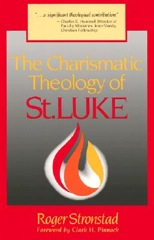
As theologian Roger Stronstad reminds us:

‘If for Paul the historical narratives of the Old Testament had didactic lessons for New Testament Christians, then it would be most surprising if Luke, who modelled his historiography after the Old Testament historiography, did not invest his own history of the origin and spread of Christianity with a didactic significance.’ (The Charismatic Theology of St. Luke, p7)

Not only that, but we have these oft-quoted words of Paul:

16 All Scripture is breathed out by God and profitable for teaching, for reproof, for correction, and for training in righteousness, 17 that the man of God may be competent, equipped for every good work. (2 Timothy 3:16-17)

Paul envisioned all parts of Scripture as God-breathed and useful for teaching. To say that certain portions of Scripture take precedence over others is not easily established from Scripture itself.

Luke Speaks For Himself

What I mean with this subheading is that, many times, theologians will try and squeeze Paul’s specific theological emphases into Luke’s theology. Thus, we end up reading Luke through a Pauline lens, which is not at all helpful.

Of course Scripture presents a harmonious whole. There is a unifying structure and nature to the entire text. But we need to give room for Luke to speak as Luke, rather than try and make Paul’s words fit into Luke’s words (or vice versa). For Luke is himself trying to teach us something about the Messiah, the mission of the church, the work of the Spirit, and a whole lot more. Let’s give this man room to teach us, even teach us apart from Paul’s own words.

Even more interesting, when it comes to the baptism and filling of the Holy Spirit, Luke speaks about these two issues many more times than Paul ever does. Consider these statistics:

  • Baptised in the Spirit: Luke 3 times; Paul 1 time
  • Filled with the Spirit: Luke 9 times; Paul 1 time

Not only that, but Luke utilises a lot of different phrases to describe these similar actions: the Holy Spirit came upon; the Spirit was poured out; the gift of the Holy Spirit; the Spirit fell on people; people received the Spirit. If we take all of these into account with regards to being baptised and/or filled with the Spirit, Luke has a lot to contribute on this topic. Our ears should be tuned to this man’s words.

Stronstad shares some more insights:

‘Consequently, just as the recognition that Luke is a theologian as well as a historian makes Luke-Acts a legitimate data base for the doctrine of the Holy Spirit, so the recognition that Luke is independent of Paul will broaden the New Testament data base for the doctrine of the Holy Spirit. To recognize these two facts is to rehabilitate Luke as a historian-theologian of the Holy Spirit and to allow him to make a significant, unique, and independent contribution to the doctrine of the Holy Spirit.’ (p11)

Thus, I agree wholeheartedly with this final statement of Stronstad:

‘On the one hand, where it is appropriate, all parties in the current debate must abandon those largely self-serving methodological programs which conspire to either silence or to manipulate Luke’s distinctive theology. On the other hand, all parties must develop a methodological consensus for interpreting the gift of the Spirit in Luke-Acts. At a minimum, this consensus must include the following principles: 1) Luke-Acts is theologically homogeneous, 2) Luke is a theologian as well as a historian, and 3) Luke is an independent theologian in his own right.’ (p12)

And just as a side note, another great work on how Luke should be viewed as not only historian, but also theologian, is I. Howard Marshall’s Luke: Historian & Theologian.

As we look to develop a holistic pneumatology, consistent with the full text of Scripture, we must not forget Luke’s words and set them aside as only secondary to the words of Paul. Of course, we must also not pit Luke and Paul against one another, noting they were part of the same ministry team at times and are both within the canon of Scripture. But Luke’s words will, no doubt, enrich our understanding of the work of the Holy Spirit. All we must do is allow for them to teach us.

The Prophetic Body of Christ

by Scott

The gift of prophecy is not some arbitrary gift given to the church so that we can sound super-spiritual and have goose-bump experiences. The gift of prophecy is given for a reason, for a purpose.

There is one major practical reason that prophecy is given to the church, which is stated this way by Paul:

On the other hand, the one who prophesies speaks to people for their upbuilding and encouragement and consolation. (1 Corinthians 14:3)

Prophecy will bear fruit when it is spoken – fruit that will bring edification, encouragement-exhortation, and comfort. It might also challenge, but that challenge, if heeded as God’s word, will still stir these three characteristics in the life of the believer. It can cause a fog to clear, despair turn to hope, deep worry resolve to peace, and much more.

But, while this is a major outcome of Spirit-directed prophecies, there is still yet a greater reason as to why prophecy is still given to the church today. This might sound over simplified, but it breaks down into these 3 points:

  • As the very Word of God, Jesus was and is the great prophet of human history.
  • The Holy Spirit was sent in His stead to continue the work of Jesus, including His prophetic work.
  • The Holy Spirit is given to the church so that they may be all of Christ in the world today, even the prophetic Christ.

In a simplified manner, that is how it plays out. Jesus >> Holy Spirit >> Body of Christ.

Jesus is the proto-type of every ministry within the body of Christ, from prophecy to mercy to teaching to shepherding to giving to healings to whatever ministry might come forth. Though it might sound somewhat cheesy, we really are called to start with Jesus as to the great example of every ministry made possible to God’s people.

And this is the key to making sure His ministry would continue: Jesus promised to send another Parakletos in His name, even the Spirit of God. That was the plan way back when.

I have always loved these words of Jesus:

Nevertheless, I tell you the truth: it is to your advantage that I go away, for if I do not go away, the Helper will not come to you. But if I go, I will send him to you. (John 16:7)

It was to our advantage that Jesus went back to the Father? Huh?

Yes, for in doing so He could send the Spirit that could now indwell and empower the whole body of Christ, not just a few select individuals. This was the cry of Moses centuries before Christ stepped onto the scene and promised His Spirit:

Would that all the LORD’s people were prophets, that the LORD would put his Spirit on them! (Numbers 11:29)

And, so, when the Spirit was poured out on all flesh – male and female, young and old – this was what the ‘special’ prophets had been longing for and what THE prophet had promised. Peter has a revelation himself at Pentecost that what they were viewing and hearing was a fulfilment of the words of the great prophet, Joel:

17 “‘And in the last days it shall be, God declares, that I will pour out my Spirit on all flesh,and your sons and your daughters shall prophesy,
and your young men shall see visions,
and your old men shall dream dreams;
18even on my male servants and female servants
in those days I will pour out my Spirit, and they shall prophesy. (Acts 2:17-18; from Joel 2:28-29)

The very Word-of-God-become-flesh promised to the give the very Spirit of God to His people. What a fantastic idea! For how could the body of Christ actually be Christ without His Spirit? How could we be Christ to one another and a hurting world if we did not have His indwelling and empowering Spirit? Well, we simply could not.

And, if the very Spirit of God was given by Christ to His church, would He expect anything less than for us to continue in all the varying ministries He Himself walked in? I cannot imagine such. The very Spirit of God who empowered the incarnate, fully human Son was also given to empower the current incarnate Christ in His fully human body, if you will. The hundreds of millions that make up Christ’s body today are Christ incarnate today. That’s exactly how He meant it. And Jesus knew that the best way to help us be Him in the world is to give us the same Spirit that empowered Him as a human man.

It truly is a marvellous plan.

So, in a much bigger sense, the gift of prophecy, while it is a blessing to us and we are strengthened by it, is given that we might continue the full work of Christ. And, again, every single ministry gift given has been given so that we might continue in the full work of Christ.

Thus, we find in this one of the main purposes of the Spirit of God being given to His church. It would not just be fine and dandy for Christ to charge us to continue His work without supplying and equipping us with His Spirit. We would have failed pretty miserably (though sometimes we do in the midst of such a provision). So, as the Father sent the Son, the Son now sends the Spirit. Quite a team.

This was to our advantage because, as a human-incarnate man, Jesus was only able to do so much by Himself. He touched many lives, but it was still limited as a human. But He knew that, as the exalted Christ, He could send His Spirit to empower literally billions down through the centuries to finish what He started.

This stirs me even now to complete His work, to catch the prophetic heart of Christ as I gather with the saints, have conversation with friends, and meet with the varying peoples that God brings into contact in my life. To have an ear attuned to what He might say, to speak it forth, and see it come as a kind of two-edge sword into the lives of people. This is a privilege.

But more than that one moment, we start to the get the sense that we are participating in something far larger than our tiny selves. We are walking out the very ministry of the Lord of heaven and earth. And, in doing so, we can be certain that we will see and taste the fruit of edification, encouragement, exhortation and comfort in the midst of prophecy. And that fruit will taste very sweet.

So, let us keep in mind that Christ has and always will desire that His body be a prophetic people. No gender barriers, no age barriers allowed, a true reality of the age of the Spirit. And we can, by the Spirit of God, speak forth the words of God that call people to be drawn in to the bigger purposes of God, the redemptive purposes of the kingdom of God. This stirs me deeply.

Renewed Emphasis on the Spirit

by Scott

I am not a man of nostalgia. I don’t particularly like to look back and wonder where the good ol’ days have gone. I recognise that a true disciple of the kingdom is one who brings out of his treasure both new and old (Matthew 13:52). Yet, I am one who is ever looking to keep his eyes fixed on the future, to where God is taking us. Thus, I hope you understand why I am not usually so stuck on reminiscing.

Yet, I will be honest, sometimes I long for God’s people to recover something, or someone, that can seem more active in the past than in the present. His name is Holy Spirit. I do believe that my generation has lost a little confidence in the presence and power of the Holy Spirit. I’ve heard countless stories of what the Holy Spirit did in the 1960’s and 1970’s, especially in the UK. And, yes, it was amazing and exciting. But the one word wrong with the previous sentence is this – WAS.

In one of Jesus’ last discourses before His crucifixion, He told His friends this:

And I will ask the Father, and he will give you another Helper, to be with you forever. (John 14:16)

The Holy Spirit was to be ‘another Helper’, just as if Christ Himself were actually there in the flesh. Jesus even had the audacity to say:

Nevertheless, I tell you the truth: it is to your advantage that I go away, for if I do not go away, the Helper will not come to you. But if I go, I will send him to you. (John 16:7)

An advantage, eh? How in the world is this an advantage?

Because Jesus would be able to pour out on all of God’s people the long awaited blessing – the Holy Spirit. The Spirit would be God Himself living inside and empowering His people to change planet earth. And so I believe we must have a renewed emphasis on the person of the Godhead who has come to be with us, live in us and clothe us.

In looking to be stirred towards a renewed emphasis, I highlight three points about the work of the Spirit:

1) Reason

We could easily ask the simple question, ‘Why has the Holy Spirit come?’ It is a good question, no, even more, a vital question to the life of the body of Christ in the world. And I do believe that Jesus made it quite clear as to the reason why the Holy Spirit has come. It is found in a very familiar Scripture:

But you will receive power when the Holy Spirit has come upon you, and you will be my witnesses in Jerusalem and in all Judea and Samaria, and to the end of the earth. (Acts 1:8)

There it is! That is the reason! The Holy Spirit has been sent and He has come to empower God’s people to complete the task for which God has called us – to be witnesses in all the earth. The Holy Spirit was not given mainly for tingles, nor to try and contain Him in our Sunday gatherings, but all that we might walk in the power of God so that we are equipped for serving and reaching others in our generation.

Amazingly, Jesus was not even afraid to say this about those who would believe in Him:

Truly, truly, I say to you, whoever believes in me will also do the works that I do; and greater works than these will he do, because I am going to the Father. (John 14:12)

As Christ went back to His Father, He would send the Spirit, and by the Spirit’s power we, as a company of God’s people, would be able to do greater works than Christ Himself. Not a qualitatively greater work, but a quantitatively greater work. One can do a lot, but billions can accomplish quite a lot more. And it is estimated that there are now well over one billion followers of Jesus in the earth.

Remember, what Christ says, He will make sure it comes true!

And so, we are challenged to remember the reason for which the Holy Spirit has come – to empower the saints to accomplish the work of God in reaching to the ends of the earth.

2) Revelation

Next, we need to consider that the Spirit is the Spirit of revelation. We are all probably familiar with this passage, which many love to quote:

No eye has seen, nor ear has heard, nor mind has conceived what God has prepared for those who love him. (1 Corinthians 2:9)

There is a song that is sung these days quoting this Scripture, one I even enjoy singing. But we need to read on, at least for one more verse:

But God has revealed it to us by His Spirit. The Spirit searches all things, even the deep things of God. (2:10)

How about that? There was a day in which many things were hidden in God, for even Jesus declared:

For truly, I say to you, many prophets and righteous people longed to see what you see, and did not see it, and to hear what you hear, and did not hear it. (Matthew 13:17)

But we live in a day in which the things of God have been revealed, and even are being revealed, by His Spirit.

Yes, we still live in an age in which we ‘prophesy in part’ (1 Corinthians 13:9). And I believe there will always be things which will not be revealed (see Deuteronomy 29:29; Isaiah 55:8-9). But we are still getting glimpses, we are still called to hear the voice of the Spirit who lives within in us.

Some will argue that 1 Corinthians 2:9-10 is speaking about God’s revelation to the first apostles, and thus, this does not apply to us. And, granted, I do understand such an argument. But, remember we have the same Spirit dwelling within us as the first apostles, and thus, we are an apostolic people called to hear our God in our generation.

This does not mean we write another letter to add to Scripture, nor does it mean this revelation will not be in line with what He has revealed in through the whole tenor of Scripture. But, I am convinced God is calling His people to be a verse 10 people, one by which He continues to reveal to us His heart by the Spirit of God.

When is the last time we heard Him speak? Whether it is in the gentle voice as with Elijah (1 Kings 19:12-13) or in the whirlwind as with Job (Job 38:1), we desperately need to hear from the Holy Spirit. Listen to what Jesus said about our ears:

But blessed are your eyes, for they see, and your ears, for they hear. (Matthew 13:16)

We have One who lives in us that is a friend, One who wants to speak to us. Remember that He is another exactly like Jesus. With His presence within, it should be as if Jesus were right here with us. I know this is challenging, but I want to be drawn in and cultivate a deeper, intimate relationship with the Holy Spirit.

3) Response

Finally, if the Spirit is one who speaks, then we must, as the people of God, be willing to respond to His voice. The writer to the Hebrews reminds the Jewish believers of his day:

Today, if you hear his voice, do not harden your hearts. (Hebrews 4:7)

Now, as encouragement, keep in mind that we have been given new hearts by the One who drew us to Himself (see Ezekiel 36:26). We are new creations (2 Corinthians 5:17). So we are actually at an advantage in responding to our God.

I, myself, want to understand more and more what Paul meant when He exhorted the believers in Ephesus:

Do no grieve the Holy Spirit of God. (Ephesians 4:30)

In the context, Paul is probably referring to the words that come from our mouths (see 4:29). Oh, that only blessing would come from my lips, emulating the One whose words were gracious (Luke 4:22). But I believe grieving the Holy Spirit can go beyond just our words. The Spirit is speaking. Thus, I want to be listening. But I don’t want to stop there. I want to be obedient to His voice.

Interestingly enough, when the Scripture speaks of God hearing our prayers, it is actually referring to His response to our prayers (see Psalm 6:9; 66:19). The same is to stand true for us. We are to be hearers of God’s voice and responders.

Before Stephen was stoned, he told the Sanhedrin:

Our fathers refused to obey him. (Acts 7:39)

Oh, that we would not be like the Israelites who very rarely listened to and responded to the voice of God. Oh, that we would not grieve our great Friend who dwells within.

I believe that, as we bear in mind the reason the Spirit was given, the revelation of the Spirit and our response to the Spirit, we will begin to walk out the greater works which Christ has called us to. These are the days following Pentecost in which Christ gives the Spirit without measure (John 3:34). Let a passion be rekindled within us to pursue such a relationship with the Holy Spirit.

Who Are the Ones Gifted by the Holy Spirit?

by Scott

There was a recent article posted over at the Gospel Coalition on the gifts of the Spirit being given to all God’s people. The author of the article, Juan Sanchez, states:

Paul continues to undermine the basis for the boasting of the pneumatics (i.e., those who think they are spiritual because of the manifestation of spectacular gifts) by reminding them that All who have the Spirit are also gifted with gifts of the Spirit: charismata.

He quotes Paul’s words in 1 Corinthians 12:7,11 to show such. Sanchez goes on to exclaim:

In other words, no one has any basis upon which to boast about spiritual giftedness, because each Christian not only has the Spirit but also has spiritual gifts (charismata). This was, after all, part of the promise of the new covenant (Acts 2:39) – that ALL God’s people would manifest the Holy Spirit:

Thus, a challenge, a rather good one, is presented near the end of the article:

So, if you are a Christian, you are gifted by the Spirit for ministry! Do you believe that? If so, then serve! We are not to be consumers; consumerism is contrary to the gospel and contrary to the Spirit’s work in us. May the Lord forgive us for our American evangelical McChurches, where we invite people to “sit back, relax and enjoy the show.”

Click here to read the full article.

Four Positive Scriptures for Continuationism

by Scott

In the past, I have addressed four major passages of Scripture that cessationists might typically use to discount the continuation of all gifts of the Spirit following the first century (or sometime there abouts). Those four passages are:

In my article, I specifically showed how I believe these four passages are, often times, misunderstood and misused by cessationists to teach that there was an expectation in the first century that certain gifts (supernatural gifts or miraculous gifts or sign gifts) were to cease as we moved toward the full and faithful teaching of the first apostles now recorded in the New Testament.

I don’t say these words – misunderstood or misused – arrogantly. Yet, I still believe that if we read the passages carefully and fully consider what they are teaching, we will see that none of these four give solid ground for the case of cessationism.

Of course, there are other passages that could be dealt with from a cessationist standpoint (i.e. Ephesians 2:20 – that apostles and prophets were foundation layers and we no longer need a foundation to be laid since it was laid once for all time in the first century). But I decided to mainly focus on those four passages, though I have addressed the Ephesians 2 verse in another article.

But, while, at times, it is good to address how another viewpoint utilises certain passages, it is also quite healthy to lay out Scripture passages that would support one’s own specific view. So we don’t just take up the ‘polemical approach’ or addressing what we consider wrong, but we also take up the ‘apologetic approach’ in confirming what is true.

I’m not talking about moulding passages to fit our view, though it is easy to fall into that trap here and there (and I’m sure I could be accused with the form four passages and what I will address in just a moment in this post). But we can’t just defend against another view. We have to make sure Scripture actually teaches what we believe it teaches.

Thus, there are four major passages I would like to point out that I believe give a positive case for the existence of all spiritual gifts from Christ’s first advent to second advent. Those four passages are:

John 14:12

These words in John 14 are well-known, at least to most charismatics and Pentecostals:

Truly, truly, I say to you, whoever believes in me will also do the works that I do; and greater works than these will he do, because I am going to the Father.

I don’t want to spend an immense time on this passage, as my partner in crime, Marv, has done fine exegesis on it here. But I will share a few of my own thoughts.

I know that for many, this passage can merely be put down to talking about doing more evangelism, reaching more people than the one Christ could in His incarnation. And while I absolutely support such a notion, I would argue that to say it only speaks of that is a bit reductionistic. It misses the bigger picture

I believe this statement entails all of the works of Christ. He simply meant it that way. I love the first words of Luke in Acts 1:1:

In the first book, O Theophilus, I have dealt with all that Jesus began to do and teach.

Christ, in His incarnation, had only begun to do and to teach. There was a lot more work to accomplish. A lot more! Hence, the Father and Son had this great plan to send the Spirit to indwell all of God’s people to empower them to do the works that Jesus did. It’s absolutely astounding that Christ Himself would want His body, in the power of His Spirit, to continue the works He did.

Of course, this is not limited to gifts of the Spirit as listed in 1 Corinthians 12:8-10. Nor is this just about miracles and healings. It is about that. But not only about that, just as it was not only about evangelism.

And Jesus said these wonderful words, ‘whoever believes in me’. That’s challenging, but a good challenge for us who are believers. The works of Jesus, in all their variety, which includes miracles and healings and prophecy, are available to the Spirit-indwelt and Spirit-empowered body of Christ. There is no denying this or reducing this. All of the works of Christ are available to all of the body of Christ, not just the spiritually elite nor the spiritually elite of 1900 years ago.

Acts 2:17-18

I love Acts 2:17-18, where, at Pentecost, Peter quotes Joel’s prophetic words from centuries before:

17 “‘And in the last days it shall be, God declares, that I will pour out my Spirit on all flesh, and your sons and your daughters shall prophesy,
and your young men shall see visions,
and your old men shall dream dreams;
18 even on my male servants and female servants
in those days I will pour out my Spirit, and they shall prophesy.

After the Spirit had fallen on the 120 like never seen or known before, Peter has a revelation: This is the fulfilment of Joel’s words spoken so long ago. Joel said that, in the last days, God would pour out His Spirit on all flesh. This was happening right in front of eyes and ears as these tongues of fire descend and these new tongues are spoken.

The last days had just been initiated way back then. This was not to be some few final years of planet earth. The last days began some 1977 years ago at that great Pentecost.

What was the fruit of this outpouring?

That God’s people would become of prophetic community. Oh sure, God would continue to have those specifically gifted as prophets (1 Corinthians 12:28; Ephesians 4:11; etc). But from now on, during the last days of the Messianic age when Messiah would reign over all heaven and earth, God’s Spirit would allow all of God’s people to be utlitised in the prophetic. Moses had longed for it (Numbers 11:24-30), but this was the beginning of the prophethood of all believers, as I’ve written about before.

This work of the Spirit would break all gender barriers and age barriers: sons and daughters; young men and old men; male servants and female servants.

Because the last days are the entire age from Pentecost onwards (or we might technically say first advent of Christ to second advent), we must expect God’s people to always function as a prophetic community. This includes revelations, prophecies, visions, dreams, words of knowledge, words of wisdom, etc. None of this has to be leather bound and added to the New Testament, and thankfully Scripture stands as a measuring stick of whether such prophetic action is truly of God today. But there is no doubt that the last days are to be a continuing work of Jesus by the prophetic Spirit amongst His church in the world.

1 Corinthians 13:8-12

8 Love never ends. As for prophecies, they will pass away; as for tongues, they will cease; as for knowledge, it will pass away. 9 For we know in part and we prophesy in part, 10 but when the perfect comes, the partial will pass away. 11 When I was a child, I spoke like a child, I thought like a child, I reasoned like a child. When I became a man, I gave up childish ways. 12 For now we see in a mirror dimly, but then face to face. Now I know in part; then I shall know fully, even as I have been fully known.

For an in depth look at my thoughts on this passage, I would encourage you to read this article. But, suffice it to say, the ‘perfect’ of this passage is not the completed New Testament canon. I believe the New Testament canon is the God-breathed Word. I’m not into backing away from that reality. But the perfect that Paul speaks about in this passage was not the awaiting of the New Testament.

He was awaiting the perfect One, the perfect ending, where we would see ‘face to face’ and we would ‘know fully, even as [we] have been fully known’. This is quite obviously talking about the final consummation of all things when Christ brings the fullness of His kingdom.

Thus, prophecies and tongues and [words of] knowledge (vs8) have not yet been done away with.

Ephesians 4:11-16

11 And he gave the apostles, the prophets, the evangelists, the shepherds and teachers, 12 to equip the saints for the work of ministry, for building up the body of Christ, 13 until we all attain to the unity of the faith and of the knowledge of the Son of God, to mature manhood, to the measure of the stature of the fullness of Christ, 14 so that we may no longer be children, tossed to and fro by the waves and carried about by every wind of doctrine, by human cunning, by craftiness in deceitful schemes. 15 Rather, speaking the truth in love, we are to grow up in every way into him who is the head, into Christ, 16 from whom the whole body, joined and held together by every joint with which it is equipped, when each part is working properly, makes the body grow so that it builds itself up in love.

I’ve personally been doing a very long series for the past few months on apostles today and what all that entails, of which I have posted about 17 articles already over at The Prodigal Thought. You can click here for the first one or do a search on the category sidebar of my blog for ‘apostles’ or ‘apostles today’.

But, at least from the perspective of the ministry of the prophet in this passage, we are told some very helpful information about the enduring nature of that ministry. We are told that Jesus has given these five (or some argue for four) ministries spoken of in Ephesians 4:11 to help equip God’s people to do the work of ministry. They are equippers of the body so that the body can get on with the work of Christ. And I wonder what work(s) Paul had in mind? Possibly the works of Christ, going back to John 14:12.

But vs13 of Ephesians 4 is very important here. It tells us about the duration of these gifts: until we all attain to the unity of the faith and of the knowledge of the Son of God, to mature manhood, to the measure of the stature of the fullness of Christ.

Well, I think everyone could easily agree that we are not there yet. The word ‘until’ denotes we are headed that way. But we all know we have not reached the point. And we might not be as far along as we had hoped after 1900 years.

Hence, Jesus still gives all five of these ministries. Not just shepherds or evangelists or teachers, though they provide a necessary part. But all five to help equip us and prepare us to move towards the unity of the faith and the knowledge of the Son of God. Prophets (and apostles also) are still needed. Again, it doesn’t mean we are to add a new book to the Bible and call it 2 Romans or 1 Chicago. But we need their ministry to help equip us. And prophets will be very helpful in seeing the body formed into the prophetic community we have been called to, for Joel (and Peter) prophesied of the prophetic community of this new covenant age.

Therefore, I believe this ministry is absolutely vital until we reach that place of unity in the faith and become mature, reaching the full stature of Christ. I would even argue that we would be found somewhat lacking if we do not allow for this ministry in our midst, just as we would be found lacking without shepherds, teachers and evangelists.

Thus, these are four very strong passages that have helped me realise that Jesus still desires that all the gifts be utilised in the present age as He reigns at the right hand of the Father. I don’t want to put my eggs solely in the basket of miracles, healings, prophecy, tongues, etc. But I do want those gifts to be a few of the eggs that go in the ‘full basket’ of what Christ has called His body to by the empowering of the Spirit.

All I can say is this provides for both an exciting and challenging move forward in seeing the kingdom come on earth as it is in heaven. I’m up for such an exciting challenge.