By Marv
So what about walking on water? I’m sometimes asked why this miraculous act is not repeated today if whoever believes in Jesus really will do the works that He did (John 14:12), as we repeatedly assert.
It’s actually a reasonable enough question, especially if you consider John’s admonition and take it rather on the literal side:
Whoever says he abides in him ought to walk in the same way in which he walked.(1 John 2:6)
I do have an answer for this question. But first, let’s put the matter into perspective. An awe-inspiring miracle, this event without question defies both gravity and physics. What it doesn’t defy is the power of the God who made the earth and sea and everything in them. Yet, let’s be clear, it was never in the top ten of frequently-performed miracles.
As far as we are told, it was done by exactly two human beings: One who exectuted it flawlessly, and another whose showing can barely be called a success. Our Lord, the God-man had no difficulty whatever hiking across the waves. Still, the fact that Peter did it at all, however poorly, shows us that it is a case of divine power mediated through a human being. It’s what I call a human-level miracle (God’s power manifested though man).
What’s a God-level miracle, or display of divine power?
All things were made through him, and without him was not any thing made that was made. (John 1:3)
He upholds the universe by the word of his power. (Hebrews 1:3)
And he is before all things, and in him all things hold together. (Colossians 1:17)
A walk on the lake, then, is… a walk in the park…
No mere human is ever said to do what Christ does through His own divine power. This is rather obvious. Yet, during his time on earth, we do see Him performing amazing miracles, but like walking on water, something that a mere man can do as long as “God is with him.”
And this is exactly how Christ’s miracles are described:
God anointed Jesus of Nazareth with the Holy Spirit and with power. He went about doing good and healing all who were oppressed by the devil, for God was with him. (Acts 10:38)
This is what it means that He was “anointed,” though He Himself is the Second Person of the Trinity (infinitely powerful in His own Person), according to the divine plan, carrying out His mission as a human being, He is empowered through the Third Person of the Trinity, the Holy Spirit.
This is entirely deliberate, since the plan entails rasing up many brothers and sisters who can likewise carry out their mission through the power of the Third Person. Unlike Jesus–again obviously–they have no innate divine power of their own. Thus He did what He didn’t have to–operate under the Spirit’s power, so as to later cause us to share in His ministry as His Body.
So, what are we saying? That when Jesus walked on water He did so through the power of the Holy Spirit. So did Peter, though his faith was weak: “O you of little faith, why did you doubt?” (Matthew 14:31)
Aha! So it’s a faith deal! Clearly. So can we manage to do it if we have enough faith?
Herein lies a misunderstanding. It is true that Peter failed due to lack of faith. But he suceeded to the degree that he had a measure of faith. But we need to understand that one thing was absolutely indispensible or else Peter could have had no faith at all.
Faith is not positive thinking, pumped up self-confidence, banishing doubt from your mind. It’s not any kind of ego-quality. It is other focused. Specifically, it is reliance on the promise of a reliable person. That person says X, so X it is. We consider the person reliable, faithful, and so we trust, rely on what that persn says. And act on it. Apart from a promise, there can be no faith.
Our confidence in that person’s reliablity can be weak or strong, and this can make a difference. It did so in Peter’s case–and so the failure.
Of course this person’s reliablity can also be weak or strong. In the case of God, it is absolute–and so the measure of success in Peter’s water walking. He couldn’t do it at all, not a single step, if he didn’t have an absolutely reliable promise that it would work.
Did he have such a promise? Yes. Note the exchange:
And Peter answered him, “Lord, if it is you, command me to come to you on the water.” He said, “Come.” So Peter got out of the boat and walked on the water and came to Jesus. (Matthew 14:28-29)
When it comes from our Lord, a command is a promise. Peter did not step out on the surface of the lake in bold self-confidence, thinking “if he can do it, I can do it.” He knew enough that if Jesus said it, he could do it. And that what He commanded, Peter could put his total confidence in, and do it. And so he asked for a command.
For I too am a man under authority, with soldiers under me. And I say to one, ‘Go,’ and he goes, and to another, ‘Come,’ and he comes, and to my servant, ‘Do this,’ and he does it.” (Matthew 8:9)
Excellent theory, and good practice for a few seconds, at least. Then he got weirded out.
But you and I can walk on water, too, no problem–if Jesus commands us to do so. That’s an industrial strength IF though. Because He apparently doesn’t work that kind of thing in very often. It would have come in handy for Paul, who otherwise mangaged raising the dead, inflicting blindness, handling snakes, that sort of thing:
Three times I was shipwrecked; a night and a day I was adrift at sea. (2 Corinthians 11:25)
So that the Lord will give us that particular command may be unlikely. Though if He ever does, your potential to water-walk is 100%, if you can believe it.
On the other hand, he commands us, instructs us, intends for us to do many, many other things–acts which are not uncommon in His Kingdom. But they all likewise flow from His particular communication to us. Understand, He’ll glorify Himself in many, many ways in answer to our prayers, even if we have no particular command. But to act in faith requires a promise which is a command or a command which is a promise.
This is how Jesus operated, during His ministry. He makes this crystal clear:
So Jesus said to them, “Truly, truly, I say to you, the Son can do nothing of his own accord, but only what he sees the Father doing. For whatever the Father does, that the Son does likewise. For the Father loves the Son and shows him all that he himself is doing. And greater works than these will he show him, so that you may marvel.” (John 5:19-20)
And nine chapters later:
Truly, truly, I say to you, whoever believes in me will also do the works that I do; and greater works than these will he do, because I am going to the Father. Whatever you ask in my name, this I will do, that the Father may be glorified in the Son. If you ask me anything in my name, I will do it. (John 14:12-14)
This is why the reality of ongoing communication from Christ to us His servants, through the Holy Spirit, is absolutely vital to our carrying out His works and our mission. He has made us for works and prepared works for us to do (Eph. 2:10), and we are to do them in full confidence, faith, in His power. And if he tells us to, we can, and we will.

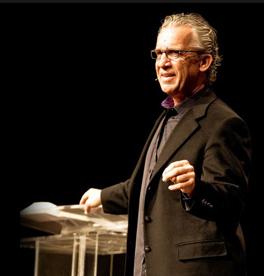 I came across something while listening to a Bill Johnson message, from Bethel Church, titled Extreme Living (part 2), recorded in 2007, and it so encouraged me, so specifically touched me in areas that I’ve been thinking and praying about, that I thought I’d share them with you. Actually, just about anything Bill Johnson is a supercharge of faith-building vitamins. But I especially appreciated these few paragraphs about how the Spirit speaks to us and we listen.


 To Be Continued...