Tag Archives: apostles

Apostles in the New Testament (Part 2)

by Scott

In the last post, I started looking at the specific role and gift of apostle. My plan is to slowly work through these three sub-points:

  1. Apostles in New Testament Scripture.
  2. Objections to the existence of apostles today.
  3. What an apostle actually is.

And, of course, each sub-point will have a few articles. I know it seems slow and tedious, but I think it is helpful to slowly work through some of the concepts and biblical texts that surround this, since I am purporting a not-so-popular-belief that apostles (and prophets) still exist today.

I have decided to start by simply looking at the varying apostles (or probable apostles) in the New Testament, for I think this can be an eye-opener to many. As I stated in the last article, when we think of apostles, we usually think of something like this:

  • The twelve
  • The twelve and Paul
  • Scripture writer

But what we can fail to recognise is that a) there were quite a few more apostles than we originally thought, b) Paul was not specifically tied into the ‘twelve apostles of the Lamb’ (Revelation 21:14), c) nor was Scripture writing the first and foremost calling of an apostle, since many apostles never penned anything and there were a handful of people who did author parts of Scripture but were not apostles. Continue reading

Apostles Today? Two More Brief Reasons Why

by Scott

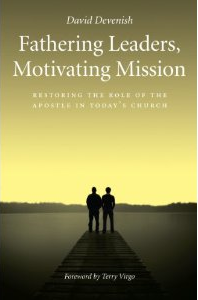
I recently posted about a new book I have begun reading, a book on the modern-day ministry of apostles authored by British church leader, David Devenish – Fathering Leaders, Motivating Mission: Restoring the Role of Apostle in Today’s Church. Remember, I am one of those guys (not the only one) who believes this role (along with all ministries spoken of in Eph 4:11-13) to be very important in seeing the people of God equipped for works of ministry and preparing them to move towards maturity. At least that’s how Paul articulates it in Eph 4.

I’ve been spending time here lately on To Be Continued sharing why I believe this ministry (yes, ministry, not so much ‘office’ or ‘position’) is still active today. But as I was reading Devenish’s book, he brought out two points that I never really considered before as to why apostles would exist today, or post-first century. They are not major, eye-openers as to solve the debate that might exist for some Christians. Nevertheless, I thought I would share those two points below and then encourage you to read my series here at the blog. Continue reading

New Book on Modern Day Apostles

by Scott

Yes, I am the nut case who believes apostles still exist today. I’m even posting a series here at To Be Continued, of which I am about half-way through. I recently posted considering the apostles that actually existed in New Testament times (there were more than we think!).

In the near future, I am writing a paper for the churches I work with, and one major point I will consider is the nature of apostolic ministry today. And so I was specifically made aware of a new book that came out this past summer entitled Fathering Leaders, Motivating Mission: Restoring the Role of Apostle in Today’s Church. Continue reading

Apostles in the New Testament (Part 1)

by Scott

It’s been a few weeks since my last post, but it is time to move on into the more ‘debatable’ issues with regards to my current series on the Ephesians 4 ministry gifts, based out of the passage of Ephesians 4:7-16. Here are some of the summary thoughts so far from past articles:

  1. Upon his ascension to the Father, Jesus began gifting people in all five of the Ephesians 4 ministries – apostles, prophets, evangelists, shepherds (pastors), and teachers. As the Ephesians passage makes clear, these ministries are given to equip the body of Christ and help prepare them to outwork the ministry of Christ in the world today. (You can read more from me here.)
  2. Jesus Christ was the greatest to function in all five of these ministries – the greatest apostle, the greatest prophet, the greatest evangelist, the greatest shepherd and the greatest teacher. The body of Christ can only function in these ministries as we look to him who was faithful in all five. (You can read more from me here and here.)
  3. The Holy Spirit was sent in the place of the resurrected and ascended Christ, all to continue the full work of Christ. As ‘another Helper’, just as if Christ were still here in active ministry, he is the apostolic, prophetic, evangelistic, shepherding and teaching Spirit. (You can read more from me here.)
  4. The body of Christ, as a whole, are to be empowered by the Spirit of God as we look to continue to be all of Christ to all of the world. That means that we are to function as an apostolic, prophetic, evangelistic, shepherding and teaching community of God’s people. Again, the concept is pretty simple, and biblical, but we are to walk out all that Christ himself walked out since we are His body on earth today. (You can read more from me here.)
  5. Finally, my past two articles have been looking at some practical areas – why this all matters and what ‘general’ fruit we should already expect from those gifted in these areas.

But, let’s be honest, the question really is this: Does Christ actually still gift people in all five of these ministries today, especially as apostles, and even prophets? Continue reading

Some Practical Thoughts on Apostles & Prophets Today

by Scott

I am well aware that many people would disagree with my conclusion that apostles and prophets are still much needed amongst the body of Christ. I believe one main reason they are given is to help God’s people continue to be fully equipped and prepared for works of service in the world today. At least that is what Paul indicates in Eph 4:11-16. And, interestingly enough, he says that these gifts were given until we all attain to the unity of the faith and of the knowledge of the Son of God, to mature manhood, to the measure of the stature of the fullness of Christ’.

I think we would all agree we are not there yet, hence my strong belief in the continuing need of these ministries to help us move towards that goal of unity and maturity. And with Jesus being the greatest one to ever function in all five of these ministries, and with him sending the Spirit to continue in all five of these ministries, then I would only, could only, expect that he would desire his body to continue functioning in all five of these ministries.

Of course, many would say, ‘It’s not that simple, Scott.’ Well, I lean towards it being that simple. But I am willing to walk down the well-worn path of biblically and theologically considering all things necessary. Continue reading