Tag Archives: resource

Top Ten Posts at To Be Continued

by Scott

So Marv and I have been writing and interacting on this blog for about 9 months now. I think we are still looking to stay true to the intent and purpose of the blog. Simply stated, our goal is to put forth a solid biblical, theological and historical case for continuationism, or the continuation of all gifts of the Spirit until Christ returns.

Of course, Marv and I don’t see eye to eye on every detail. But we see that as a plus. Two guys, very different, very different in other areas of theology, but working together to testify to the reality that the same Spirit that was active in biblical times is also active today in those exact same ways.

So, after 9 months of posting, here are the top 10 posts from To Be Continued based upon the calculation of ‘hits’ from the WordPress statistics.

1. Book Review of Jack Deere’s Suprised by the Power of the Spirit. A solid book both theologically and practically on the continuance of gifts. Deere has a powerful testimony of how he came into the things of the Spirit.

2. The Author Page. Hey, people want to know how these two nuts are posting articles.

3. The Charismata in Church History. Though many people think the major workings of the Spirit began to die out soon into the second century, here are many quotes from early church fathers noting the activity of God’s Spirit in things like prophecy and healings.

4. Book Review of Roger Stronstad’s The Charismatic Theology of St. Luke. A wonderful, theological, yet shorter, treatise giving a survey of Luke’s pneumatology from both his Gospel and Acts. I believe Stronstad will challenge us with things we never saw in Luke’s 2-volume work.

5. The About Page. People want to know what this blog is all about.

6. Our PDF Document Interacting with Michael Patton. Michael Patton wrote a series entitled ‘Why I’m Not a Charismatic’ (here is the PDF document). Marv and I decided to interact with that series. Actually, I recently updated the PDF document to include our two series together in more of a free-flowing dialogue between Michael’s series and our series.

7. The Case for Continuationism by Sam Storms. Storms is from Enjoying God Ministries and in this specific post, we note his 12 bad reasons for being a cessationist.

8. An Example of Hearing God’s Voice. Here, I simply give an example from John Eldredge’s book, Love & War, in which he shares a specific time when he heard God speak to him. It’s important to hear real stories from real people with both feet on the ground. It helps encourage us that we can hear God’s voice and it doesn’t have to be spooky.

9. The Best Continuationist Essay Ever Written by a Cessationist. This is an article by Vern Poythress, who is a cessationist himself, but gives quite good arguments for continuationism.

10. Book Review of Ken Berding’s What Are Spiritual Gifts. Berding challenges the typical ‘conventional’ view about spiritual gifts. I wouldn’t agree with every nuance, but I love his challenge to what I also believe is a very wrong understanding about spiritual gifts in much of the church.

Interaction with Michael Patton

by Scott

Those who follow our blog at To Be Continued, you might remember that, back in the summer, Marv and I interacted with Michael Patton’s in depth series entitled, Why I Am Not A Charismatic.

At the time, we made a PDF document available, as Michael had previously done as well. Well, rather than the previous two PDF documents being posted – Michael’s and our’s – I am now posting one PDF document that incorporates both series into the one document. So, what you have in this new document is Michael’s part 1, followed by ours, Michael’s part 2, followed by ours, etc, etc, all the way through to the full 8-part series. I believe this will allow for a better reading flow and make it easier to follow our interaction with Michael’s series.

So, for those interested, here is the link to the one PDF document that incorporates both series into one easier to follow document: Response to Michael Patton’s “Why I’m Not Charismatic”.

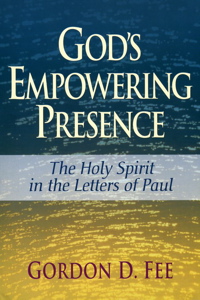
God’s Empowering Presence – Resource

by Scott

I believe very much that, for any true student of theology wanting to grow in their pnuematological understanding, especially for all continuationists, then an extremely solid resource to own is Gordon Fee’s work, God’s Empowering Presence: The Holy Spirit in the Letters of Paul. Fee, himself is a New Testament scholar and professor emeritus from Regents College in Vancouver, Canada. He is also an ordained minister in the Assembly of God church. You can read more of his credentials here.

Nevertheless, this book is a treatise unlike many others, standing in at just over 900 pages long. So I would say this is more a study resource, rather than a bed-time read.

What is truly unique about the book is that it analyses every single mention of the Holy Spirit and his work within the letters of Paul. Fee doesn’t start with Romans (as that is the first Pauline letter in our NT canon), but rather with 1 Thessalonians, which is considered one of Paul’s early letters. He then moves on to 2 Thessalonians, 1 Corinthians, 2 Corinthians, Galatians, Romans, Philemon, Colossians, Ephesians, Philippians, 1 Timothy, Titus and, finally, 2 Timothy.

The last 100 pages or so deal with important theological topics on the Holy Spirit including such themes as the Spirit as eschatological fulfilment, the Spirit as God’s personal presence, the soteriological Spirit, the Spirit and the people of God, and then answering what all of this Pauline pneumatology means (which includes touching on Old Testament and intertestamental pneumatology). And, of course, there is an extended bibliography.

You can see that some of this work implements his writings from other works, like his commentary on 1 Corinthians or his work, Paul, the Spirit, and the People of God.

The only pneumatological resource that could be considered better is if an author took up the challenge of providing commentary on every verse in the New Testament that speaks of the Holy Spirit and His activity. Maybe it’s out there, or maybe it will be released one day. But I suppose that would be at least a 2-volume work weighing in at a 1500+ page length.

Two Books and an Interview About the Holy Spirit

by Scott

Over at Between Two Worlds, blog of Justin Taylor, he recently posted an article that tells of two books on the Holy Spirit by author Graham Cole. Cole is currently professor of biblical and theological studies at Trinity Evangelical Divinity School.

The two books are He Who Gives Life: The Doctrine of the Holy Spirit (which is a more theological work) and Engaging with the Holy Spirit: Real Questions, Practical Answers (which is a more accessible book to all people).

It seems Cole is more of a cessationist, but his book receives a positive recommendation by C.J. Mahanney (a continuationist) for both books.

But, more interesting on Justin Taylor’s blog is a short interview between him and Cole. There are four specific questions discussed, but I thought this one about the Spirit’s filling in Ephesians 5:18 presented some good things to chew on.

———————————–

We are commanded to “be filled with the Spirit” (Eph. 5:18). How do we do that?

A great question!

The first thing to notice is that Ephesians 5:18 is addressed to a congregation.

Next, it may be translated “Be filled by the Spirit!” In fact, in context Paul is contrasting the sort of behaviors you see in a pagan assembly (e.g., drunkenness) and what is to characterize a Christian one (e.g., making melody in your [plural] heart [singular] to the Lord and submitting to one another out of reverence for Christ).

In my view, it is not about power for service for the individual. We obey this command when our Christian meeting is filled by the Spirit with these kinds of practices. Then we truly are the temple of the Holy Spirit that Paul speaks of in Ephesians 2.

However, Paul specifies no steps. So what’s the way forward? I suggest Acts 4 provides a paradigm case. These early Christians gathered in the face of persecution and prayed for boldness to proclaim the gospel. Interestingly they did not pray to be filled with the Spirit. And what did God do? He filled them with the Spirit and they spoke boldly indeed. So I would counsel if you want to be filled with the Spirit, set your heart and life prayerfully on the next step of Christian faith and obedience and you will be filled with the Spirit.

Back to Ephesians 5. When we as a congregation prayerfully fill our meeting with the practices set out in Ephesians 5:19-21 we can trust that our assembly really is the temple of the Spirit. In these practices the focus shifts from me to the Lord, and my brothers and sisters.

———————————–

Click here for the rest of the article at Between Two Worlds.

The Charismatic Theology of St. Luke

A couple of weeks ago, I posted an article about a solid theological book on pneumatology, that is, the doctrine of the Holy Spirit. It was entitled, The Holy Spirit and Spiritual Gifts: In the New Testament Church and Today by Max Turner, professor at London School of Theology. The book must be one of the more modern better books on pneumatology. Well, here is another pneumatological title, The Charismatic Theology of St Luke, by Roger Stronstad.

To start out, one of the pluses of the book is that it is a mere 83 pages. Now, of course, one might say, ‘Only 83 pages as an academic work. Are you sure it’s good?’

Well, I am quite aware of the fact that all things cannot be covered in a 300+ page book, like Turner’s, much less an 83-page book. But I was quite intrigued that Stronstad was able to faithfully look at quite a few things in such a shorter work. He was even pulling in references from various sources, including quite a few intertestamental writings as he looked at some later-BC Judaistic views of the Spirit.

Stronstad is a Pentecostal scholar, so I would tend to agree with a lot of things he has put forth in the work. But I would also couple that with stating that he is quite balanced in his approach.

Yes, he does believe the baptism, or initial filling of the Spirit, can be received following salvation-initiation. But I do not believe he is one to argue too far over the top, stating that this is the only way. He even ends out in his final chapter with some practical and pastoral challenges such as 1) not seeing tongues as the initial evidence of receiving the Spirit or that 2) we steer clear of a two-tier class of Christianity. Both are not biblically warranted, to which I agree.

There are three major and important contributions in Stronstad’s work that I point out in this article:

1) He shows the strong connection between the infancy-inauguration of Luke’s Gospel with the Pentecost initiation narrative of Acts. Stronstad states:

‘In the structure of Luke-Acts, the Pentecost narrative stands in the same relationship to the Acts as the infancy-inauguration narratives do to the Gospel. In the Gospel of Luke these narratives not only introduce the motifs which define the mission of Jesus, but they also show that Jesus will execute His mission in the power of the Holy Spirit. In a similar manner, the Pentecost narrative introduces both the future mission of the disciples and the complementary empowering of the Spirit.’ (p49)

He also makes this statement just a few pages earlier in regards to the parallel accounts of Luke’s narrative Gospel and Luke’s narrative of Acts:

‘The Gospel [of Luke] is the story of Jesus, the unique charismatic Prophet; the Acts is the story of His disciples, a community of charismatic prophets.’ (p34)

No wonder Stronstad would later publish the book, The Prophethood of All Believers, of which I also wrote an article about here.

2) Stronstad also shows how Luke must be considered both historian and theologian, not simply historian. This is not always accepted in biblical-scholarly circles. But doing so will be of great help to us as we consider a full and holistic biblical pneumatology. He makes this important statement in his work:

‘Consequently, just as the recognition that Luke is a theologian as well as a historian makes Luke-Acts a legitimate data base for the doctrine of the Holy Spirit, so the recognition that Luke is independent of Paul will broaden the New Testament data base for the doctrine of the Holy Spirit. To recognize these two facts is to rehabilitate Luke as a historian-theologian of the Holy Spirit and to allow him to make a significant, unique, and independent contribution to the doctrine of the Holy Spirit.’ (p11)

He, then, goes on to challenge our thinking with these words:

‘On the one hand, where it is appropriate, all parties in the current debate must abandon those largely self-serving methodological programs which conspire to either silence or to manipulate Luke’s distinctive theology. On the other hand, all parties must develop a methodological consensus for interpreting the gift of the Spirit in Luke-Acts. At a minimum, this consensus must include the following principles: 1) Luke-Acts is theologically homogeneous, 2) Luke is a theologian as well as a historian, and 3) Luke is an independent theologian in his own right.’ (p12)

3) Connected to the last point, Stronstad also emphasises that Luke and Paul have different emphases in their pneumatology. Of course, their theology is to be harmonized as part of the whole of Scripture’s teaching. Yet, within Paul’s writings, we continually read of the soteriological necessity of the Spirit, which sees the work of the Spirit as bringing people into sonship with God and incorporating them into the body of Christ. But, in Luke, the Spirit is recognised as the Spirit of prophecy that empowers God’s people for mission and service.

And we see this as we compare the use of certain phrases in both Luke and Paul. Interestingly enough, Luke uses the phrase, ‘baptised in the Spirit’, 3 times while Paul only uses it once. Even more, Luke uses the phrase, ‘filled with the Spirit’, 9 times of which Paul only refers to it once as well. Maybe Luke will help inform our pneumatology a little more than we had first thought.

Thus, we see that Stronstad puts forth the arguement that Luke’s pneumatology is about the Spirit being given for witness and service. Hence, why he would argue that the Spirit, from a Lukan-charismatic perspective, could be received post-salvation. He states:

‘If we have interpreted Luke’s Pentecost narrative correctly, then the gift of the Spirit is not for salvation, but it is for witness and service. In other words, with the transfer of the Spirit to the disciples on the day of Pentecost, they become a charismatic community, heirs to the earlier charismatic ministry of Jesus.’ (p62)

Therefore, with anyone wanting to studying biblical pneumatology, especially a Lukan pneumatology, though this book is short and from a more Pentecostal-charismatic perspective, I do think it is worth diving into. For me, I definitely appreciated the work. But may be I am a little biased as a charismatic.