
Tag Archives: tongues

The Tongues Conundrum (Part 3)

by Scott

Recently I began a series on the gift of tongues (here is part 1 and part 2). From part 2, one major discussion point arose out of Paul’s words in 1 Corinthians 13:1:

If I speak in the tongues of men and of angels, but have not love, I am a noisy gong or a clanging cymbal.

The discussion surrounded whether or not people can actually speak in the ‘tongues of angels’. I didn’t give much time to discussing this particular aspect of tongues, but maybe I should have seeing some recent discussion here at To Be Continued. In particular, my first article stated these brief words on the subject:

Some will claim that this reference to ‘tongues of angels’ is a hypothetical situation and one should not expect to find themselves speaking in such a manner. But remember the first words of Paul’s statement: ‘If I speak in the tongues of men.’ Now, we know this is an actual certainty – speaking in the tongues of men that we have not learned. Thus, it seems highly unlikely that Paul would refer to one situation that is a reality and one situation that is hypothetical. And, noting that tongues are a Spirit-enabled language, it’s possible that one might speak in a heavenly tongue.

Nothing could be ‘proved’ in regards to this, since tongues can regularly come forth in languages one has never learned, and especially since there are thousands of languages and dialects in the world. But I would propose that, since it is possible to speak in tongues (languages) or men, then the same could be true with regards to tongues of angels.

Particularly, my great co-author and colleague, and much better at biblical languages than I, Marv, gave some good constructive criticism on this same article posted at Theologica. And you can see some other challenging comments that follow the article here at To Be Continued.

One of the major arguments that came forth as probable cause for why Paul did not actually mean that humans can speak in the tongues of angels is the use of hyperbole, especially found in the first three verses:

1If I speak in the tongues of men and of angels, but have not love, I am a noisy gong or a clanging cymbal. 2And if I have prophetic powers, and understand all mysteries and all knowledge, and if I have all faith, so as to remove mountains, but have not love, I am nothing. 3If I give away all I have, and if I deliver up my body to be burned, but have not love, I gain nothing.

I think this was an excellent challenge, one that I must admit I had not really considered. I mean, reading the text now, I see the hyperbole very clear – understand all mysteries and all knowledge (vs2); have all faith (vs2); and give away all I have (vs3). Depending on whether you take Jesus’s own words as hyperbole in places like Matthew 17:20, that will probably determine your view of the phrase, ‘as to remove mountains’.

But, regardless, no one, at least in this present age, can attain to the measure of the word all (Greek pas).

But, the passage does not contain hyperbole at every point, does it? I would suppose these things could actually happen:

  • Speaking in tongues of men – vs1 (This is what I briefly pointed out in the first article.)
  • Have prophetic powers – vs2 (Notice it doesn’t say all prophetic powers’, though I suppose some would argue that was intended.)
  • Deliver up my body to be burned – vs3 (Well, noting Paul’s suffering as stated in 2 Corinthians 11:23-29, I suppose Paul thought this was possible. But your thoughts on this phrase might be determined by whether you think this refers to suffering or offering your body to show one’s spirituality. Either way, to do such an action is possible.)

So, my conclusion is that I don’t believe it entirely impossible that Paul actually meant that human beings could speak in the languages of angels.

I also pointed out that, when we read accounts of angels communicating to human beings in Scripture, the angels actually verbally spoke. Of course, they spoke the language of the hearer. But angels do communicate, at least at times, via spoken medium. It’s possible they do the same amongst themselves or with God.

But, one final pointer I would like to bring up is Gordon Fee’s commentary thoughts on this passage of 1 Corinthians 13:1. Gordon Fee is both a well-known New Testament scholar and from a Pentecostal-Assembly of God background. And, though Fee is of the Pentecostal-Assembly of God circle, he has not been one who so easily accepts every single Pentecostal-charismatic teaching. He is solid and level-headed when approaching Scripture.
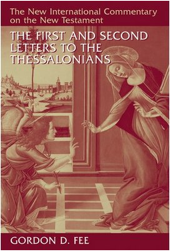
So I think his words are at least worth consideration, noting his long-standing studies on Pentecostal-charismatic issues, like that of tongues. This comes from the New International Commentary of the New Testament: The First Epistle to the Corinthians.

That the Corinthians at least, and probably Paul, thought of tongues as the language(s) of angels seems highly likely – for two reasons: (1) There is some evidence from Jewish sources that the angels were believed to have their own heavenly language (or dialects) and that by means of the “Spirit” one could speak these dialects. Thus in the Testament of Job 48-50 Job’s three daughters are given “charismatic sashes”; when these were put on they allowed Hemera, for example, to speak “ecstatically in the angelic dialect, sending up a hymn to God with the hymnic style of the angels. And as she spoke ecstatically, she allowed ‘The Spirit’ to be inscribed on her garment.” Such an understanding of heavenly speech may also lie behind the language of 1 Cor. 14:2 (“speak mysteries by the Spirit”). (2) As has been argued elsewhere, one can make a good deal of sense of the Corinthians view of “spirituality” if they believed that they had already entered into some expression of angelic existence. This would explain their rejection of sexual life and sexual roles (cf. 7:1-7; 11:2-16) and would also partly explain their denial of a future bodily existence (15:12, 35). It might also lie behind their special interest in “wisdom” and “knowledge.” For them the evidence of having “arrived” at such a “spiritual” state would be their speaking the tongues of angels. Hence they high value placed on this gift. (p630-631)

These same words can be found in his God’s Empowering Presence, p200-201.

Now, one might notice that some of these thoughts centre on what the Corinthians might have thought. And we know the Corinthians had some off-base theology, hence Paul’s corrective words not just on practical life matters, but doctrinal matters. But Fee also reckons that it was probable that Paul also held that humans could speak in tongues of angels. And, he then proceeds to share two main reasons why speaking in the tongues of angels is probable, with the first probably being more substantial for why Paul might believe this.

So, I thought it was interesting to share some of Fee’s thoughts on this passage.

In all, we cannot make a 100% conclusion either way. Again, I did appreciate some of the comments of Marv, as he pointed out his understanding of why he believes Paul didn’t actually believe this was a possibility. And there were other goods thought shared as well, like from commenter Ted Bigelow.

For these reasons, though such is difficult at times, it might be good that we not be closed off to either views, respecting them both. This could be hyperbolic language right throughout the entire vs1-3, or it could be that some words could become part of real life and some were hyperbole. I lean towards the latter view, but am now much more aware of the former.

The Tongues Conundrum (Part 2)

by Scott

I recently began a series on the gift of tongues, but started with some thoughts on the larger scope of Spirit-inspired speech. But let’s move on specifically to the gift of tongues.

The first instance that we read about tongues is at the Pentecost event of Acts 2:1-4:

1 When the day of Pentecost arrived, they were all together in one place. 2 And suddenly there came from heaven a sound like a mighty rushing wind, and it filled the entire house where they were sitting. 3 And divided tongues as of fire appeared to them and rested on each one of them. 4 And they were all filled with the Holy Spirit and began to speak in other tongues as the Spirit gave them utterance.

The word normally translated as ‘tongues’ in our English versions comes from the Greek word glossa or glossia (plural). It could also be translated as ‘languages’, which seems an acceptable translation when considering the biblical teaching on this gift. Though some might argue it sounds like babble (or babel), it actually comes as some sort of intelligible language, even if that language is not personally known to the speaker.

As a kind of side excursus, many theologians see this act of the initial outpouring of the Spirit as a reversal of the curse at the Tower of Babel where there was a confusion of languages (Genesis 11:1-9). Because of Pentecost, tongues now stands as a sign of unity in the body of Christ, God using people to speak in languages they have not learned to be a blessing to the body of Christ.

Of course, one of the main purposes of tongues in Acts 2 was that of an evangelistic drawing of people to Christ. But, a sort of theological deduction from considering tongues across both Acts and 1 Corinthians (and possibly a few other passages) is that such was given as a unifying sign of edification to the body of Christ, thus, reversing the curse of Babel for God’s covenant people. And, I can only suppose that the first Christians that witnessed the amazing and paradigmatic event of Acts 2 would have been blessed and edified by the outcome.

Now, in the account of Acts 2, the people spoke in languages that were recognised by those gathered around (see Acts 2:5-12). This is really the only biblical account in which we see tongues being utilised evangelistically. But that does not mean it was never again utilised in such a way in the New Testament record, especially if an interpretation comes forth, which we will consider later on from looking at 1 Corinthians 14.

We see other specific examples of tongues in Acts, specifically with Cornelius’ household in 10:46 and the Ephesian disciples in 19:6. But neither of these accounts point to an evangelistic use. Rather they were a response to the baptism/initial filling of God’s Spirit.

Still, though tongues might come forth in a language recognised by those present (and I can think of a couple examples off hand from ministry friends in the present day), we must also bear in mind that tongues might not always be spoken in a language that is recognised by those present. I think such is acceptable when we consider words like there from Paul:

For one who speaks in a tongue speaks not to men but to God; for no one understands him, but he utters mysteries in the Spirit. (1 Corinthians 14:2)

But it is through the interpretation of the tongue that understanding is brought to the body of Christ for edification, or even utilised in drawing people to Christ. And, I suppose the need for the gift of interpretation would only point to the fact that tongues are not always understood by those present.

There is much discussion about another aspect of tongues, as highlighted by these words of Paul:

If I speak in the tongues of men and of angels, but have not love, I am a noisy gong or a clanging cymbal. (1 Corinthians 13:1)

Some will claim that this reference to ‘tongues of angels’ is a hypothetical situation and one should not expect to find themselves speaking in such a manner. But remember the first words of Paul’s statement: ‘If I speak in the tongues of men.’ Now, we know this is an actual certainty – speaking in the tongues of men that we have not learned. Thus, it seems highly unlikely that Paul would refer to one situation that is a reality and one situation that is hypothetical. And, noting that tongues is a Spirit-enabled language, it’s possible that one might speak in a heavenly tongue.

Nothing could be ‘proved’ in regards to this, since tongues can regularly come forth in languages one has never learned, and especially since there are thousands of languages and dialects in the world. But I would propose that, since it is possible to speak in tongues (languages) or men, then the same could be true with regards to tongues of angels.

As an encouraging personal side story on the gift of tongues, I share an account of a specific local church where a friend of mine is an elder-pastor. This happened about a year and a half ago.

My friend specifically works with a church that officially relates to the Southern Baptist Convention (SBC). But, while they maintain that relationship of accountability, the church does not always practically function in regards to every specific of the SBC. For example, they have a plurality of eldership, which is not the norm for SBC churches.

Also, as you might imagine, historically, the SBC has not been an advocate for the practise of the more ‘charismatic’ giftings of the Spirit, i.e., those in 1 Corinthians 12:8-10. My friend’s church never preached against such, and they actually were quite open in allowing people to openly share what God was stirring in them during their corporate gatherings, even some things that could be classified as prophecies and revelations. But, with tongues, there was not much knowledge or practise of this gift.

So, my friend and the wider eldership of the church decided to take up preaching and teaching through the book of 1 Corinthians. Wow, what a challenge to say the least! And, of course, many months down the road, they took up a close study of 1 Corinthians 12-14.

Not too long after they finished the teaching on those chapters, God brought a surprise into their midst. God was making sure that their spirituality was not just doctrinal teaching, but also a practical reality. In one of the Sunday gatherings of the congregation, a person gave the first ever public message in tongues. In recalling the story to me, my friend shared how he kind of sat back in his chair and went on to let God know that he trusted Him. This was something that had never happened before. But my friend was not going to ‘nip it in the bud’, as they say.

And when the message in tongues was finished, the interpretation came forth by the one who spoke in the tongue.

But here is the beautiful part – After the gathering ended, a young man came forth to speak with my friend who is one of the elder-pastors. This young man did not usually attend their gatherings. Rather, he happened to be there as he was in a close relationship with one of the members of my friend’s church. I guess he was the boyfriend of one of the young adults of the church. He shared with my friend that he was of Jewish background and the tongue that had come forth in the gathering was in Hebrew (obviously more modern Hebrew than ancient-biblical Hebrew). And the young man preceded to share that the interpretation that came forth was correct.

A fantastic story of God’s grace and gifting amongst His people. A testimony to the reality of the gift of tongues being utilised, and utilised properly, in the corporate gathering of God’s people.

Thus, here are some summary points from this first post on tongues:

  • Tongues is most likely a God-statement that He was reversing the curse of Babel for His body.
  • Tongues can be utilised evangelistically (as in Acts 2) or in edifying the body (1 Corinthians 14).
  • Tongues can be spoken in actual human languages or in the languages of angels (1 Corinthians 13:1).

I hope this has begun to give somewhat of a solid introduction into the gift of tongues. Stay tuned for more articles in which I will discuss other important aspects of the gift.

The Tongues Conundrum (Part 1)

by Scott

After three week’s of teaching on the gift of prophecy at Cornerstone, which you can listen to or download the messages on our podcast (part 1, part 2, part 3), I was looking forward to moving into a three-part series on the gift of tongues.

You can listen to the message below from this past Sunday, or you can download from our podcast or iTunes.

One of the more perplexing gifts of the Spirit to discuss has to be the gift of tongues. Of course, there are enough opinions out there about every other spiritual gift found in 1 Corinthians 12 – healings, miracles, prophecy, etc – that we could spend the rest of our lives conversing over the in’s and out’s of just those.

But tongues might just be in a class all by itself, causing confusion, and even much worse, for some non-continuationists. So I thought it would be good to post a series about tongues here (maybe 5 or 6 posts), hoping it brings some clarity about the nature of tongues, at least from my study of Scripture.

Over the series, I want to address some major points in regards to understanding the gift of tongues. But, in this post itself, I will simply give a kind of introduction to the nature of the gifts.

For many Pentecostals and charismatics, the gift of tongues is part and parcel to the practise of their faith. For others, the practise of this gift has been the cause for steering clear of more Pentecostal and charismatic churches. And even in decades past, the use of tongues could have been regarded as demonic a small portion of believers. But thankfully, such a belief has pretty much faded to the background.

But what I began with in my message this past Sunday was a brief overview not only to tongues, but to the reality of Spirit-inspired speech amongst the Spirit-empowered people of God. I had three specific points.

1) A new age by God’s Spirit

I’ve written on this plenty of times, but suffice it to say that, with the Pentecost of Acts 2, we entered the fulness of the new covenant age in which the baptism, filling and empowering of God’s Spirit would now be available to all God’s people – men and women, young and old. EVERYONE!

This allows for the continuation of all that Christ began to do (see Acts 1:1), this being through the Holy Spirit via the Spirit-empowered ekklesia-church.

2) A new gift by God’s Spirit

All manifestations of God’s Spirit in 1 Corinthians 12:8-10 were all witnessed and evidence before Pentecost – in the Old Testament and in the life of Jesus. But this is the first time we see the manifestation of God’s Spirit through the gift of tongues.

Many theologians believe that this was a direct statement pointing to the reversal of what happened at the Tower of Babel (see Gen 11:1-9). There, God confused the languages of a rebellious humanity. Here, God does a unifying work amongst the body of Christ via this special demonstration of God’s power.

Interestingly enough, tongues actually functions in a prophetic sense. How? As we know, after the outpouring of the Spirit of God, the people spoke in other languages they had not learned. But, when Peter quotes Joel in Acts 2:17-18, the emphasis of those words was that prophecy would be the fruit of the outpouring of God’s Spirit. But here, they are speaking in tongues.

What’s going on?

Well, though the specifically spoke in tongues, this gift functions prophetically when 1) people speak languages they do not know but the listeners do understand what is being spoken or 2) the gift of tongues is followed by the gift of interpretation. And I know examples of both in various situations, as well as an example of both at the same time.

3) A new proclamation by God’s Spirit

For those who have studied the doctrine of the Holy Spirit and his gifts, many will be aware of the Pentecostal argument that tongues is the initial evidence of the baptism of the Spirit. The five usual instances in Acts that are pointed to are found in 2:1-4 (Pentecost), 8:12-19 (the Samaritans), 9:17-18 (Paul), 10:44-48 (Cornelius and household), and 19:1-7 (Ephesian disciples). I won’t go into detailed reasons why Pentecostals usually argue for this, but I, personally, believe this is too strict a statement – that tongues is the initial evidence of the baptism of the Spirit.

But what I would argue is that a Spirit-baptised, filled and empowered people are a people who are to be utilised in Spirit-inspired speech of all forms. Why would I claim such? There are five major accounts of people being filled with the Spirit in Acts that I believe point out that the people of God are regularly used in such Spirit-directed and empowered speech: 2:1-4; 4:27-31; 8:12-17; 10:44-48; 19:1-7 (not to mention 4:8ff).

Now the only example where we don’t see any speech come forth from the mouths of those baptised-filled with the Spirit is that of the Samaritans in 8:12-17. The usual argument by Pentecostals for the gift of tongues being the initial evidence of the baptism of the Spirit is that something must have been happening for Simon the sorcerer to want to buy the ability to impart the Spirit of God through the laying on of hands (see 8:18-19). While I wouldn’t go so far as to say it must have been tongues, I will venture to say that some kind of Spirit-inspired speech probably did come forth from their mouths noting the four other examples I pointed out: 2:1-4; 4:27-31; 10:44-48; 19:1-7.

But what I will note is not all instances records tongues, i.e., 4:27-30 and the ever-debated passage of 8:12-17. But, again, what I do note is that various Spirit-inspired speech does come forth from a Spirit-baptised, filled and empowered people: prophecy, tongues, praise, the word of God.

And so, if anything, the people of God are to be a Spirit-empowered people speaking forth Spirit-inspired speech in all of its various forms. This also includes things like words of knowledge, words of wisdom (look back at 1 Cor 12:8-10), or what Paul notes as revelation (see 1 Cor 14:26).

Thus, while I believe it is a bit too strict to say that the initial evidence of the baptism of the Spirit is tongues and tongues alone, I would argue that the Spirit-empowered people of God are to be a people speaking forth Spirit-inspired speech in all its various kinds.

If you want more details, feel free to listen to the message.

The Muddled Middle: παύσονται in 1 Cor. 13:8

By Marv

Certain grammatical features of 1 Corinthians 13:8 are the focus of a particular spurious argument sometimes made by Cessationists.  I want to explain the matter.

I will begin with two English sentences with different uses of the verb stop.

a.  Bob stopped the car at the light.

b.  The rain stopped.

The difference between the two is that (a) is transitive, while (b) is intransitive.  Note that in this particular case the verb is not marked for the difference in transitivity.  The usage is simply understood from context.  This is a particularity of stop and some other verbs in English.  A synonym of the (b) sense is cease, which can only be intransitive.  We do not say *“Bob ceased the car at the light.”

Other European languages make the same transitive/intransitive distinction in a different way, marking the verb to make the distinction explicit.  For example, for this same contrast French  uses a pronominal verb to indicate the intransitive form.  This is what is sometimes called a “reflexive verb,” but true reflexivity (for example se tuer “to kill oneself”) is only one of the form’s multiple uses.  So French grammarians prefer “pronominal,” since the form is made by attaching a (reflexive) pronoun.

Sentences equivalent to (a) and (b) in French would read:

(c)  Bob arrêta la voiture au feu.

(d)  La pluie s’arrêta.

Example (d) might appear to non-speakers to mean “the rain stopped itself,” but this would be q misunderstanding.  It is not auto-transitive, but merely intransitive.  In other words, there is no assignment of causality to the subject.  An animate subject might be understood as being the cause of its own “ceasing,” but this is due to its being the cause of the activity or motion in the first place.  An inanimate subject that is not considered self-activating does not become the cause of its own ceasing simply because of the pronominal or “reflexive” form.

The pronominal form in French has a range of uses, but for the verb arrêter, it serves as an intransitivizer.

Another European language, Ancient Greek, had a system equivalent to the Greek pronominal verb system.  It is known as the middle voice.  Like the French pronominal verb it may sometimes express true reflexivity, but it has a range of uses very similar to those of the French pronominal verb.  One of those is to serve as an intransitivizer.  Thus the verb παύω (pauō) in the active means “I stop,” in the transitive sense.  In the middle form, παύομαι (pauomai), means “stop” in the intransitive sense, or “cease.”

And they went and woke him, saying, “Master, Master, we are perishing!” And he awoke and rebuked the wind and the raging waves, and they ceased (ἐπαύσαντο, epausanto), and there was a calm. (Luke 8:24)

This was the set usage of παύομαι even in Classical Greek.  Smyth (Greek Grammar) says of the middle voice in general “It will be noted that the active is often transitive, the middle intransitive.” (§1734); and of this particular verb: “παύειν make to cease, stop (trans.);  παύεσθαι  cease (intr.)” (§1734.14).

In 1 Corinthians 13:8 we have the same usage:

Love never ends. As for prophecies, they will pass away; as for tongues, they will cease (παύσονται, pausontai); as for knowledge, it will pass away.

It is a matter, very simply, of intransitivity.  It is precisely the appropriate voice form for this verb.  However, the nature of middle voices is often poorly understood.  The usual blanket description holds that the verb “in some way acts upon itself.”  However, this is really next to useless, because this wording merely seeks to find some common ground for the disparate uses of the middle voice. 

The spurious Cessationist argument I referred to above employs one of two errors:

(1) Overstating the force of the grammatical function of grammatical form, for example trying to make it auto-transitive (“The rain stopped itself”) rather than simply intransitive (“The rain stopped.”)

(2) What we might call “double dipping,” where once the grammatical form has done its duty, we call it up again to render a second service.

For example the argument holds that in 1 Cor. 13:8 tongues are said not only to cease (at some future point) but to do so “by themselves.”  The middle voice is made to have two functions: (i) changing the active to passive, and (ii) adding the adverbial sense “by themselves.” 

The point of this is to argue that the text gives the gift of tongues a time-limited status.  So whatever it may be saying about knowledge and prophecy in regard to the coming of “the perfect,” tongues are a different case.  They just stop on their own. 

We find this argument referenced, of all places, in Dr. Daniel Wallace’s  Greek Grammar Beyond the Basics.  It is true that it is listed under “Debatable Examples.”  However, Dr. Wallace is quite justifiably seen as a world expert in the Greek language.  Also, according to Monergism.com as well as Wikipedia, Dr. Wallace is one of the three best-known classical Cessationists (with Richard Gaffin and John MacArthur).  So even if classified as “debatable,” the argument has heft based on his name.

Now, at the end of Dr. Wallace’s discussion on the matter, he does state clearly that the basic function of the middle voice in παύσονται is to make it instransitive (423).  Yet this is only after he has introduced the matter as follows:

If the voice of the verb is significant, then Paul is saying either that tongues will cut themselves off (direct middle) or, more likely, cease of their own accord, i.e., “die out” without an intervening agent (indirect middle). (p. 422)

Dr. Wallace, then, is offering a choice between error (1) and error (2).  Both distort the actual “significance” of the middle voice, which in this case is no more or less than marking intransitivity. There is in fact no implication at all present in the grammatical voice as to any element of self-causation or limited duration.

The matter is actually less complicated than Dr. Wallace’s discussion makes it appear.  One misleading direction it takes is consideration over whether the middle voice here is “deponent” (it is not), or whether Classical usage is still present in the Koine.  Thus Dr. Wallace states in a general discussion about the middle voice:

One’s view of the nature of NT Greek has strong implications for this use of the middle voice. If one thinks that NT Greek has abandoned the rules of classical Greek, then h/she would not put much emphasis on the force of the middle voice in a given passage…

However, if one thinks that the NT Greek has, for the most part, retained the rules of classical Greek, then he/she will see more significance in the use of the middle voice. (p. 420)

We have already seen, however, in the citation from Smyth above, that the intransitive-marking function of the middle, particularly with παύω, was the well-established rule for the middle voice. 

To show how this argument has escaped the bounds of Dr. Wallace’s “Debatable Examples,” here re some much less restrained statements from another of the “three best-known classical Cessationists,” John MacArthur:

The verb that says tongues will cease (pauo) is in the middle voice. Let me show you the differences in the active, passive, and middle voices. In the active voice we would say, “I hit the ball.” In the passive voice we would say, “The ball hit me.” And in the middle voice (if English had a middle voice) we would say, “I hit myself.” In other words, the Greek middle voice is reflexive, indicating that the subject is acting upon itself. The middle voice also indicates intense action on the part of the subject. Literally, then, verse 8 says, “Tongues will stop by themselves.” That’s the meaning that the middle voice gives to the verb pauo. (“Speaking in Tongues”)

Here Dr. MacArthur does not even characterize the passive voice correctly (it would be “I was hit by the ball” not “the ball hit me.”) His description of the middle voice, however, is completely wrong.  This is clearly a matter of inferences drawn from a grammar’s general description of the middle voice.  His reference to “intense action on the part of the subject” is a dead give-away here.  Apparently, as learned an exegete as he is, he simply does not understand the middle voice in Greek.

Elsewhere he states:

It should be noted that 1 Corinthians 13:8 itself does not say when tongues were to cease. Although I Corinthians 13:9-10 teaches that prophecy and knowledge will cease when the “perfect” (i.e., the eternal state) comes, the language of the passage – particularly the middle voice of the Greek verb translated “will cease”- puts tongues in a category apart from these gifts. Paul writes that while prophecy and knowledge will be “done away” (passive voice) by “the perfect,” the gift of tongues “will cease” in and of itself (middle voice) prior to the time that “the perfect” arrives. When did this cessation of tongues take place? The evidence of Scripture and history indicate that tongues ceased in the apostolic age. ( “The Gift of Tongues”)

Here he is taking the implication far beyond what the text actually says, not only that tongues would cease “in and of themselves,” but “prior to the time that ‘the perfect’ arrives.”  This statement is completely unwarranted.

He even includes this fallacious argument in his commentary on 1 Corinthians:

Cease is from pauo, which means “to stop, to come to an end.” Unlike katargeo, this verb is here used in the Greek middle voice, which, when used of persons, indicates intentional, voluntary action upon oneself. Used of inanimate objects, it indicates reflexive, self-causing action. The cause comes from within; it is built it. God gave the gift of tongues a built-in stopping place. “That gift will stop by itself,” Paul says. Like a battery, it had a limited energy supply and a limited lifespan. When its limits were reached, its activity automatically ended. Prophecy and knowledge will be stopped by something outside themselves, but the gift of tongues will stop by itself. This distinction in terms in unarguable.  (I Corinthians. p. 359.)

Again, this statement is based on a very faulty understanding of the function of the middle voice.  There is nothing in it about a “built in” cause.  This is absurd merely on the intuitive level, that every time a Greek speaker says “The rain stopped” using the middle form παύομαι that he is making a statement about its “limited lifespan” or a “built-in stopping place.” This is nonsense, human language just doesn’t work this way.

There is a secondary matter that requires comment.  This “distinction in terms” that Dr. MacArthur refers to is a related part of this spurious Cessationist argument.  It is an interesting question, however:  Why in the ēcases of knowledge and prophecy does Paul employ the verb καταργέω (katargeō), but with tongues he “switches to” παύσονται?  Is he not drawing a distinction here, as MacArthur asserts is “unarguable”?

No, actually, he is not.  Sometimes the answer is given “stylistic variation,” but there is a bit more to it that this.  It is a matter of collocation.

Collocation has to do with the appropriateness of words to occur together even if they are grammatically able to do so.  It is what is wrong with Noam Chomsky’s example of linguistic nonsense: “Colorless green ideas sleep furiously.”  The sentence is perfectly grammatical, but the sense of the words causes a “collocational clash.”

So in 1 Cor. 13, Paul generally wishes to make a point about the future obsolescence of the partial in the presence of the complete (more here), and his general statement is in v. 10: “but when the perfect comes, the partial will pass away (καταργηθήσεται, katargēsētai).” 

Now this verb works well enough with “prophecies” and “knowledge,” but “tongues” is a different class of noun.  These are all shorthand designations for particular spiritual gifts.  “Prophecy” and “knowledge” refer to cognitive and communication acts in the first instance and the particular informational content as a result, in the second.  This information, being partial, becomes obsolete in the face of full knowledge and fulfilled prophecy.  Thus the verb καταργηθήσεται, translated here “will pass away” (ESV), is semantically appropriate, and there is no collocational clash.

“Tongues,” however, γλῶσσαι (glōssai) in Greek, is a different category of noun.  It does not refer to so much to the informational content of the activity, but to the activity itself.  The interpretation of a “tongue” may function in a way similar to prophecy (1 Cor. 14:5), but the word itself is more a designation of the activity than the result of the activity.   In the first instance the noun refers to the literal organ of speech and taste, the tongue.  In a second major sense, it means “language.”  The concept of speaking “in other tongues as the Spirit gave them utterance” (Acts 2:4) was a specialized meaning within the Christian community. 

As such an activity does not so much “pass away” as discontinue, cease.  So evidently the verb καταργηθήσεται  presented collocational difficulty (like “sleeping furiously”), and so Paul used the more appropriate idea of “cease.” 

Besides this, there is an issue of the other meanings causing confusion.  Paul was not communicating that after the Parousia physical tongues would not be a part of our resurrection bodies, or that language and languages would also “pass away.” 

At any rate, the semantic nature of γλῶσσαι is quite sufficient to motivate Paul’s verb choice.  So that to infer from this choice an implicit message about an early expiration for the gift of tongue is completely unwarranted.

What is “the Perfect”?

By Marv

1 Corinthians 13:9-10 reads: “For we know in part and we prophesy in part, but when the perfect comes, the partial will pass away.” (ESV)

a. Does “the perfect” refer to the Bible here? No.

b. Does “the perfect” refer to the Second Coming of Christ? No, but (b) is closer than (a).

Think about it. Why would Paul refer to either of these in this enigmatic way? Yes, you can find reasons, excuses, to understand either one of those, and surely other things, by the title “the perfect.” But we don’t have to scour distant contexts to discover what is motivating this choice of words here.

“The perfect” isn’t any one thing; it is a class of things. Or rather it is a state in which many different things can be: whole, as opposed to partial. We know that is what “the perfect” is, because that is what “the partial” is. Paul states in verse 9 two things that we do “in part”: know and prophecy. The phrase for “in part,” ek merous, is the most prominent part of each clause in verse 9. It’s what he is talking about. Reading it in the Greek order: “In part we know, and in part we prophesy.”

Then he takes this prepositional phrase and nominalizes it by adding the article: “the in part,” to ek merous. This is what the ESV translates as “the partial.” Another way of saying this would be “that which is only in part,” not referring to a specific thing, but anything which is partial.

The contrast Paul is making between “the partial” and “the perfect” tells us what specific meaning he has in mind for “perfect,” teleion. It means the state in which something has reached its fullness or completeness. The phrase he uses parallels “the perfect” to teleion with “the partial,” to ek merous.

The point he makes about these two states of being is not so much a prediction as a principle, a proverb, something that is true across the board: when the full and complete version of something arrives, the preliminary, partial version of it loses its value.

He provides an analogy and two examples to illustrate. First, he states that at one time his thoughts and words were those of a child, but as a grown man, of full age, his education complete, the ideas he had while still under age were not worth holding on to.

So then “partial” and “complete” also correlate with “now” and “then,” in comparison with minority and majority. This is equivalent to “not yet” and “already,” and at this point we see that “the perfect” is not itself a reference to the Second Coming but the state of things that will only occur at the second coming.

Now we see some things but much remains unseen (v.12a) . For these we have “faith” and “hope” (v. 13). Then, at the consummation of all things, our partial sight yields to completeness of sight, as faith becomes sight.

The same is true for our knowledge (v. 12b), which is partial now, but will in that day be complete. The two phrases are unmistakably descriptions of conditions only available beyond this age; we will “see face to face,” and we will “know as we are known.”

Faith is the conviction of things not seen (Heb. 11:1). Who hopes for what he sees (Rom. 8:24)? So even faith and hope, which remain “now,” will give way “then” to sight and fullness of knowledge. Love, however, is greater because as it reaches completeness it has all the more reason to continue.

This is the reason Paul commends it above all that it “in part.” The examples he gives are prophecy, knowledge, and tongues. These are things that are in a state of “in part.”

Prophecy entails revelation in bits and pieces, riddles and puzzles (Num. 12:8). It reaches its fulness, obviously, when it is fulfilled. So even the prophecies of Revelation, of the completed Canon, are partial until all is fulfilled.

Knowledge too can only ever be partial in this age, but one day the knowledge of God will cover the earth as water covers the sea (Hab. 2:14).

If tongues is a “sign to unbelievers” (1 Cor. 14:22a), then it has value while there are still unbelievers. The contrast of faith and lack of faith exists only in this age when sight is partial. So tongues reaches its fullness when every knees bows and every tongue confesses (Phil. 2:10).

Love alone surpasses this age. The rest, even faith, even hope are for the present age, where knowledge and sight are partial. If Paul is telling us anything about the gifts he mentions, it is that they correspond to the age of the partial, they are coterminous with faith and hope. They come to an end, yes, they cease, yes, but only when they reach the state of their fulness.

It is odd that this passage is so often used to teach the previous cessation of these gifts, when it is such a very strong argument for their enduring until the end of this age.