I think it is continually important to give actual, real life, down to earth examples of what it is like to hear the voice of God and even to prophecy. Most people need this to help bring these things ‘out of the clouds’ and into real life on planet earth. I’ve posted a few examples in the past of such instances in my own life and in the lives of others (here, here and here). And I wanted to post another example.
This comes from Richard Foster’s book entitled Freedom of Simplicity. I have recently been posting a few quotes and short excerpts from the book, food for thought, if you will. But here is an example of Foster sharing a time when he heard the voice of Lord direct him in a particular situation.
Allow me to share with you a very small experience, but one that may help you to see what I mean. This occurred at an especially busy time in my year. I was preparing for a weekend trip that involved speaking at three different churches. The financial arrangement was for each church to take up a little offering on my behalf when I had finished speaking. As I was meditating on what God desired of me for that weekend, I had the strong impression that I was not to take any money at all from these churches. For some time I struggled over this directive, for we were counting on the money to meet several obligations. The struggle further revealed an inward greed that I thought had been exorcised long ago. Finally, I felt clear that this was what I had to do if I was to be obedient. I shared this with my wife, for I felt we had to be in unity on the matter. She released the money much more easily than I, noting that perhaps there would be some people in the meetings who needed to know that ministers of Christ were not always after their pocketbooks.
I told the pastors of the first two churches that any offering should be given to the poor or disposed of in whatever way they saw fit. Although surprised at my unorthodox request, they were congenial to the idea. But I arrived at the third church just as the service began, and so had no opportunity to explain my concern. I was relieved, however, when they did not take up an offering for me, and assumed that the matter was settled.
It was late when I finally arrived at the home where I was to stay the night. As I walked in the door my host handed me a check of an amount that was, for me, considerable. It was from the church. I protested, but they mistook my concern for modesty and insisted with such vigor that I let the matter drop.
I wish I could express to you the experience I went through that night. There was the check lying on the nightstand, mine to take. I did not want to cause offense or seem ungrateful, after all, the money had been given for me. Maybe this last church should be considered an experience separate from the others. But what about the earlier directive – it had seemed quite clear. Back and forth I went. Finally, I had about decided that I really should take the money rather than cause any trouble, but I determined to review my decision once more in the morning when I was rested. I invited God to teach me while I slept if he desired.
When I opened my eyes the next morning it was unmistakably clear to me that I could not – must not – take the money. A period of meditation only intensified the conviction. With considerable trepidation I explained to my hosts as best I could why I was not able to accept the gracious gift. The moment I finished there rushed into me an unspeakable joy. Though outwardly I tried to remain calm, I was being filled with an overwhelming sense of the glory of God. Once alone in the car I shouted and sang and blessed God. I did not have to be controlled by money! I could live in obedience! It was wonderful, jubilant ecstasy, and although the profuse exuberance lasted for perhaps twenty minutes, the sense of deep warm joy flowed over me all day long. (I was pleased to learn later that the church decided to give the money for refugee work in Cambodia.)
I don’t want to give too much commentary to the story above, as I think it speaks volumes itself. But suffice it to say, I believe this is a beautiful account of hearing God and responding in obedience. And, even more, here is a great example of Foster weighing what he believed was a directive from God, and weighing it with his covenant partner, his wife. This is always a very healthy perspective as we learn to discern the voice of God. I’ve shared about this before, our spouse being one of five major gifts we have been given to help us discern the voice of the Lord.
I hope this is another example that helps make hearing God’s voice more and more real.
Over at the blog of Mark Roberts, he recently posted a 3-article series on prophecy in the book of 1 Corinthians. It was refreshing to see a Presbyterian pastor-theologian advocating the continuation of the gift of prophecy today. And, of course, this was interesting as I just began posting a series on prophecy as well.
You can read all three posts by clicking on these links:
On Sunday at Cornerstone, after a few weeks of visiting speakers, I continued on from my introduction to the gifts of the Spirit. I began what will be a two-Sunday series on the gift of prophecy, maybe something like seminars entitled Prophecy 101 and Prophecy 102.
You can listen to the message by clicking on the icon below, or you can download from Cornerstone’s podcast site or iTunes.
For those interested, the major thrust of my message can be found in the article below.
There are five terms I specifically discussed:
1) Revelation
At times, in discussing this word amongst varying Christians, there are two unhelpful perspectives that I believe can arise from the term revelation. They are as follows:
a) Super-scary
This comes with regards to some ideas about the book of Revelation. The Greek word for revelation is apokalupsis, and it’s where we get our word apocalypse. And that word apocalypse brings up all sorts of unhelpful images, with a special thanks to Hollywood in recent decades.
Oddly enough, the word apokalupsis or revelation simply means an unveiling or an uncovering. As an illustration, it’s quite like being present at a theatre play and awaiting the beginning scene of the play. The curtains are drawn closed and everyone is chattering away with anticipation of the opening scene. And, at the first sound of the pit orchestra, the curtains open and the crowd sees the beautiful and intriguing set designed on stage, the cast of characters beginning with a great dance, etc. With that, we just had an unveiling, an uncovering.
The same is true of God’s revelation. When God reveals, He is pulling back the curtain, if you will, for us to see.
b) Super-spiritual
Some Christians hold that God is no longer revealing Himself (they might term it as no more ‘special’ revelation) because we now have all of God’s revelation fully and finally recorded within the canon of Scripture. The Bible is the final measuring stick for the beliefs and practises of the church and, thus, God no longer speaks and specifically reveals Himself. But I have three minor points to bring up about God revealing Himself today.
a) No new redemptive revelation.
I would agree with just about every evangelical Christian that God is no longer bringing forth new redemptive revelation. To claim such is dangerous. Well, it’s heretical. We believe that Jesus Christ and his work alone is the final word on God’s redemptive plans for all peoples. To that, there is nothing to add. As Paul said, if we preach another gospel than the finished work of Christ and, well, one will be cursed (Gal 1:8-9).
b) God has always been speaking and acting outside the Bible.
As I always make sure I communicate, I recognise that the Bible stands as the measuring stick for our faith and the practice of our faith. And, within the the text, we find a very thorough account of all God has said and done from the beginning until the first century. We truly know this is God’s inspired word.
But, of course, the Scripture does not record every word and act of God, does it? A couple of small examples are found in 1 Sam 10:10-13 and 1 Tim 1:18-19. In the first, we find Saul empowered by the Spirit prophesying amongst a group of prophets. What they said was not recorded in Scripture. But there is no doubt that, as prophecy, it would have been Spirit-inspired utterance. In the second example, we read of Paul reminding Timothy of the prophetic words that were made about him and that ‘by them you may wage the good warfare, holding faith and a good conscience’. In both situations, we would have found Spirit-inspired prophecy. But in neither case do we find those prophetic, and revelatory, words recorded in Scripture. The event is mentioned, but not the specific words. And that is quite ok. God has been doing it ever since the beginning and He will keep doing so until all things are completed in Christ.
c) God speaks and reveals today.
As all would note, nothing that God speaks and reveals today would contradict the tenor of Scripture summed up in Christ and the gospel. Such is out of bounds, for we are convinced Scripture is the word of God.
And, so, one way that God still speaks today is through Scripture. Some refer to this as illumination, which is a helpful term. But some use it over and above the term revelation, for they are convinced God no longer does it. But both terms do refer to God unveiling Himself, making Himself known to His creations. It’s just that the term illumination centres around light. And revelation also has to do with light, because revelation helps us see better. So I believe the terms are connected, kind of semantical cousins.
Now, when I say God speaks through Scripture, I do mean that He speaks from the God-breathed words that are right there in the text. But I also believe that He utilises those same words, at times, to speak things that were not intended within the text. I will give you one example from my own life. One day, as I was reading Jesus’ words in Matt 6:21 – For where your treasure is, there your heart will be also. – I understood that Jesus was speaking in the context of challenging people that they cannot have two masters. Such is impossible. But, as I was meditating on the passage, God said to me, ‘Scott, this is true of me as well. Where my treasure is, there my heart is also. And my people are my treasures, and, therefore, my heart is with them.’
God utilised Scripture to speak to me. It wasn’t something ‘in between the lines’. But God definitely used what was already there to reveal more of His heart to me. Now, sure, I could have also received that from reading Psalm 139 or other passages. But God took the text I was meditating on and spoke to me right then and there. Of course, many a folk claim this, with some of it being quite off-base. But there are some guidelines that can prove helpful, of which I have shared a bit here.
Still, I also believe very much that God speaks and reveals Himself ‘outside’ of what is in the Bible. Again, the Bible is the measuring stick for such revelation and that which is truly from God will not contradict that summation of Scripture in Christ. But the reality is that God is a relational and living God, and relational and living beings actually communicate. It’s part and parcel to being relational. I cannot imagine God not speaking, not revealing, not unveiling. It’s at the core of who He is. So God will and does speak, even if there is no verse and chapter number to quote.
2) New revelation
The big question I always get asked is: Is this new revelation?
I have talked about this already above, but I would say there is absolutely no new redemptive revelation. Again, Christ and his work are the final word on that. Such is a closed chapter. But, with regards to God speaking into our lives, our situations, our churches, even the nations today, I am ok to recognise it as ‘new’. Why? Because our lives, situations, churches, etc, are not detailed in Scripture. God didn’t speak about Scott Lencke in Scripture. God did not speak about Cornerstone in Scripture. God did not speak about 21st century Belgium in Scripture. Of course, that which is in Scripture speaks into all three of those. But not in a detailed sense. And I find God still regularly speaks, with detail, into those areas of real life.
3) Prophet
I didn’t spend a long time on this, but I did give what I believe is a solid, working definition of a prophet: one who received and brought forth a direct, inspired, revelatory message from God.
Now, some of these prophets, especially in the Old Testament, were given the amazing, special and authoritative privilege of having their words recorded in the Scripture. And for that every Christian is thankful for their God-inspired words in the Bible. But, of course, not every prophet had their words recorded in Scripture. But, such people were still utilised in direct, inspired, revelatory messages from God, with this ministry continuing into the new covenant era (i.e. Agabus, those in Corinth, those in Antioch in Acts 13:1-3, Philip’s daughters, etc), and I am very much convinced it still continues today.
4) Prophetic community
I have shared about this a lot, but, suffice it to say, because the Spirit of prophecy was to be poured out on all God’s people as of Pentecost, we now have a prophetic community in the whole body of Christ. When Peter stood up on that great day, he quoted some words from Joel’s prophecy:
17 “‘And in the last days it shall be, God declares, that I will pour out my Spirit on all flesh,and your sons and your daughters shall prophesy,
and your young men shall see visions,
and your old men shall dream dreams; 18 even on my male servants and female servants
in those days I will pour out my Spirit, and they shall prophesy. (Acts 2:17-18)
The reality is that now, male and female, young and old, are part of the prophetic community of all believers. We don’t simply have the priesthood of all believers, but we now also have the prophethood of all believers. I share much more in this article.
5) Prophecy
Finally, I began to touch on the gift of prophecy. There is much more to share next Sunday (and, thus, in another post here). But here are a few things I shared thus far.
I believe there are two misunderstandings about prophecy:
a) Prophecy is mainly about prediction.
I am not a fan of the word prediction because it makes one think of fortune telling and palm reading, which is, of course, very dangerous. I would rather use the term forth telling. And, yes, God forth tells things to come. Such is right through the Bible, and I have known such today as well. But prophecy isn’t always about saying something to the effect of: In the next week, events A, B and C will take place in your life. Why? Because the goal is not prediction. The goal is summarised fairly by Paul in these words:
On the other hand, the one who prophesies speaks to people for their upbuilding and encouragement and consolation. ( 1 Cor 14:3)
Prophecy could include forth telling from God, of directives and things to await with regards to ‘the future’. But that is not the central core of prophecy. Prophecy is God unveiling His plans, His purposes, His ways, His heart for the upbuilding, encouragement and consolation of His people.
b) Prophecy is mainly about rebuke.
This is another misnomer for some. Again, a quick glance at 1 Cor 14:3 reminds us of one central goal with prophecy. It doesn’t mean that prophecy is merely a pat on the back with a, ‘You’ll be ok. Hang in there.’ At times, prophecy will involve correction and rebuke. But even in rebuke and correction, such comes forth with the ultimate goal of seeing people strengthened, edified and built up. This is in line with Paul’s earlier words about the purpose of all gifts of the Spirit:
To each is given the manifestation of the Spirit for the common good. (1 Cor 12:7)
Therefore, I would say a helpful and good working definition for prophecy is this: a Spirit-inspired, intelligible, verbally delivered message intended to edify, encourage and comfort other believers. I’ve seen this happen on a regular basis for the past 12 years of my life in Christ and I would never, ever be moved from seeing it as something foregone, ending a long time ago with the finished product of our canon of Scripture. And I have not only known prophecy and revelation to come forth today, but I have also known the true fruit to come from it, that of upbuilding, strengthening, encouragement, exhortation and the common good.
Many people who have spent time studying pneumatology and the gifts of the Spirit will probably be aware of Wayne Grudem and the works he has written around such topics. Grudem believes the charismata gifts of 1 Corinthians 12 still exist today. He is one of the many ‘theologically-minded’ and scholarly Christians now standing as advocates for these gifts of the Spirit. Others are Sam Storms, John Piper, Gordon Fee, Mark Driscoll, Jack Deere, and many other such people.
Though one can get a taster of his theological stance on the gifts of the Spirit in his Systematic Theology (pgs1016-1088), another of his writings, The Gift of Prophecy in the New Testament and Today, gives a much more in-depth treatment of the gift of prophecy, as you would expect from such a title.
Though the book definitely stands as an evangelical stalwart for study on the gift of prophecy, I believe the book fails to incorporate the full biblical teaching on prophecy, as well as the nature of apostles and prophets. I want to deal with one area where I believe his work has some shortcomings. This revolves around his discussion on New Testament apostles. With this specific matter, Grudem offers what I believe is faulty exegesis on the passages of Ephesians 2:20 and 3:5. You can see his discussions in chapter 2 of the book (pgs45-47), as well as in his Appendix 6 (pgs329-436). Remember, this is in the revised edition from 2000. I don’t believe earlier copies have Appendix 6.
Before analysing some of his words, let’s quote the two biblical passages. I shall give a little bit of context around these verses up for discussion:
19 So then you are no longer strangers and aliens, but you are fellow citizens with the saints and members of the household of God, 20built on the foundation of the apostles and prophets, Christ Jesus himself being the cornerstone, 21 in whom the whole structure, being joined together, grows into a holy temple in the Lord. 22 In him you also are being built together into a dwelling place for God by the Spirit. (Eph 2:19-22)
4 When you read this, you can perceive my insight into the mystery of Christ, 5 which was not made known to the sons of men in other generations as it has now been revealed to his holy apostles and prophets by the Spirit. 6 This mystery is that the Gentiles are fellow heirs, members of the same body, and partakers of the promise in Christ Jesus through the gospel. (Eph 3:4-6)
What does Grudem teach about New Testament apostles and prophets by looking at these two Scriptures? The two bullet points below are a summary of his thoughts:
New Testament apostles are equal to the Old Testament prophets in their authority. Therefore, these two groups, NT apostles and OT prophets, are the authoritative recorders of Scripture.
Subsequently, New Testament prophets have much less authority than New Testament apostles.
In discussing the two Ephesians texts, Grudem gives four possibilities of how to understand the roles of apostles and prophets in the New Testament. Those possibilities are below, with the emphasis being his own:
the apostles and the Old Testament prophets
the teaching of the apostles and New Testament prophets
the apostles and New Testament prophets themselves
the apostle-prophets themselves (that is, the apostles who are also prophets)
His conclusion is that the best interpretation can be found with the fourth option. For Grudem, from a New Testament perspective, these two verses in Ephesians teach that apostles and prophets are mainly one joint ministry rather than two distinguishable ministries. Such helps maintain his viewpoint that New Testament apostles are the authoritative writers of the New Testament while the prophets of the Old Testament era were the authoritative writers of the Old Testament.
Grudem goes on to state:
After considering these views…it seems best to me to conclude that Ephesians 2:20 has meaning 4, that the church is “built upon the foundation of the apostles who are also prophets,” and Ephesians 3:5 should be understood to mean that the mystery of the Gentile inclusion in the church “was not made to the sons of men in other generations as it has now been revealed to his holy apostles who are also prophets by the Spirit.” (p46)
But such a view only seems contrived to prove one’s point rather than to be carefully founded in exegesis of the Scripture. For starters, in every other place outside of Ephesians 2:20 and 3:5, apostles and prophets are actually distinguished from one another. The two main places we see this distinction are:
11 And he gave the apostles, the prophets, the evangelists, the shepherds and teachers, 12 to equip the saints for the work of ministry, for building up the body of Christ, 13 until we all attain to the unity of the faith and of the knowledge of the Son of God, to mature manhood, to the measure of the stature of the fullness of Christ (Eph 4:11-13)
28 And God has appointed in the church first apostles, second prophets, third teachers, then miracles, then gifts of healing, helping, administrating, and various kinds of tongues. 29 Are all apostles? Are all prophets? Are all teachers? Do all work miracles? (1 Cor 12:28-29)
One other major point Grudem brings up to try and prove that apostles and prophets are one group in both Ephesians 2:20 and 3:5 is that, in both instances in, the definite article ‘the’ is found before the word apostle, but not before prophet. Thus, Paul is referring to one joint authoritative group, mainly apostle-prophets.
Theologian, Edmund Clowney, who oddly enough used to be Grudem’s seminary professor, and they maintain a great relationship to this day, answers Grudem in his own work:
The absence of the article before ‘prophets’ in Ephesians 2:20 and 3:5 indicates, then, not that prophets are identical with apostles, but that they are closely linked with them since they, too, receive and communicate revelation. (The Church, p261, italics mine)
This makes perfect sense, for we see prophets carrying a very unique and important ministry amongst the body of Christ within the New Testament. Some examples are:
Acts 13:1-3 – Prophets utilised in the apostolic commissioning of Paul and Barnabas together.
Acts 15:22-35 – Following the Jerusalem council, Judas and Silas, who were prophets, accompanied Paul and Barnabas on their trip to Antioch. We read that these two were ‘leading men among the brothers’ (vs22) and of their strengthening role they had to the church (vs32). Noting that in vs32 we are told these two are prophets, we can assume that the verse is not simply telling us they were simply doing a little encouraging. But it is highly probable the strength and encouragement came out of their prophetic ministry. Not to mention Silas’ continued role in Paul’s apostolic-ministry team.
1 Cor 12:28 – Though I am not up for pyramid-like leadership structures, we still get a sense of the important role prophets had from reading this verse – first apostles, second prophets, third teachers…
Eph 4:11-13 – Prophets are part of a team of ministries that are given by Christ to the church to help equip and prepare them for ministry. They have quite a significant role, along with apostles, evangelists, teachers and shepherds.
I’m not negating the role of apostles, nor would I even look to negate their primary role within the New Testament. But apostles never replaced prophets in any sense. They both existed alongside each other, as we find in the testimony of the New Testament itself. Prophets were foundation layers, in conjunction with apostles (hence Eph 2:20 and 3:5). Prophets were revelatory communicators, and still are.
Therefore, my conclusion is that apostles and prophets are two distinguishable ministries, yet both working together in an all-important, authoritative role within Christ’s body. For practical purposes today, this does not mean we add to the biblical canon, making their words the rule of faith for the entire body of Christ for all time. But, by His Spirit, God still utilises these ministries in relaying revelation from God. And such would make sense, for God has always been communicating even outside the bounds of the biblical canon. This was even taking place in biblical times as Scripture was being authored and inspired by God.
So, when God speaks today, it doesn’t mean we write 4 John or 3 Thessalonians or 1 Brussels. It simply means that, as people speak forth revelation (or what they claim as revelation), we learn to weigh it against Scripture, keep it before the leaders we are connected to, keep it before the wider body we are in relationship with, and pray for discernment. It doesn’t make it easy. But it makes us move towards becoming the men and women God desires His body to be – hearers of His word. How amazing to hear the living God through both His written revelation and through His spoken revelation.
Thus, in all, though I do believe I understand the desire of Wayne Grudem to uphold the importance of the revelation of God as found in the trustworthy, God-breathed canon of Scripture, I do not believe that we faithfully accomplish this by somewhat watering down the role of prophets, claiming that apostles replaced prophets as the only authoritative revelatory communicators of the new covenant era. Nor can I agree with another major premise of his, mainly that God’s revelation can come to the mind (or spirit) with 100% accuracy, but by the time it is spoken from the mouth of humans today, it is no longer 100% accurate. But, hey, challenging that notion is for another day and another time. In all, I would call Grudem to rethink his exegesis of Ephesians 2:20 and 3:5

 This comes from Richard Foster’s book entitled Freedom of Simplicity. I have recently been posting a few quotes and short excerpts from the book, food for thought, if you will. But here is an example of Foster sharing a time when he heard the voice of Lord direct him in a particular situation.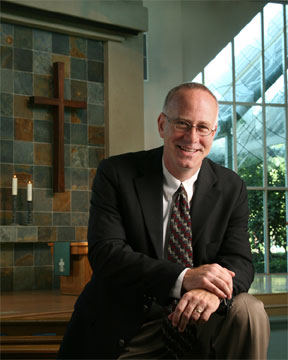



 To Be Continued...