Over at the blog of Mark Roberts, he recently posted a 3-article series on prophecy in the book of 1 Corinthians. It was refreshing to see a Presbyterian pastor-theologian advocating the continuation of the gift of prophecy today. And, of course, this was interesting as I just began posting a series on prophecy as well.
You can read all three posts by clicking on these links:
On Sunday at Cornerstone, after a few weeks of visiting speakers, I continued on from my introduction to the gifts of the Spirit. I began what will be a two-Sunday series on the gift of prophecy, maybe something like seminars entitled Prophecy 101 and Prophecy 102.
You can listen to the message by clicking on the icon below, or you can download from Cornerstone’s podcast site or iTunes.
For those interested, the major thrust of my message can be found in the article below.
There are five terms I specifically discussed:
1) Revelation
At times, in discussing this word amongst varying Christians, there are two unhelpful perspectives that I believe can arise from the term revelation. They are as follows:
a) Super-scary
This comes with regards to some ideas about the book of Revelation. The Greek word for revelation is apokalupsis, and it’s where we get our word apocalypse. And that word apocalypse brings up all sorts of unhelpful images, with a special thanks to Hollywood in recent decades.
Oddly enough, the word apokalupsis or revelation simply means an unveiling or an uncovering. As an illustration, it’s quite like being present at a theatre play and awaiting the beginning scene of the play. The curtains are drawn closed and everyone is chattering away with anticipation of the opening scene. And, at the first sound of the pit orchestra, the curtains open and the crowd sees the beautiful and intriguing set designed on stage, the cast of characters beginning with a great dance, etc. With that, we just had an unveiling, an uncovering.
The same is true of God’s revelation. When God reveals, He is pulling back the curtain, if you will, for us to see.
b) Super-spiritual
Some Christians hold that God is no longer revealing Himself (they might term it as no more ‘special’ revelation) because we now have all of God’s revelation fully and finally recorded within the canon of Scripture. The Bible is the final measuring stick for the beliefs and practises of the church and, thus, God no longer speaks and specifically reveals Himself. But I have three minor points to bring up about God revealing Himself today.
a) No new redemptive revelation.
I would agree with just about every evangelical Christian that God is no longer bringing forth new redemptive revelation. To claim such is dangerous. Well, it’s heretical. We believe that Jesus Christ and his work alone is the final word on God’s redemptive plans for all peoples. To that, there is nothing to add. As Paul said, if we preach another gospel than the finished work of Christ and, well, one will be cursed (Gal 1:8-9).
b) God has always been speaking and acting outside the Bible.
As I always make sure I communicate, I recognise that the Bible stands as the measuring stick for our faith and the practice of our faith. And, within the the text, we find a very thorough account of all God has said and done from the beginning until the first century. We truly know this is God’s inspired word.
But, of course, the Scripture does not record every word and act of God, does it? A couple of small examples are found in 1 Sam 10:10-13 and 1 Tim 1:18-19. In the first, we find Saul empowered by the Spirit prophesying amongst a group of prophets. What they said was not recorded in Scripture. But there is no doubt that, as prophecy, it would have been Spirit-inspired utterance. In the second example, we read of Paul reminding Timothy of the prophetic words that were made about him and that ‘by them you may wage the good warfare, holding faith and a good conscience’. In both situations, we would have found Spirit-inspired prophecy. But in neither case do we find those prophetic, and revelatory, words recorded in Scripture. The event is mentioned, but not the specific words. And that is quite ok. God has been doing it ever since the beginning and He will keep doing so until all things are completed in Christ.
c) God speaks and reveals today.
As all would note, nothing that God speaks and reveals today would contradict the tenor of Scripture summed up in Christ and the gospel. Such is out of bounds, for we are convinced Scripture is the word of God.
And, so, one way that God still speaks today is through Scripture. Some refer to this as illumination, which is a helpful term. But some use it over and above the term revelation, for they are convinced God no longer does it. But both terms do refer to God unveiling Himself, making Himself known to His creations. It’s just that the term illumination centres around light. And revelation also has to do with light, because revelation helps us see better. So I believe the terms are connected, kind of semantical cousins.
Now, when I say God speaks through Scripture, I do mean that He speaks from the God-breathed words that are right there in the text. But I also believe that He utilises those same words, at times, to speak things that were not intended within the text. I will give you one example from my own life. One day, as I was reading Jesus’ words in Matt 6:21 – For where your treasure is, there your heart will be also. – I understood that Jesus was speaking in the context of challenging people that they cannot have two masters. Such is impossible. But, as I was meditating on the passage, God said to me, ‘Scott, this is true of me as well. Where my treasure is, there my heart is also. And my people are my treasures, and, therefore, my heart is with them.’
God utilised Scripture to speak to me. It wasn’t something ‘in between the lines’. But God definitely used what was already there to reveal more of His heart to me. Now, sure, I could have also received that from reading Psalm 139 or other passages. But God took the text I was meditating on and spoke to me right then and there. Of course, many a folk claim this, with some of it being quite off-base. But there are some guidelines that can prove helpful, of which I have shared a bit here.
Still, I also believe very much that God speaks and reveals Himself ‘outside’ of what is in the Bible. Again, the Bible is the measuring stick for such revelation and that which is truly from God will not contradict that summation of Scripture in Christ. But the reality is that God is a relational and living God, and relational and living beings actually communicate. It’s part and parcel to being relational. I cannot imagine God not speaking, not revealing, not unveiling. It’s at the core of who He is. So God will and does speak, even if there is no verse and chapter number to quote.
2) New revelation
The big question I always get asked is: Is this new revelation?
I have talked about this already above, but I would say there is absolutely no new redemptive revelation. Again, Christ and his work are the final word on that. Such is a closed chapter. But, with regards to God speaking into our lives, our situations, our churches, even the nations today, I am ok to recognise it as ‘new’. Why? Because our lives, situations, churches, etc, are not detailed in Scripture. God didn’t speak about Scott Lencke in Scripture. God did not speak about Cornerstone in Scripture. God did not speak about 21st century Belgium in Scripture. Of course, that which is in Scripture speaks into all three of those. But not in a detailed sense. And I find God still regularly speaks, with detail, into those areas of real life.
3) Prophet
I didn’t spend a long time on this, but I did give what I believe is a solid, working definition of a prophet: one who received and brought forth a direct, inspired, revelatory message from God.
Now, some of these prophets, especially in the Old Testament, were given the amazing, special and authoritative privilege of having their words recorded in the Scripture. And for that every Christian is thankful for their God-inspired words in the Bible. But, of course, not every prophet had their words recorded in Scripture. But, such people were still utilised in direct, inspired, revelatory messages from God, with this ministry continuing into the new covenant era (i.e. Agabus, those in Corinth, those in Antioch in Acts 13:1-3, Philip’s daughters, etc), and I am very much convinced it still continues today.
4) Prophetic community
I have shared about this a lot, but, suffice it to say, because the Spirit of prophecy was to be poured out on all God’s people as of Pentecost, we now have a prophetic community in the whole body of Christ. When Peter stood up on that great day, he quoted some words from Joel’s prophecy:
17 “‘And in the last days it shall be, God declares, that I will pour out my Spirit on all flesh,and your sons and your daughters shall prophesy,
and your young men shall see visions,
and your old men shall dream dreams; 18 even on my male servants and female servants
in those days I will pour out my Spirit, and they shall prophesy. (Acts 2:17-18)
The reality is that now, male and female, young and old, are part of the prophetic community of all believers. We don’t simply have the priesthood of all believers, but we now also have the prophethood of all believers. I share much more in this article.
5) Prophecy
Finally, I began to touch on the gift of prophecy. There is much more to share next Sunday (and, thus, in another post here). But here are a few things I shared thus far.
I believe there are two misunderstandings about prophecy:
a) Prophecy is mainly about prediction.
I am not a fan of the word prediction because it makes one think of fortune telling and palm reading, which is, of course, very dangerous. I would rather use the term forth telling. And, yes, God forth tells things to come. Such is right through the Bible, and I have known such today as well. But prophecy isn’t always about saying something to the effect of: In the next week, events A, B and C will take place in your life. Why? Because the goal is not prediction. The goal is summarised fairly by Paul in these words:
On the other hand, the one who prophesies speaks to people for their upbuilding and encouragement and consolation. ( 1 Cor 14:3)
Prophecy could include forth telling from God, of directives and things to await with regards to ‘the future’. But that is not the central core of prophecy. Prophecy is God unveiling His plans, His purposes, His ways, His heart for the upbuilding, encouragement and consolation of His people.
b) Prophecy is mainly about rebuke.
This is another misnomer for some. Again, a quick glance at 1 Cor 14:3 reminds us of one central goal with prophecy. It doesn’t mean that prophecy is merely a pat on the back with a, ‘You’ll be ok. Hang in there.’ At times, prophecy will involve correction and rebuke. But even in rebuke and correction, such comes forth with the ultimate goal of seeing people strengthened, edified and built up. This is in line with Paul’s earlier words about the purpose of all gifts of the Spirit:
To each is given the manifestation of the Spirit for the common good. (1 Cor 12:7)
Therefore, I would say a helpful and good working definition for prophecy is this: a Spirit-inspired, intelligible, verbally delivered message intended to edify, encourage and comfort other believers. I’ve seen this happen on a regular basis for the past 12 years of my life in Christ and I would never, ever be moved from seeing it as something foregone, ending a long time ago with the finished product of our canon of Scripture. And I have not only known prophecy and revelation to come forth today, but I have also known the true fruit to come from it, that of upbuilding, strengthening, encouragement, exhortation and the common good.
Today we had a time of training in hearing God and prophecy. If I mentioned this to a few people, they might look at me kind of quizzically and ask – You had a time of training in hearing God and prophecy? Huh?
It doesn’t sound too spiritual, does it? Training in hearing God and prophecy? Don’t these things just happen by the Spirit?
Well, I would disagree that this sounds unspiritual. Hence why we held a training time for our church this morning in learning to hear God and in prophesying. While, for some, prophecy is for the super-spiritual, maybe those with their heads constantly ‘in the clouds’, most of us need these things brought down to planet earth where most of us live on a day to day basis. We need practical training and equipping. Hence, with all the recent stirrings of God’s Spirit in the midst of our people, and with little previous teaching on the topic for a transitionary church like Cornerstone, I knew it was absolutely vital to not simply ‘preach’ a few sermons on the topic, but to provide real, solid, biblical and practical training in prophecy.
Now, first off, I would note that there are differing measures of prophecy. 1) The prophet (i.e. Eph 4:11-13) who has a very strong measure of the prophetic and they help equip the whole body to be prophetic, 2) One with the gift of prophecy (i.e. 1 Cor 12:10) who is used regularly in this ministry gift but might not have the specific and greater measure of a prophet, and 3) All can be utilised in prophecy since they are indwelt by the Spirit of prophecy (i.e. Acts 2:17-18; 1 Cor 14:1-5).
Because I am convinced the whole body of Christ is called to be a prophetic body (read more here), we need to ‘equip the saints’ for such a ministry, as it says in Eph 4:11-13. And so we need to prepare and equip God’s people in how to hear God and speak forth what He is saying as He directs. Of course, every time we hear God, it might not call for us to speak it forth as prophecy. I share a great example here where God spoke to me about changing the way I was praying into a situation. But we need the body of Christ to be prepared to be a prophetic people, just as we need them to be prepared to be a shepherding or evangelistic people as a whole.
Now this starts by, one, learning to hear from God. Jesus did tell us that his sheep would hear his voice (John 10:3-4). And, though, the temptation is simply to relegate this only to initial salvation, and the context of John 10 can be used to support such, I suppose sheep don’t simply hear their master’s voice once and that’s it. There is a constant and continual listening to the shepherd. Hence, I think the same is true of the sheep of the Great Shepherd. Or we could use the imagery of a child with their father. They don’t hear the father once and that’s it. There is constant communication between the two.
Still, there are plenty of questions that arise out of learning to hear God: 1) Is it truly God or just me? 2) Is this God or is this the enemy? 3) What am I to do with what I believe God is speaking to me? And so on and so forth.
I think there are quite a lot of amazing factors God has given us to help wisely discern the voice of the Lord. While I list these, I wouldn’t say they are in any particular order. Some might say, ‘Well, you have to start with the Bible, the word of God.’ While I centre all my theology in Scripture and use it to weigh what I believe God is speaking even today, sometimes it is not that simple. Hence, why I list these and do not claim a particular order, as, at times, some will be more helpful than others.
1) The Scripture. As I said, and cannot say enough, this is central to weighing correct theology-doctrine as well as what we believe God is speaking today. But the thing is that Scripture does not address every little nook and cranny of every matter of life. Of course it addresses a wide gamut of issues and there are even things we can glean from its wisdom in one area that could relate into another. But Scripture is not a car instruction manual giving us 7 steps on how to do this or that and it will all be perfectly fine. Hence, the need in our lives for these other factors below.
2) Spouse. For those married to solid followers of Christ, this is normally the best place to start in weighing what we believe God is speaking today. But, having a godly spouse is not always the case, and, thus, we have the following to help as well.
3) Leadership. This is so central and important to our lives as Christ-followers. But, unfortunately, in the west, our individualism has set this aspect aside in so many ways. But God has given us elder-shepherds in our local church to consult for wisdom in matters of life. Of course, it isn’t fool-proof, nor will they have all the answers in every situation. But this is an absolutely vital part of the life of the body. They are God-given instruments to us! Yes, there has been and probably always will be abuse. But we cannot let misuse of this in some places detour us from the design of Jesus himself. Think of Jesus’ relationship of dependence on the Father. We need to be connected to leaders in our lives.
4) Body of Christ. Not only do we have leaders in our lives, but there are other wise and mature people in the body of Christ. Please don’t head towards people that you know will always agree with you. Rather head to people that love you, have your best interests in mind, but are also willing to speak into your life even if it means not agreeing with what you sense from God. If only we would value this aspect more and more, for God has never, ever thought the idea of the ‘lone ranger’ was good. Never! Also, if someone ever prophesies to you and asks you to keep it a secret and not tell anyone, that is not of God. He is one who brings things to light instead of hiding them. Prophecy has to do with God revealing or unveiling His heart, not hiding His intentions. Thus, we are not called to hide these things, but we should be willing to weigh it with leaders and others in the body of Christ. So don’t get caught up in ‘secretive’ prophecies. It is not healthy.
5) Peace of God. The peace of God is ultimately so very helpful in this area of our walk with God. In the end, if we think we have heard something from God or someone has spoken something as a word of prophecy to us, it needs to ultimately produce the peace of God in us. It’s not that we have to fell 100% comfortable with something. At times, God calls us to very uncomfortable things. But we can still know the peace of God in the midst of uncomfortability. But let our hearts be assured in God’s peace, which does surpass our cognitive understanding at times (Phil 4:7).
But these five things, and there are probably others, become very helpful in discerning the voice of God. And even then, it might call for steps of faith when we are still uncertain. We would love it if it were all so easy with no sense of need for wisdom, discernment, vulnerability, relying on the body, etc. But there is a process of learning here, just as with all aspects of our spiritual lives. Did we hear that? Again, while some want to super-spiritualise this whole thing and say, ‘It just happens. You just hear,’ most of us are still learning to hear from God. We are learning the Father’s voice. So let’s not be afraid if we are not always 100% certain.
As for prophecy, while the prophet or the one gifted in prophecy who has been functioning in such a ministry gift for quite some time might walk in much more confidence in the gift, those not specifically gifted in this way also need growth in this area. That is why the best place to start with prophecy is amongst the body of Christ whom we are closely connected with and joined to. Such is to be a safe place. Or, if the main gathering of the whole body is too intimidating at first, we can start in smaller groups or in one-on-one prayer time with close friends.
And when God speaks, it can be into differing areas: 1) into our own lives (which connects with some of the things discussed above about hearing God), 2) into the life of another or multiple others, 3) into the wider situations like a local church, or 4) into far-reaching situations like cities or nations, etc. Yes, I could have considered different ‘categories’. But I believe these provide a general understanding of how God can speak across varying lives and situations.
So, what we need to ask God is whether or not this revelation we have received from God is for ourselves, for others, or for a wider situation. Sometimes we immediately know. Sometimes we don’t. And sometimes the revelation comes and we are to share it immediately. But sometimes it comes and we are to hold on it; such is for a later time. How do we know if it is for now or later? Well, I can encourage us to not feel rushed. If it is the word of the Lord, He will make sure it comes forth and accomplish its purpose. I am pretty sure there were plenty of prophets of old that received something from God but await the proper time to disclose the revelation.
If we are not sure if the prophecy is for now or another time, let’s remember the importance of consulting our leaders. They can be very effective in helping us know if it is for now or not for now. And they can also be helpful in bringing guidance on whether this is for ourselves alone, other particular people, or a wider situation. Strong and healthy leadership truly protects and provides wisdom. That is why they are shepherds.
Finally, I simply note that prophecy can come in varying forms. And this is where the particular personality of a person will have an effect on the way in which the prophecy is delivered. I’m not trying to lessen the impact of prophecy, but rather trying to emphasise just how incarnational our God is in revealing Himself. Thus, what I mean is that prophecy through a physicist will come forth in a little different way than, say, a creative artist. One might receive very stirring imagery, what some might call a ‘prophetic picture’ (the creative artist) while the other might communicate the prophecy in quite minute and ordered detail (the physicist). This happens very regularly. It’s quite like a David and an Isaiah prophesying in differing ways at differing times. But both communicated the word of the Lord. Again, this happens frequently.
In the end, there are still questions. We will always carry them as finite human beings. I suppose the prophets of Scripture also had questions (sorry if this sounds denigrating, but I don’t believe it is). But they also took steps of faith as the word of the Lord burned within their heart.
So I have no problem with providing practical training and equipping for God’s people to learn to hear the voice of our Father and how to prophesy. I think such is very helpful to see the body of Christ grow in their calling as a Spirit-indwelt people to be a prophetic voice in all the world.
As I recently mentioned, at Cornerstone, we are beginning an in depth series on the gifts of the Spirit as found in 1 Corinthians 12:1-11. So, on Sunday, we did just that. Here were the five points I emphasised from the text:
1) The knowledge of the gifts of the Spirit (1 Cor 12:1)
Now concerning spiritual gifts, brothers, I do not want you to be uninformed.
Paul did not want this group of believers to be uninformed, or ignorant. Well, for the Corinthians, they had knowledge, but they had wrong knowledge as well as wrong practise.
So Paul comes in and teaches about healthy and proper practise. Many times, out of fear, it is easier to steer clear of things that have been continually done wrong. For example, some are afraid to engage with evolutionary biology because so many people have utilised as an attack against Scripture and Christ. But I think this might be a bit too reactionary on our part.
The same is true with the gifts of the Spirit. Many people are not open to these because they know how unhealthy the practises of some have been. I’m sure you have a few names or groups in your mind already. And, yes, that is true. But misuse and abuse should never lead us to abandon something. Rather, as imitators of Christ, we are called to faithful and healthy use. Such instruction was very relevant to the Corinthian church.
But, with today’s church, whereas most people have moved away from a possible antagonistic view towards the gifts of the Spirit, due to the major moves of the Spirit across multiple denominations and church groups, including an enormous amount of solid men and women of God, you might still find quite a lot of people uninformed. The Corinthians had wrong knowledge in a lot of ways. Many present day churches are just not knowledgeable at all about these gifts. Our best ideas are from television, or even worse, YouTube. But that doesn’t become all that helpful for becoming informed about the reality of these gifts.
And, so, that’s where we need to be challenged. We are not to remain uninformed. We are not to remain ignorant. Almost 2000 years later, we are to remain challenged by these words of Paul:
Pursue love, and earnestly desire the spiritual gifts, especially that you may prophesy. (1 Cor 14:1)
Where do we start? Most of us probably know some person or people involved in a church that believes in and correctly practices the gifts of the Spirit. And there are plenty of solid resources and books to consider – here is a short list of some. But let not our desire be to remain uninformed of these gifts. And, even more, let us be stirred to earnestly desire such gifts.
2) The nature of the gifts of the Spirit (1 Cor 12:4-6)
The first thing to briefly point out is the activity of the Trinity with these gifts:
4Now there are varieties of gifts, but the same Spirit; 5and there are varieties of service, but the same Lord; 6and there are varieties of activities, but it is the same God who empowers them all in everyone.
Normally, the word Lord (kyrios in Greek) is utilised for Jesus and the word God (theos in Greek) is utilised for the Father. I am simply amazed at both the cooperation and unselfishness of the Trinity. If only the body of Christ could get a small glimpse of that reality, all that it might spur us on for what God Himself desires for us.
But, with regards to the nature of the gifts of God, all gifts, I believe there is a heavy amount of misunderstanding. It is all centred around certain thoughts that could go like this: First, we believe the gifts of God are secret, hidden abilities within us that we are called to search for, dig up and unearth. And, the way many of us do so is by taking a multiple-choice test to figure out what our top 3 or 4 gifts are. Then, we feel good that we have identified our gifts.
The thing is that such a pattern is not really left to us in Scripture, is it? Listen, I am not trying to say it is inherently evil to take a test for gaining information and understanding about the giftings and ministries God might have opened to us. But, when it comes down to it, we are not really ever asked to search and find out our gifts. God’s people are simply called to serve. We are told to get on with edifying the body, serving, blessing, building up, etc. Remember, these are serving ministries, not hidden abilities to unearth.
Think of it this way: The reason why we know someone is an evangelist is because they are drawing other people towards Christ. The reason why we know someone is a teacher is because they are faithfully explaining the truth of Scripture. The reason why we know someone has a ministry of leading is because people follow their lead. And so on and so forth.
There are 3 other reasons why I believe this is a more healthy approach to spiritual gifts than the test-to-find-out-your-gifts approach:
a) There are two main words in the Greek that we translate as ‘spiritual gifts’ – pneumatika and charismata. The word pneumatika (i.e. in 1 Cor 12:1) could probably be better translated as ‘spiritual people’ or even simply ‘spirituals’. There is nothing about hidden abilities to dig up that is found in this word. I don’t doubt that the Spirit puts things within us, since He does indwell us, and it might be that the word charismata could be used to make this point. But we still need to remember we have no precedence in Scripture to find out our gifts, especially through a multiple-choice test.
b) Look at the emphasis of vs4-6 again:
4Now there are varieties of gifts, but the same Spirit; 5and there are varieties of service, but the same Lord; 6and there are varieties of activities, but it is the same God who empowers them all in everyone.
Vs4 utilises the word gifts in the place of the Greek word charismata. But look how it is coupled with the two words from the following two verses – service and activities. These gifts are serving ministries (for ‘ministry’ simply means ‘service’). And these are actual activities, or workings, of the Spirit. They aren’t hidden. They are activities we walk out through serving!
c) Finally, note the emphasis of vs7
To each is given the manifestation of the Spirit for the common good.
Again, just as vs4-6 point out that they are something we serve in and are activities, here we are told they are manifestations. This also highlights that they are visibleactivities that take place – again, through serving.
So I focus in on the nature of these gifts because I believe we can easily hold to a warped view of such. We are not called to find out our gifts and, then, once we do, we slot in to where our gifts can be best used. It’s just not really done that way. Rather, we are simply called to serve. And as opportunities arise, if it is right, God will empower us to be used in such a service, in such a ministry, in such an activity, even a manifestation of God’s Spirit.
Therefore, I will be honest and say that I don’t believe the excuse, ‘Well, that’s not my gift,’ is a very valid one. So what if one doesn’t think they have the gift of whatever. Let’s be open and available to God in being utilised where we are weak. Remember, His grace is sufficient. His power will be made perfect in weakness (2 Cor 12:9).
Yes, I am very much aware of balancing this with wisdom. I am not saying we throw anyone and everyone into any and every ministry activity. But, I would remind us that I have been emphasising that that is not how it works. You don’t throw people in to ministry opportunities. You see where a ministry, a service, and a manifestation of God is needed, and available people step in to serve in just that way as they are empowered by God.
That is the nature of the gifts of God’s Spirit. All of them.
3) The result of the gifts of the Spirit (1 Cor 12:7)
To each is given the manifestation of the Spirit for the common good.
The gifts are given mainly to be a blessing to people – to build them up, edify, exhort, strengthen. This is similar to what Paul says specifically about the gift of prophecy:
On the other hand, the one who prophesies speaks to people for their upbuilding and encouragement and consolation. (1 Cor 14:3)
When people serve in these gifts, the body of Christ will be spurred on towards the things of God. That is the fruit, the results. Even with prophecy, there are many who think 1) it is mainly about predicting the future, 2) it must be in King James English and 3) it must always be rebuke. But that is not what prophecy is mainly about, as Paul reminds us in this verse above. Of course there will be times to challenge and rebuke. That is a reality. But, in all, it’s given (even in rebuke) to help people move towards Christ. And such is truly building them up, strengthening them, blessing them.
Also, let me take a minute to remind us that the reverse is true as well. If the gifts of the Spirit are for the common good, then if we don’t have the people of God being utilised in such gifts, the body will be found lacking. It is as simple as that. It doesn’t mean we will forever be held back from moving forward in Christ. But these specific gifts will help us move towards Christ more and more, just as all the gifts of God will. That is important to remember.
4) The list of the gifts of the Spirit (1 Cor 12:8-10)
By no means do I believe these 9 gifts are exhaustive, or even that the other lists in the NT (1 Cor 12:28-29; Eph 4:11; Rom 12:6-8; 1 Pet 4:10-11) are exhaustive. There is quite a good representation amongst them. But there are plenty of other serving ministry gifts available to God’s people.
But these gifts remain part of the mix, no doubt.
Some find it helpful to divide these nine gifts into 3 groups of 3, as follows:
Gifts of power: faith, gifts of healings, workings of miracles
Gifts of thought: word (message) of knowledge, word (message) of wisdom, distinguishings between spirits
Gifts of speech: prophecy, tongues, interpretation of tongues
With Cornerstone, I am going to start with prophecy, as it seems the most readily available gift of the Spirit to God’s people (from my reading of passages like Acts 2:17-18 and 1 Cor 14). So, as and if I post articles about these gifts, I will probably follow my preaching order. We shall see.
5) The empowering of the gifts of the Spirit (1 Cor 12:11)
Finally I emphasise that these gifts are empowered in God’s people, and this is obviously done by the Spirit. I have written plenty on how God has been emphasising His power to me as of late, and I have specifically been focusing on the power of the Holy Spirit. And, so, in this short verse, we are reminded of this empowering:
All these are empowered by one and the same Spirit, who apportions to each one individually as he wills.
Similar words are found in vs6:
and there are varieties of activities, but it is the same God who empowers them all in everyone.
We need to be connected to the power source, if you will, which happens to be the person of God’s Spirit Himself. The Spirit was given in the first place to empower God’s people to be witnesses (Acts 1:8). I feel 100% confident in acknowledging that these nine gifts, along with all of God’s giftings, will be helpful in walking out our call as an empowered people.
So, thus, you have some of my introductory thoughts to the gifts of the Spirit, at least as found in 1 Corinthians 12:1-11.
Just as a side note, for the sake of moving more towards discussion of the gifts, I left out addressing why some people believe these gifts have ceased (known as cessationism). If you want to read more of my thoughts addressing the usual passages quoted by cessationists, and some ‘positive’ affirmations of the continuation of these gifts, you can read here and here. Another objection of cessationism is that these gifts seemed to have ceased pretty much in the second and third centuries and nor do we see them much throughout church history. Here is some food for thought on the charismata in church history.
Lastly, I leave you the audio file from my message on Sunday if you would like to click on it below, or you can download from our podcast or iTunes.
Starting this Sunday at Cornerstone, I plan to begin a preaching series on the gifts of the Spirit. As I have shared much recently (here, here and here), God has been re-emphasising his power to me – the power of the Holy Spirit, the power of the kingdom of God and the power of the gospel to change lives (amongst other emphases on His power). And, I have specifically been spending time preaching on the power of the Holy Spirit. You can listen to two of my most recent sermons: Acts 1:1-8 here and Acts 2:1-21 here.
Thus, after spending this time with Cornerstone looking at the reality of the power of the Spirit in both Acts 1 and 2, I believe it is now right in God to move on to specifically addressing the gifts of the Spirit. This will be an exciting time for the church, as they have never had any specific previous teaching on the Holy Spirit and His gifts. The past month has already been very stirring as we held two conferences – VMI and Fast Forward – and have been focusing on the power of God, especially the power of the Spirit. But this will be helpful, meaty and practical in seeing our local church body move forward into the things God has planned for us.
Though the church has never been antagonistic to the Holy Spirit and His gifts, and many come from backgrounds that allow for all gifts of the Spirit to be active, as I mentioned, the church had not had any specific teaching on the Holy Spirit’s gifts and, thus, not actively looking to practise these gifts in their gatherings and lives. But, with the recent connection of the church with Lifelink International, and with my arrival to oversee the church as of the summer of 2008, we have been purposeful to move towards an emphasis on the work of the Spirit and His gifts. It has taken us a while to get there, but now with a little (or BIG) push out of the nest by God, it is time to specifically dive into such an amazing reality.
But, we have had tasters of His gifts, no doubt. There have been times when prophecy has come forth (though some might not have realised it was such). And I have done teaching on the continuance of all five (or four) ministries mentioned in Ephesians 4:11-13: apostles, prophets, evangelists, shepherds and teachers (you can see the 4-part series here). And, just two weeks ago, we had an evening of seeking God together, mainly to hear from Him and speak forth what we believed God was stirring and saying. And, lo and behold, we had some prophecy, as well as others stepping out by praying aloud, sharing Scriptures, etc. It was truly beautiful and stirring!
So, I look forward to jumping into that all-important text in Corinthians on gifts of the Spirit, beginning with 1 Corinthians 12:1-11:
1Now concerning spiritual gifts, brothers, I do not want you to be uninformed. 2You know that when you were pagans you were led astray to mute idols, however you were led. 3Therefore I want you to understand that no one speaking in the Spirit of God ever says “Jesus is accursed!” and no one can say “Jesus is Lord” except in the Holy Spirit.
4Now there are varieties of gifts, but the same Spirit; 5and there are varieties of service, but the same Lord; 6and there are varieties of activities, but it is the same God who empowers them all in everyone. 7 To each is given the manifestation of the Spirit for the common good. 8For to one is given through the Spirit the utterance of wisdom, and to another the utterance of knowledge according to the same Spirit, 9to another faith by the same Spirit, to another gifts of healing by the one Spirit, 10to another the working of miracles, to another prophecy, to another the ability to distinguish between spirits, to another various kinds of tongues, to another the interpretation of tongues. 11All these are empowered by one and the same Spirit, who apportions to each one individually as he wills.
There is a lot one could address just in that text, but we will take it week by week. We will also have visitors in to speak on some Sundays, so my specific series might be put on hold here and there. But that is fine by me. They will bring the word of the Lord into our church regardless.
And I also look forward to a time of training in hearing God and prophesying next Saturday morning, 11 September. God continues to blow upon the embers of our heart and I can only expect there will be more blowing in the weeks to come.
So, stay tuned to our podcast if you would like to hear some teachings on the gifts of the Spirit (rather than read, though I might post some articles as well in the weeks to come). I will also post links to the teachings here at To Be Continued.

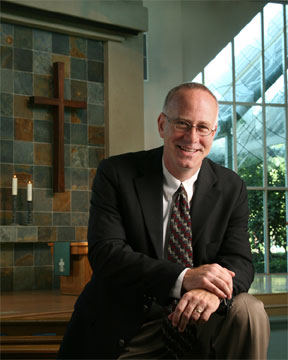 by Scott


 To Be Continued...