Tag Archives: continuationism

Top Ten Posts at To Be Continued

by Scott

So Marv and I have been writing and interacting on this blog for about 9 months now. I think we are still looking to stay true to the intent and purpose of the blog. Simply stated, our goal is to put forth a solid biblical, theological and historical case for continuationism, or the continuation of all gifts of the Spirit until Christ returns.

Of course, Marv and I don’t see eye to eye on every detail. But we see that as a plus. Two guys, very different, very different in other areas of theology, but working together to testify to the reality that the same Spirit that was active in biblical times is also active today in those exact same ways.

So, after 9 months of posting, here are the top 10 posts from To Be Continued based upon the calculation of ‘hits’ from the WordPress statistics.

1. Book Review of Jack Deere’s Suprised by the Power of the Spirit. A solid book both theologically and practically on the continuance of gifts. Deere has a powerful testimony of how he came into the things of the Spirit.

2. The Author Page. Hey, people want to know how these two nuts are posting articles.

3. The Charismata in Church History. Though many people think the major workings of the Spirit began to die out soon into the second century, here are many quotes from early church fathers noting the activity of God’s Spirit in things like prophecy and healings.

4. Book Review of Roger Stronstad’s The Charismatic Theology of St. Luke. A wonderful, theological, yet shorter, treatise giving a survey of Luke’s pneumatology from both his Gospel and Acts. I believe Stronstad will challenge us with things we never saw in Luke’s 2-volume work.

5. The About Page. People want to know what this blog is all about.

6. Our PDF Document Interacting with Michael Patton. Michael Patton wrote a series entitled ‘Why I’m Not a Charismatic’ (here is the PDF document). Marv and I decided to interact with that series. Actually, I recently updated the PDF document to include our two series together in more of a free-flowing dialogue between Michael’s series and our series.

7. The Case for Continuationism by Sam Storms. Storms is from Enjoying God Ministries and in this specific post, we note his 12 bad reasons for being a cessationist.

8. An Example of Hearing God’s Voice. Here, I simply give an example from John Eldredge’s book, Love & War, in which he shares a specific time when he heard God speak to him. It’s important to hear real stories from real people with both feet on the ground. It helps encourage us that we can hear God’s voice and it doesn’t have to be spooky.

9. The Best Continuationist Essay Ever Written by a Cessationist. This is an article by Vern Poythress, who is a cessationist himself, but gives quite good arguments for continuationism.

10. Book Review of Ken Berding’s What Are Spiritual Gifts. Berding challenges the typical ‘conventional’ view about spiritual gifts. I wouldn’t agree with every nuance, but I love his challenge to what I also believe is a very wrong understanding about spiritual gifts in much of the church.

Interaction with Michael Patton

by Scott

Those who follow our blog at To Be Continued, you might remember that, back in the summer, Marv and I interacted with Michael Patton’s in depth series entitled, Why I Am Not A Charismatic.

At the time, we made a PDF document available, as Michael had previously done as well. Well, rather than the previous two PDF documents being posted – Michael’s and our’s – I am now posting one PDF document that incorporates both series into the one document. So, what you have in this new document is Michael’s part 1, followed by ours, Michael’s part 2, followed by ours, etc, etc, all the way through to the full 8-part series. I believe this will allow for a better reading flow and make it easier to follow our interaction with Michael’s series.

So, for those interested, here is the link to the one PDF document that incorporates both series into one easier to follow document: Response to Michael Patton’s “Why I’m Not Charismatic”.

Seven Reasons Why I Believe the Gifts of the Spirit Still Exist Today

by Scott

This post has come out of my recent comment to Marv’s recent article, He Has Spoken Through His Son.

If it came down to why I believe all gifts of God, including those in 1 Corinthians 12 and Ephesians 4:11, still exist today, I think I could summarise it in seven specific points. So here they are:

1) God is an actual living, personal being

Almost every Christian would uphold this statement. God is a personal being and He is living. And, so, one would only expect a living, personal being to be a communicator, a speaker. This is not so much a biblical argument in which I want to specifically quote a few passages here and there (though I know we could). But it is simply a theological deduction from reading the entirety of Scripture.

Living, personal beings are communicators in so many ways. And with God Himself being a living, personal being, what else could one expect from Him? Thus, He will continue to communicate, speak, reveal, unveil, illuminate, until all things are completed. Well, and then He will keep speaking to those enjoying the blessing of the new heavens and new earth!

2) Christ is a charismatic prophet and so is his body

When I use the word charismatic, I mean it in the sense that Roger Stronstad defined it in his work, The Charismatic Theology of St. Luke (which I review here):

I use the term “charismatic” in a functional and dynamic sense. By “charismatic” I mean God’s gift of His Spirit to His servants, either individually or collectively, to anoint, empower, or inspire them for divine service. (p13)

And, as the living Word, Christ was the greatest Prophet to ever exist (as I share more here at my personal blog). There has been none like him who spoke and revealed the Father, for he taught us that whoever has seen him has seen the Father (John 14:9).

Therefore, if Christ is the great charismatic prophet, then by nature, his body is to follow in his footsteps. The body follows the head. It’s part and parcel to our calling in Christ. It doesn’t mean that everyone is particularly marked out as a prophet today. Of course not. But, via the Holy Spirit’s indwelling and empowering, Christ expects his body to get on with completing that which he initiated. Christ is still continuing that which he began to do and teach (Acts 1:1). Thus, we are now not only a priesthood of all believers, but also a prophethood of all believers.

3) The Spirit continues the same work of Christ

This really connects with the former point, but it is the Spirit that is the main one to continue the work of Christ. It is the Spirit that comes to indwell and empower the people of God here and now. We are the vehicle by which Christ continues his work via his Spirit.

I know this sounds like the A, B, C’s of pneumatology (doctrine of the Holy Spirit). But when one reads the pervading teaching about the Spirit of God throughout the Scripture, and especially noting the heightened teaching and activity in the NT, one receives the overwhelming sense that the Spirit that was sent at Pentecost was to continue acting in accordance with his nature as recorded in the OT and NT until that final parousia-return. Again, the basics on pneumatology, but the same Spirit that was actively at work in the first century was to continue to indwell and empower the body of Christ for the past 1900 years and counting.

4) The positive affirmation in Scripture that such gifts would continue

I share much more here for you to read on this, but suffice it to say that there are actual Scripture passages teaching that such works and gifts would continue. In the article I have linked to, I specifically take time to look at these four positive Scriptural affirmations: John 14:12; Acts 2:17-18; 1 Corinthians 13:8-12; and Ephesians 4:11-16.

There are plenty more one could look at and consider, but those are a very solid starting point as to specific passages.

5) Faulty exegesis of the normal passages brought up by cessationists

By no means do I want to sound arrogant, but there are the ‘usual suspects’ brought up by cessationists as pointers to why certain gifts (or ‘sign gifts’) would cease once the full testimony of the gospel and new covenant was finished in the completed canon of NT Scripture. While I uphold the importance and authority of the Bible, I strongly believe none of Scripture points to the ceasing of any gifts prior to the parousia-return of Christ.

Four very often quoted passages are 1 Corinthians 13:8-12; 2 Corinthians 12:12; Hebrews 1:1-2; and Hebrews 2:3-4. I have spent some time considering these passages in this article. So rather than dealing with them in depth here, you can follow the link and read my thoughts.

As a side point, it is also quite interesting to note that phrases like ‘word of the Lord’, ‘word of God’, or ‘word’ do not always refer to the graphe written Scripture. God spoke His word and always has spoken His word. Again, it’s part and parcel to be a living, personal being that desires to communicate with those He created. But here are some examples where the above mentioned phrases are not referring to Scripture:

  • Word of God – Luke 3:2
  • Word of God – Acts 4:31
  • Word of God – Acts 6:7
  • Word of God – Acts 12:24
  • Word of the Lord – Acts 13:44, 48-49
  • Word of the Lord – Acts 19:20
  • Word of the Lord – 1 Thess 1:8
  • The are countless times the word ‘word’ arises and does not refer to Scripture

6) The amount of times God actually spoke through and used those who were not prophets or apostles

Here is a smattering of examples just from the New Testament:

  • Stephen (Acts 6:8)
  • Philip (Acts 8:4-7)
  • Ananias (Acts 9:17-18)
  • The 120 believers at Pentecost (Acts 2:4)
  • Cornelius and his household (Acts 10:46)
  • Agabus (Acts 11:37-38; 21:10-11)
  • The Ephesian disciples (Acts 19:6)
  • The Galatian believers (Gal 3:5)
  • The Corinthian believers (1 Cor 14)

This should give us courage who are not actually apostles or prophets. God wants to utilise His people in such ‘charismatic’ activities since He has been doing such from the beginning.

7) The great testimony of the charismata in church history

I have already written on this topic before, as you can see here. But suffice it to say, there are plenty of examples of God, by His Spirit amongst His people, speaking and acting out the charismata as found in 1 Corinthians 12.

And, a great resource to look at would be The Century of the Holy Spirit: 100 Years of Pentecostal and Charismatic Renewal by Vinson Synan. He takes time to chronicle what has happened over the past 100 years or so with the rise of the Pentecostal and charismatic movements. In today’s world, it is highly probable that there are some 500 million believers associating themselves with either Pentecostal, charismatic or neo-charismatic churches. And the accounts of God’s activity by His Spirit continue on into the 21st century.

So, suffice it to say, I find it extremely hard to argue for the cessation, or ceasing, of the gifts of the Spirit. For me, there is an overwhelming biblical, theological and historical positive case for the continuation of such.

He Has Spoken Through His Son

by Marv

The coming of the Son of God in the flesh is the turning point in redemptive history, that is in the outworking of God’s plan for rescuing His fallen world.  It marks a decisive divide between all that came before and all that God does from that crucial point onward.

Jesus indicated His own place in redemptive history in the parable of the tenants.  In this parable, God is likened to the owner of a vineyard who sends a series of bondservants to collect his due,  only to have them rebuffed, abused, even killed by the uncooperative tenants.  The next step is an escalation in the status of the messenger: “Finally he sent his son to them, saying, ‘They will respect my son.’” (Matt. 21:37).  The voice of the son, we understand, bears a superiority not just in degree, but in kind.

The magnificent opening of the epistle to the Hebrews encapsulates this same truth, and then goes on for thirteen chapters to develop this theme of Christ as superior to everything in previous phases of God’s plan, to urge against retrograde motion on the part of his readers.  He begins:

Long ago, at many times and in many ways, God spoke to our fathers by the prophets, but in these last days he has spoken to us by his Son, whom he appointed the heir of all things, through whom also he created the world. (Heb. 1:1-2)

Continuationism is the understanding that according to the Scriptures, and Jesus Himself, during this era between Pentecost and the Parousia, God has established in the Church a vital and dynamic interconnection with Christ and the Father through the empowering presence of the Holy Spirit, through which Christ continues to glorify the Father, build His Church, and advance His kingdom.

To express this understanding in the imagery of the parable of the tenants, after the son is killed, when the vineyard owner comes to “let out the vineyard to other tenants who will give him the fruits in their seasons,” (v. 4) the son is in fact restored to life.   He then continues actively to run the operations of the vineyard for his father, though off site.  As he is delegated the management by his father, he in turn delegates the on-site operation to the new tenants.  In this arrangement he remains in two-way communication with the tenants and supplies the resources necessary to the success of the operation.

Some others would modify this scenario by removing the idea of “two-way communication.”  The son, in this case, commits to written form everything he wishes to say or will ever wish to say to the tenants.  Thus he leaves them an operation manual, and determines that while he expects communication from the tenants to him, he will not communicate directly back to them, since the manual already contains everything he wishes them to know.

The former of these conceptions, according to proponents of the latter, is inaccurate in that it is incompatible with Hebrews 1:2, cited above.  The idea of ongoing two-way communication with God—that is that God to man communication (still) occurs by means other than the Bible—is denied, these assert, by the statement that now God “has spoken to us by his Son” (v. 2).  God’s speaking through prophets, inferior delegates, the “servants” of the parable, is relegated to “long ago.”

The use of Heb. 1:1-2 in support of Cessationism does have a noble pedigree.  It appears with the Westminster Confession of Faith as “proof text” number six, underlying what is generally taken to be a clause expressing cessation of ongoing revelation: “those former ways of God’s revealing His will unto His people being now ceased.” (WCF I.1)

However, there are two distinct propositions involved, taken to be stated or implied by Heb. 1:1-2:

1.  God, having delegated His Son to speak for Him, no longer employs the lower-level messengers He previously had sent.

2.  God having delegated His Son to speak for Him, the Son no longer is speaking.

Proposition 1 is non-objectionable, since it represents the author’s explicit point, and he goes on to elaborate on this point in the rest of the epistle.

It is far less clear, however, that the author intends Proposition 2 as part of his meaning, as a Cessationist application would suggest.  Also, if the author of Hebrews is saying that the Son has said all He has to say, when exactly are we to understand that the Son in fact ceased speaking?

What can we determine from the text?  First, the verb translated “has spoken,” elalēsen, “is aorist, in the past from the point of view of the writer.  The specific time frame is further specified: “in these last days.”

The author then contrasts two types of events, the ministry of the prophets in the more distant past, and the ministry of Christ in the recent past.  Can we legitimately infer from the author’s statement affirming Christ spoke in the past, a denial that He is therefore not speaking in the present and will not speak in the future?  Not on the basis of any valid understanding of either Greek grammar or logic.

At any rate, when exactly does the author mean to tell us that God’s revelation ceases?

If in fact we go by the tense of elalēsen, the past, we are left with the paradox, or rather the antinomy of an inspired writer, stating in his present that revelation had previously ceased in the past.  The very verse containing this word, not to mention the thirteen chapters yet to come contradicts the notion that God’s special revelation had already ceased at that point.

The author would have to mean some other time than that strictly indicated by the tense of the verb, if indeed he intends us to understand that communication through the Son comes to a point of completion and then ceases.  When would that be, exactly?

The ascension, the ending point of Christ’s bodily presence on earth?  Hardly, the entirety of the New Testament was written after this.

Besides, the author himself states in 2:4 that after Christ’s ascension God continued to testify through human messengers other than Christ: “God also bore witness by signs and wonders and various miracles and by gifts of the Holy Spirit distributed according to his will.”

Is it then the completion of the Canon?  It may or may not be factual to state that with the close of the Canon, the Son no longer speaks to us, and the Father no longer speaks through any other means.  But how is such an understanding to be drawn from the words of Hebrews 1:1-2, which was written, perhaps decades before the last NT book was written?

What do the author’s statements about the Son tell us about the work of the Holy Spirit?  Jesus’ own teaching predicts a future in which the Spirit’s work will include acts of speaking:

“But when the Helper comes, whom I will send to you from the Father, the Spirit of truth, who proceeds from the Father, he will bear witness about me.” (John 15:26)“And when he comes, he will convict the world concerning sin and righteousness and judgment” (John 16:8)“I still have many things to say to you, but you cannot bear them now. When the Spirit of truth comes, he will guide you into all the truth, for he will not speak on his own authority, but whatever he hears he will speak, and he will declare to you the things that are to come. He will glorify me, for he will take what is mine and declare it to you.  All that the Father has is mine; therefore I said that he will take what is mine and declare it to you.” (John 16:12-15)

We find here, in fact, that the speaking ministry of the Spirit is a continuation of God speaking through the Son.  The Father delegates to the Son and the Son to the Spirit.

He delegates, not only to the Spirit, but to His Church. “As the Father has sent me, even so I am sending you.” (John 20:21)

So if the speaking of the Spirit is a continuation of the speaking of the Son, how long do we expect the Son to continue to speak through the Spirit?  Do we take Jesus’ words in John 16 then to be referring to the New Testament and nothing else?

If so, He said this to all eleven, but only commissioned three to write scripture:  Matthew, John, and Peter.  Did he exclude eight of those present and include others not present such as Paul, Luke, and James?

At any rate, the Son did in fact speak through the Holy Spirit in ways other than the writing of the New Testament:

“And they went through the region of Phrygia and Galatia, having been forbidden by the Holy Spirit to speak the word in Asia. And when they had come up to Mysia, they attempted to go into Bithynia, but the Spirit of Jesus did not allow them.” (Acts 16:6-7)

This is still, however, during the period of the open Canon. Of course, the Spirit continues to speak during this time.  Where are we ever told God will ever speak through the Spirit once the Scriptures, God’s sufficient written Word has been completed?

In Mark’s account of the Olivet discourse, Jesus gives instructions regarding what His disciples may expect in the days prior to His return, when the gospel is being proclaimed to all nations:

“But be on your guard. For they will deliver you over to councils, and you will be beaten in synagogues, and you will stand before governors and kings for my sake, to bear witness before them.  And the gospel must first be proclaimed to all nations.  And when they bring you to trial and deliver you over, do not be anxious beforehand what you are to say, but say whatever is given you in that hour, for it is not you who speak, but the Holy Spirit.” (Mark 13: 9-11)

Hebrews 1:1-2 in fact says nothing about the Son ceasing to speak.  The New Testament knows nothing of a time when once the Son has become incarnate, He ceases actively to glorify the Father to the world, to be God’s ongoing self-revelation.  What we can see are three distinct phases of His revelation activity (presented out of order).

The first.  His first advent, when He reveals the Father in His sinless life, He proclaims the gospel of the Kingdom, and dies sacrificially and rises again.

The third.  His glorious second appearing, when faith becomes sight we will know as we are known.

The second.  In between these times His Body, the Church, continues what in the first phase Jesus “began to do and teach” (Acts 1:1).

“In that day you will know that I am in my Father, and you in me, and I in you.” (John 14:20)

Yes, “in these last days, [God] has spoken to us by his Son.”  Just so, in these days too, God speaks through His Son, who speaks through the Holy Spirit, who speaks through the Church, the Body of Christ.

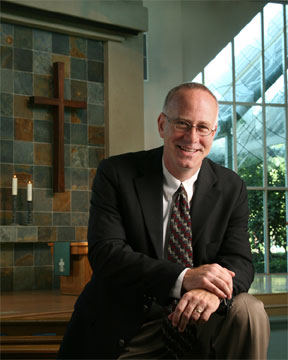
Series on Prophecy by Mark Roberts

by Scott

Over at the blog of Mark Roberts, he recently posted a 3-article series on prophecy in the book of 1 Corinthians. It was refreshing to see a Presbyterian pastor-theologian advocating the continuation of the gift of prophecy today. And, of course, this was interesting as I just began posting a series on prophecy as well.

You can read all three posts by clicking on these links:

  1. Prophecy in 1 Corinthians
  2. Prophecy in 1 Corinthians 14
  3. Prophecy in 1 Corinthians and in the Church Today